
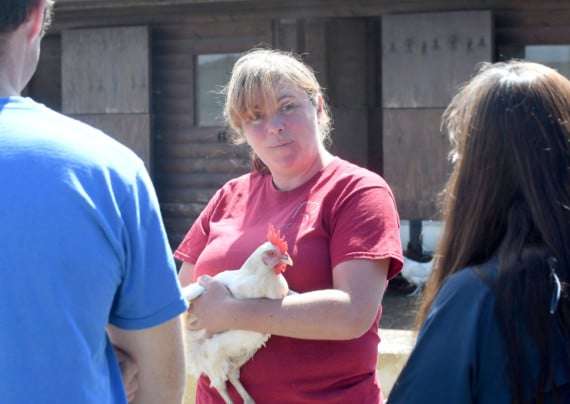
Along with cycling and breadmaking, keeping hens has seen a huge rise in popularity during lockdown.
And why not - once you have tasted your first newly laid eggs from your own hens you will never feel the same way about shop-bought ones. But, if you have never tried it, how easy are they to keep? Ruth Dermott who breeds poultry in Ballaugh runs courses for beginners and we went along to one at the weekend.
Ruth started her business, Pet Poultry in 2012.
’I started with four hens because I wanted some chickens for some eggs. Then I was given some chicks to incubate and I started selling the surplus and I realised there was a massive demand.
-(2).jpeg?width=209&height=140&crop=209:145,smart&quality=75)
.jpeg?width=209&height=140&crop=209:145,smart&quality=75)


’But people were coming to me with no idea how to look after them and it was suggested that a course would be useful.
’So now we run three or four courses a year, aimed at people who have no experience and want to know more before getting birds.’
Ruth herself now keeps a flock of 80 hybrid birds, the commercial egg-layer, and supplies eggs to local customers. She also has pedigree hens and cockerels from nine different breeds ranging from majestic Brahmas to little fluffy Silkies.
These birds are kept in separate runs to avoid cross breeding.
As Ruth keeps reminding anyone thinking of getting poultry, it’s important to bear in mind that hens are not just an egg-laying machine. They are a live animal. Most people who have hens grow to love their personalities and their often funny, quirky ways.
But taking on hens is a commitment: they can live up to eight years on average and they must be suitably housed and fed and protected from predators. We are lucky not to have foxes in the island, but polecats are a problem in certain areas.
Ruth says she always has a chat with anyone wanting to buy hens from her, to make sure they understand what they are taking on, though most of her business is repeat customers.
She only breeds pedigree birds - her hybrids, for both the eggs and the hens she supplies, are brought in from a commercial hatchery in the UK.
Ruth says: ’I’ve been working with this hatchery for five years and they always supply birds in really good condition.
’They don’t trim their beaks which is also important to me. Generally hens only need their beaks trimming when they are being kept in stressful conditions so when they don’t trim the beaks that tells me a lot about the conditions they are kept in.’
They sell eggs from their hybrids through their farm, Red Mie. Ruth started an egg delivery round during lockdown and it has been so popular they are getting another 20 birds to keep up with demand.
Red Mie became very well-known earlier this year when they ran their Manx March campaign to challenge people to eat only locally-grown and produced food for a week.
As it turned out the week that they had chosen fell immediately before lockdown and, because they were already providing a forum for people to post about where local foods they were eating and where to get them, it provided an invaluable resource for people who couldn’t find their usual foods on supermarket shelves or couldn’t get to the shops at all.
Ruth says: ’It was bizarre, the timing, and of course we didn’t know about Covid-19 [when we planned it].
’It came about because we were talking about Veganuary which annoyed us because the vegan diet is typically imported and out of season and we wanted to bring it back to Manx.
’And we thought: "If people can do it in March, they can do it anytime".’
As well as selling birds and running courses, Ruth also offers a ’chicken boarding service’ - yes really! - for people who want to go on holiday but have no one to look after their hens.
She says: ’We have some pens reserved for visiting chickens so, when people can travel again, we’ll take them in. We can take up to 12 birds.’
l You can find more information about Ruth’s birds, and book a course, on her Facebook page, Pet Poultry.
You can also message her if you want to book her chicken boarding service.
Comments
This article has no comments yet. Be the first to leave a comment.