
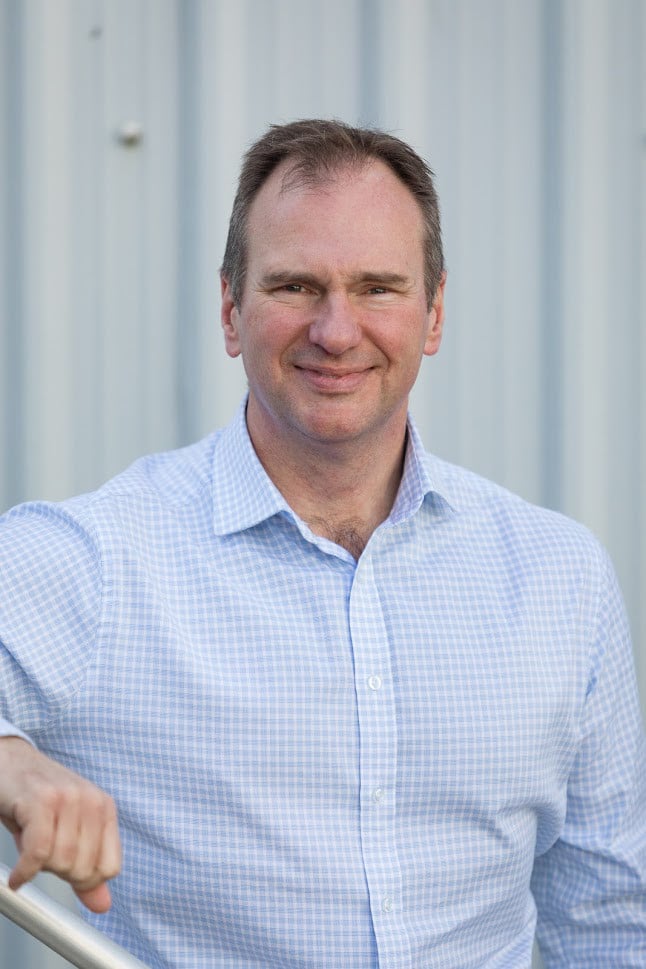
Continuing our series of articles about the challenges Brexit will bring for some of our major food exporters we talk to Findlay Macleod, managing director of Isle of Man Creamery.
’We will have no problem supplying milk for the local market: we’re very self sufficient on the Isle of Man because of the good grass,’ says Findlay.
The Isle of Man’s dairy industry produces 25 million litres of milk a year. Of this, six and a half million litres is sold in the island as liquid milk and the rest goes to butter and cheese products, the majority of which is exported.
It goes to America, the Middle East, Ireland, Malta and Spain.

.jpeg?width=209&height=140&crop=209:145,smart&quality=75)
.png?width=209&height=140&crop=209:145,smart&quality=75)
You might have thought that there would be no problem with exporting to America following Brexit but this is not necessarily the case, as Findlay goes on to explain:
’There is a risk to the American business because it’s done through an EU export licence which means that we can export premium cheese into the US. That’s been a really lucrative market for us.
’If Britain leaves the EU they’ll have to make sure it gets its share of the export licences or gets a trade deal soon with America.’
However this would bring its own problems. Findlay says: ’Apparently the American dairy industry are very keen for this trade deal but American dairy products are not produced to the same standards as the EU or the British Isles, it’s a different standard.
’In the States dairy cows are regularly given BST growth hormones and they’re kept in factory farms. Instead of having 100 cows, a farmer will have 5,000 and most of them don’t see the light of day.
’That’s why our grass fed accreditation is so popular in the States.’
Currently, just as we reported last week with the Irish beef, the UK market is also being flooded with Irish dairy products.
’We’re seeing an awful lot of cheese being imported into the UK from Ireland: 400,000 tonnes of cheese is consumed in the UK each year and a quarter of it comes from Ireland,’ says Findlay.
However he adds that the real problem with Brexit is the uncertainty it is creating as he explains: ’We have stocked up on packaging supplies, which all come from Europe, so that we’ve got several months’ worth. We’ve also bought spares for our Italian packing machinery. But it would cost a fortune to prepare for every eventuality.’
Andrew Cooper, general secretary of the Manx National Farmer’s Union agrees. He says: ’The response to our members asking about Brexit is "we’re sorry - we don’t know".
’We’ve gone through every possible scenario with all government organisations and every scenario has mapped out what could happen but, until we know what’s actually going to happen, it’s difficult to give advice on the unknown.’
He goes on: ’The UK is fairly prepared for trade issues. They have an intervention scheme in place for the lamb: if it comes the worst of using World Trade Organisation (WTO) rules on tariffs they will support the price of lamb to ensure its short term viability, however long term it will depend on what trade deals are subsequently made.’
’Beef,’ he adds, ’has its own issues.’
As he goes on to explain, beef is a perfect example of the complex ways in which trade between Britain and Ireland and the EU has evolved:
’The UK is a net exporter of beef and a net importer of beef: it exports beef into Europe but it imports a lot of beef from the Republic of Ireland which is then forward traded into Europe so it’s only 61% self sufficient in its own food production. It imports grain and protein crops from Europe and then exports those into the Republic of Ireland.
’It’s the shortest and cheapest route from Germany and Poland where they grow the wheat, across Britain and straight on to Ireland
’It may start off as wheat in Germany, be processed into feed cakes in the UK and then exported to Ireland to feed the cattle. This is then turned into beef and exported back to Germany and you need that free trade to travel through those countries.’
He goes on to say that the Manx NFU will be able to assist farmers with the extra forms that will be required following Brexit: ’The Isle of Man and Great Britain as a whole adhere to and exceed all of the EU standards because the EU standards are a list of absolute minimum standards: we far exceed the majority of them and we match or exceed slightly all of them.
’That side of it is not an issue. But we use paperwork to prove that and, if we leave the EU, we’ll still have to complete our own paperwork and also the EU paperwork to still be allowed to trade with them but we will be able to help our members with this.’
Andrew is also worried about imports of foods from the US following a future trade deal because of their very different food production standards and welfare rules.
He says: ’America’s production standards fall far below EU production standards.
’They routinely use hormone promoters and their poultry is kept in much worse conditions therefore, as a treatment against salmonella, they chlorine wash all the chickens just to be on the safe side. This in itself is not bad but the fact that they don’t have better production standards that lead them to have to do that is concerning.’
Another thorny issue that may arise because of Brexit is over the export of live animals.
Andrew explains: ’Michael Gove said initially that they were going to ban live export of animals for slaughter and then he back tracked and that’s all gone by the wayside. So as it stands there are still no tariffs on live animals.
’The farmers don’t want to live export. There is a case for live export when done properly: breeding stock already gets moved from country to country.
’But say those World Trade tariffs did come in, people may be forced to export live and when you get a sudden increase in anything in a short time you probably don’t have the people trained or the proper facilities - it’s a risk but I don’t believe it will come to that.’
Comments
This article has no comments yet. Be the first to leave a comment.