
It’s undoubtedly true that one of the biggest themes of 2022 will be continuing concerns about the environment and initiatives to mitigate global warming and reduce plastic waste.
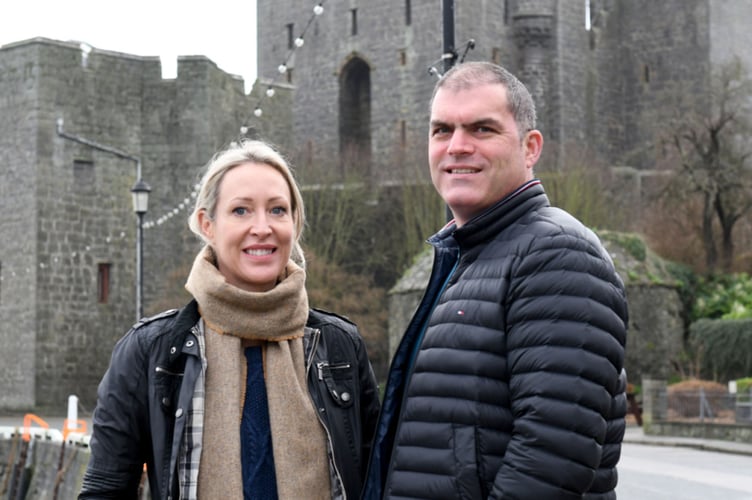
One such initiative, PlasticBusters, now has more than 100 local companies signed up to a pledge to do their best to eliminate single use plastics. One of these is Modus Architects and its principals, Jeremy and Vicky Humphries, have been speaking to Working Week about how they work with clients to make their building projects more sustainable.
’We’re at the beginning of the journey really, there’s a long way to go,’ says Jeremy.
He is on the Chamber of Commerce Climate Group with PlasticBusters’ founder, Jaime Amoedo. He qualified in architecture at Cape Town University and worked in London before coming to live on the island 20 years ago and setting up Modus nearly 10 years ago.



.jpeg?width=209&height=140&crop=209:145,smart&quality=75)
His wife, Vicky, was brought up on the island and her background and degree are in fine art. Her skills nicely complement Jeremy’s, especially at the conceptual stage.
As she points out, the PlasticBusters pledge is a way for people to help without feeling overwhelmed by the size of the problem.
She says: ’I thought it was interesting, the idea that people can take very small steps to make a difference.
’Sometimes, especially in our industry, the problems are huge and complicated, and expensive.
’But people really want to make a difference and I love the message about being a little bit thoughtful about a few things and that adding up to to something.
’I thought it was a very nice, very accessible and very cheerful, strong movement in the right direction and it does make you think. It illuminates some of our choices that we can change.’
For her and Jeremy it’s not just about aiming to eliminate plastics from their own business but encouraging clients to think about whether they should be using them in their building projects.
As Jeremy explains, the problem is not one of clients not wanting to do this: they are very much on board with the idea of using less plastic. It’s more to do with what products are currently available to use, and creating a demand for better ones.
He says: ’Plastics are so ubiquitous in the building industry and there’s a very simple reason why people use products like plastic window frames: it’s because they’re easy to get hold of and they’re cheap. The thing that’s not thought about is what’s going to happen to that product when it’s reached the end of its design life and it has to be pulled out and thrown away.
’It’s going to take a very long time to change that and I think where we as designers come into that is that we can explain to consumers what the choices are and, in so doing, build a demand for alternatives.
’A great example is cubicle panels in washroom systems. We’ve done some research into this and we’ve been speaking to one of the largest manufacturers of washroom systems and they don’t seem to be able to give us any ideas about how their products can be recycled.
’At the moment there are no ready alternatives and that is one of the things that we’re looking into. If we can present our clients with a viable alternative then that would hopefully build demand for more sustainable products.’
Sustainably sourced softwood for window frames is an alternative to plastic that does already exist. Products like Accoya, which has been treated to be low maintenance and can be left natural, or finished with beeswax, are the sort of alternatives consumers can be looking at.
For Jeremy and Vicky it’s not just about plastics. They are also helping clients to make their properties more energy efficient and to use more sustainable forms of energy. And, again, clients are very much on board with this.Jeremy says: ’I would say that, across the board, clients are far more interested in sustainability and the environment than they have ever been.
’Sometimes it’s to reduce their energy bills but very often it’s because they think it’s the right thing to do - they’re prepared to pay that "green premium" in order to live their values. They want to save on costs but they also want to play their part: people want to do what they can.’
He adds that there are ways in which people can make their properties more energy efficient and sustainable without having to invest in expensive solutions like air source heat pumps and PV panels.
He says: ’The basics are: improve your loft insulation, seal the air gaps and stop your house leaking heat. But do it in a considered way with careful thought and research: you need to know what you’re doing
’If you’re planning an extension, apart from looking at the materials that you use, look at things like natural light and taking advantage of solar gain. I’m amazed at how many houses in the Isle of Man don’t have their living spaces facing south. So many are on the dark side of the house and I think we shouldn’t be doing that.
’There are othings to think about like using natural ventilation, especially now with Covid: look at ways to avoid using electric fans, ventilating the house naturally, and it’s also better for the internal environment for the health of the occupants.’
He adds: ’’We try and help all our clients to make a difference where they can, where they can afford to, and where it will make the biggest impact.’
There is also a very positive way of looking this. After all, a building project is a big deal for all of us and it can be something that gives people a chance to do something for the environment.
’It’s a real opportunity,’ says Jeremy.
Vicky agrees: ’It’s a big thing to do, and it’s a big investment, so why not make it the best. Tick all the boxes to give yourself a healthy environment, a valuable property, something for the future, and something that’s going to last.’
l You can find out more information about the PlasticBusters pledge and see which companies have already signed up by visiting www.plasticbusters.org
Comments
This article has no comments yet. Be the first to leave a comment.