
Achieving gender equality in the island will reap economic benefits for all.
That’s one of the conclusions from research published by Isle of Man Chamber of Commerce as International Women’s Day was celebrated.
Members of Chamber’s Fuel Committee carried out extensive research which is published in a report titled ’Diversity in the Workplace: The Gender Balance’.
Fuel was the idea of former Chamber president, Micky Swindale, who announced plans in her inaugural speech in 2015 to set up the group to encourage more members of the ’millennial generation’ to become actively involved with Chamber.
.jpg?width=209&height=140&crop=209:145,smart&quality=75)



Fuel is now an official Chamber committee with 14 members drawn from various industries. They all share a common vision to create a bright future for the island through innovation, research and discussion.
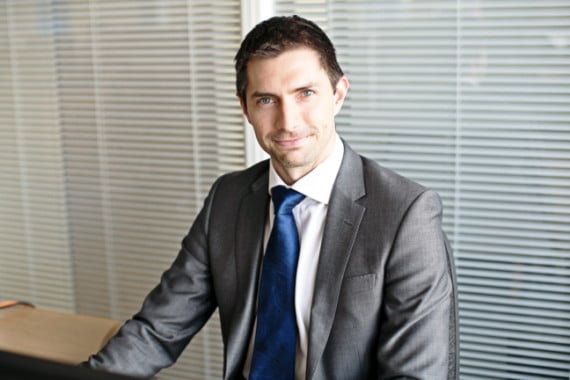
Kristan McDonald is chairman of the Fuel Committee and managing director of Manx Technology Group’s software division.
He said: ’Fuel’s mission is to look at future trends, raise awareness of potential issues, and suggest solutions and ideas to Chamber of Commerce members, the local business community, and wider society in general.
’As we look at the landscape of business in 2018 we are seeing cultural shifts in many aspects of workplace practices.
’Rigid ’nine to five’ arrangements are becoming less common as flexi-time, remote working, and the use of technology redefine how we actually work.
’As these practices are reviewed, questions are also being raised about the way gender differences are handled at work.
There is no doubt that many workplaces - in the island and elsewhere - still have a gender bias.
’Our report shows that by putting measures in place in the short, medium and long-term, we can bring about gender equality in the workplace in the Isle of Man, resulting in economic benefits for all.’
The report concludes with 18 recommendations covering short, medium and long-term solutions which Fuel believe are required to promote gender equality in the island.
The recommendations are:
Short-term
l Addressing expressed and implied gender bias in job advertisements.
l Assessing management styles to avoid gender biases in performance assessments.
l Reviewing job interview questions and techniques so as to avoid bias and afford a gender neutral approach.
l Affording equality in access to paternity and maternity leave.
l Introducing mandatory returner schemes for employees who have taken maternity or paternity leave.
l Introducing mandatory gender equality training to the workplace.
Medium-term
l Actively promoting paternity leave to ensure uptake is successful to become the new ’normal’.
l Introduction of shared grandparental leave to assist where both parents choose to continue to work.
l Flexible working and leave arrangements and ensuring these arrangements are regarded as the norm.
l Encourage and highlight role models of both genders at board level.
lReverse mentoring of board members from more junior employees to help change perceptions.
l Increasing capacity and affordability of nursery school places.
Long-term
l Education on unconscious bias to ensure students are not treated differently (by teachers or peers) according to their gender.
l Encourage equal participation in all subjects, as early as primary school, irrelevant of those traditionally associated with gender stereotypes.
l Develop initiatives that promote equality within career trajectories which facilitate higher earnings in the future.
l Companies engaging with youth programmes and schools to highlight equality of opportunity within these industries.
l Regular monitoring and publication of gender role and outcome statistics.
l School and university initiatives to increase equality in faculty leadership positions to set the tone for students from a young age.
Kristan McDonald
Above, the gender split of full time employees (FTEs) within each of thesesectors at the time of the 2016 Isle of Man Census
Above, historic average hourly earnings for full time employees by gender in the financing, insurance and business services economic sectors
Elected representatives in government. Although the general population shows a fairly even split of females and males (50.4 per cent women in the 2016 IoM Census) there are significantly more men in Tynwald and the statistics show the Isle of Man is behind the UK in this regard
Comments
This article has no comments yet. Be the first to leave a comment.