
How do we realistically increase the size of the island’s working population?
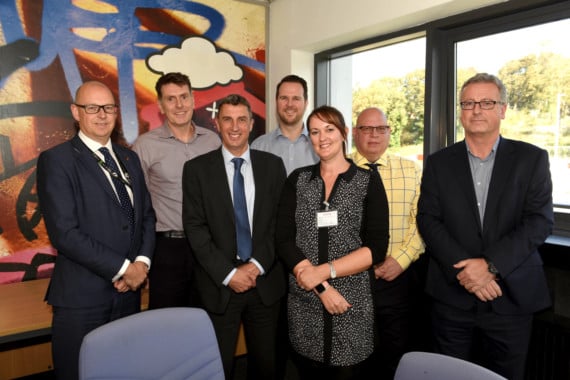
That was one of the questions posed at the second of the Topical Talks series of roundtables held at Isle of Man Newspapers and sponsored by Manx Telecom.
Shane Magee, chairman of estate agents Chrystals, posed this question and added that it seems many businesses are struggling to find staff to replace those who have moved on, never mind trying to expand their operations.
The panel also pondered the question: ’Some positions are work permit-exempt. Has this made a difference in attracting staff here in real terms?


.jpeg?width=209&height=140&crop=209:145,smart&quality=75)
And Janna Horsthuis, managing director Robinsons, wondered about opening up the relocation fee for the hospitality and catering sector.
Chairman Richard Butt, editor of Isle of Man Newspapers, thought it would be a good idea for Mark Lewin, chief executive of the Department for Enterprise to get the ball rolling.
Mr Lewin began by stressing it was our elected politicians who took the policy decisions.
While he has his own personal views, these views are largely irrelevant in policy making and would only be considered advice.
A good example of this, he said, was that a year to a year and a half ago when he arrived in the department, work permits were by far the biggest topic at the time.
He said: ’Wherever I went people threw the subject at me.
’If you get a roomful of random people together they would have a really healthy debate.
’And if you get a roomful of business people trying to run businesses then you get, clearly, like the Chamber of Commerce have said, a call to suspend the work permit system.
’There are some politicians who support that. But equally there are many that don’t.’
He admitted: ’And there are many members of the public who are nervous about relaxation [of the work permit regulations] and there’s probably some people that still don’t subscribe to the fact we need to grow our economically active population.
’When I arrived, when the census came out, that showed that we had that period of decline and it helped to change the conversation in a positive way.
’Most people recognised that’s unsustainable to have this decline and there needed to be some form of growth.
’So, when I arrived, one of the challenges for me was that I’ve got some people saying: ’’absolutely no to any relaxing of work permits, don’t change it’’, and others that were saying: ’’Suspend it." I felt ’’we’re in a bit of a stalemate here.’’ ’
Mr Lewin added: ’So what we did with the Chamber of Commerce and some other associations was to try to find a way to make it as frictionless as possible.
’So the principles are still there. If there’s an Isle of Man worker for a role, then they must be entitled to be considered as a priority.
’But clearly where we have got very low unemployment, in every sector of the economy, the single biggest message I get now is about the need for skilled workers.
’So we needed to make any barriers in that way taken out.
’So what we came up with, as a reform, was removing a lot of the candidate side of the process: previously employers would have to send forms out, get them back, that would take days, weeks, and this plants some doubts in the prospective candidate’s eyes.
’So now that has all gone and the employer can come straight to the work permit team.
’Previously the department and officers would take into account the family situation and would look at the number of dependants and health issues, any underlying medical issues, a whole series of things that was hard for officers to be considering case by case, and I think that is a broader society conversation in any event.
’At the moment we want to grow our economically-active population.
’If you bring 1,000 workers in there will be clearly some that will on a net basis be a consumer of public services but the vast majority will be a positive contributor, and in terms of growing the workforce and helping the businesses that need it the vast majority of us all will benefit from it.
’We simplified the whole process.’
And Mr Lewin said a big change was that cohabiting partners could now come in and be automatically entitled to a permit.
The first set of changes came in November last year, the second tranche last January.
And he said that as a result: ’We’ve seen a 10-fold increase in the number of online applications.
’And in August almost 90 per cent of applications were processed the same or the next day so within 24 hours.
’ The business confidence surveys showed only 27 per cent were satisfied with the work permit system last year - this year it is now 56 per cent - so that figure has more than doubled.
’But there are still people I come across who still think it is a barrier and I genuinely hope it isn’t but we will continue to monitor.
’Generally if someone has looked for a role and it is advertised and there is not a [local] candidate for those skills, I say that we are getting to the point that 90 per cent are turned round within 24 hours and the candidate does not really have to know anything about any uncertainty.
’So when an employer wants to provide a job offer they can do it the next day.’
’That’s the vision of a frictionless system. It still preserves the political need.
’We are not just letting anyone in, there still has to be a job for them and there’s a preference for Manx workers which politically is still important to a lot of people.
’I hope we have found a balance.’
Talking generally, Gary Lamb CEO of Manx Telecom said: ’From what I hear, and from my experience, it is a lot better than it has ever been.
’Where we still have some challenges is if you have someone approved from the UK who has particular skills and there happens to be some individuals on the island that we believe clearly do not have the skills it will take time to get that further process.
’That’s the only negative that I hear, that it can take quite a while to get through that process, if there’s someone on the island that somebody has a view that they might be more suitable.’
Janna Horsthuis said that in her experience: ’We are finding it is much more quicker.
’For our industry there are just not the people applying for the jobs and that is where we are really struggling.
’If you put out a job advert you would have 100 people applying two years ago, you get four or five people now.
’There’s not many people applying for the jobs themselves any more.’
Chairman Richard Butt asked: ’Has there been a cut in the working population?’
The answer from Mr Lewin was ’not at present’.
He said: ’From the census 2011 to 2016 there was a decline in the economically active but if you looked at the government produced quarterly figures for the last four quarters there had been a growth in the economically active population.’
Mr Lewin said the growth was relatively small and most employers in most sectors on average are saying that they cannot get the skilled workers, so ’we clearly have a long way to go but it is not currently in decline’.
Mr Butt said: ’So Janna’s problem really is that we have not enough people looking for work.’
Janna said: ’There are people moving around, we don’t have new people coming into the sector.’
Mr Lewin said financial services had gone through a period of reduction but were now back growing again.
He added: ’Digital is growing.’
Mr Lewin said: ’The biggest conversation I have now is not the work permits, it is how do we grow the working population?’
Shane Magee of Chrystals said he had done a quick analysis of houses sold this year to local people and how many from people coming in, primarily from the UK.
’I’m coming up to 30 years with Chrystals and the statistic has not changed much in those 30 years.
’Seventy five to 80 per cent of the sales we do are to people moving around the Isle of Man.
’But of that 20 per cent, 80 per cent of that 20 per cent I would say are to people over the age of 60 coming to the Isle of Man because it is a nice place to retire.
’That is perhaps a concern for the island. If you are trying to increase the size of the working population that is not reflected in the age group of the people we are seeing coming to the island to purchase a home.’
Greg Ellison, the chief executive officer, Capital International Group, said: ’So only four per cent of your house sales are to people coming over here to work in essence.’
Mr Magee replied: ’Many applicants we see in our Douglas office are initially looking to rent, because they are on short-term contracts or are in the gaming sector and their employer wishes them to remain fluid, where they can be moved to another jurisdiction at short notice.’
Janna Horsthuis said her brother-in-law had been unable to get a mortgage when he had been relocated here.
His wife cannot get a bank account. He can get a bank account, he has his relocation fee but cannot get a mortgage to buy a property, so was having to rent.
’They want to stay here but they can’t purchase a property. The feedback is that they do not know if the contract is going to be long term.
’He is Manx and has lived away for 30 years. He said he has spoken to other people with a similar issue.’
Mr Magee said there is generally a reason why people come here - family reasons, they have been coming to the TT for 30 years etc or whatever it might be.
’There are very few new people I see that knew nothing about the Isle of Man, that have just landed here.’
Greg Ellison said: ’We have an office in Cape Town where we have about 27 people working.
’Often we will bring them over here to do their training and all the South Africans that come over here they are amazed at how safe it is.
’The scenery, they love it, the outdoor life.
’But then we have people from here that go over to the Cape Town office and they don’t want to go back because of the weather, the vineyards and so on.’
Mr Ellison said that because of the influence of the gaming sector in the island the last 10 to 15 years has been ’amazing’
’In some ways the gaming sector has propped up the island over the last decade. But in terms of people, employees, we now compete with some firms in the gaming sector for the same skills. We generally don’t lose people to a bank or an investment company.
’We have however lost a handful of people over the last couple of years to some of the gaming companies.
’It’s not difficult for us to recruit because we have an interesting story and people want to get involved in the journey we are going on. But our bigger challenge is retention when you have got young graduates that might be in their mid to laste 20s, with another £10,000 to £20,000 on their salary with one of the big gaming companies.
’It’s difficult to compete with.
’That’s becoming a real challenge for us.’
Gary Lamb said: ’It sounds like work permits are now not the big issue. The big issue is getting people to apply for your roles. When you have issues like this I can’t help but think we can’t be the only people in the world that don’t have this challenge. There must be other jurisdictions that have the same issues. I wonder what the government has done in terms of research to see how we can address this issue?’
Mark Lewin from the Department for Enterprise said:
’The programme for government is a great tool for agreeing and driving priorities across the whole of government.
’A parliament with lots of independent candidates came together and produced a collective set of priorities.
’There were six key aims and one of the six key aims was to grow the economically active population.
’Also there was the commitment by the Department for Enterprise by October to produce a strategy to actively support this growth of the economically active population in response to this.
’The DfE is leading on that at the moment. For instance we have been working with the Chamber of Commerce and the Fuel group to explore what the problems are and what we might be able to do in response. We are also working with other bodies and the new executive agencies.’
[The fuel group is a group of individuals from various industries sharing a common vision to create a ’bright future for the island through innovation, research and discussion’.]
Mr Lewin added: ’There is not a single silver bullet but there is a broad framework to make the island more visible and more attractive. Also making it easier for businesses to find the people they need.’
One strand of it was for instance looking at high net worth individuals.
Then there were skilled workers and there were various strands to this.
Mr Lewin turned to the relocation fee question originally posed by Janna Horsthuis.
He said: ’For this last year we have piloted a scheme whereby export-led employers can come and ask for assistance for relocation roles.
’We can provide up to 20 per cent for the first year’s salary paid in arrears, capped at £10,000 per role and we are monitoring and considering expanding this.’
He added there was a strand in the new strategy looking at how we could get more graduates back over here, there was a strand on working with recruitment agencies and ’we want to encourage their marketing support and setting sights on further afield.’
And there is a strand for skilled workers themselves - finding ways to attract them over directly.
Mr Lewin said the DfE was working on a high level framework, a strategy that will take the next couple of years to look at six areas of work, of which four directly relate to skilled workers.’
Gary Lamb of Manx Telecom asked: ’They all sound logical but to what extent do we look elsewhere to see what others [jurisdictions] have done and how successful they have been?’
Shane Magee from Chrystals said he had spoken with a former client who moved from the Isle of Man to Guernsey some years ago.
He said: ’I asked about what Guernsey did to attract new residents and she felt that Guernsey was perhaps more successful in attracting 30- to 40-year-olds by marketing the safety of the island and the prospect of having a barbecue on the beach five minutes from work.’
The pitch of relaxed and aspiration lifestyle seemed to work.
Where the Isle of Man could score was to play to its strengths. She felt the island could market itself to the parents of sporty kids in the UK and Ireland, as a centre of excellence for children’s sport.
This would be one way to increase the size of the working population and it is an area that the island could easily excel in. The island has masses of open space, a good standard of education but it may require enhanced investment into certain sports and related facilities to make this work.
Greg Ellison from Capital International Group said: ’That’s an interesting angle that Shane has talked about and I can see the point of it.
’Essentially people have to want to come here. I have had 40 or 50 different family, friends etc come and visit in the last 10 years and every single time they leave having been blown away by what they have seen in the island.
’It was not what they expected and did not realise the island was so successful, so beautiful
’I think we get written off before people have really looked into us sometimes.
’We have to do more to build the brand of the Isle of Man and the outdoors, the sport and all the wonderful things we know about that many people still do not realise exist here.’
But he added: ’If they don’t want to come here it does not matter how efficient the process is, they don’t want to come here.’
Ian Plenderleith, group managing director, Manx Gas, said: ’We work across three islands with Manx Gas, Guernsey Gas and Jersey Gas.
’I’ve been here in the island for nine months now and when I came to the island it was not what I expected.
’I’d been to the island once before and that was in the 1990s.
’What a truly beautiful place it is.’
He added: ’We work on all three islands and I frequently get asked which is the nicest.
’They are always surprised in the Channel Islands when I say to them that it is the Isle of Man. But I agree there is more to be done to improve the view people have of the Isle of Man.
’As nice and as quaint as Jersey are, they are quite crowded and you don’t get that sense of space.
’There is an opportunity to do something here. This is a beautiful place and compares favourably with the other two.’
Mr Plenderleith added: ’However there is a feeling that there is a higher standard in leisure and retail [in the Channel Islands] than there is here.’
He pointed out that there was ’a feeling that the bar for dining out and retail in the Channel Islands seems to be slightly higher whch makes it easier to attract talent on to the islands.’
Mr Plenderleith added: that he felt there was an opportunity for vocational training in the island. He spoke of difficulties in recruiting someone to a senior position in the organisation.
’I’m also looking to develop high quality customer service professionals and I could not find the training in the island to help develop people who perhaps do not want to go down the academic route. So I feel there are opportunities there.
’I’m sure the Isle of Man would be pleased if its best and brightest did not always go to the UK after they finished school or college.’.’
Mr Plenderleith raised an open question: ’Is there more that employers here can do regarding communication with schools and offering graduate programmes to keep people here rather than going away. I wonder how that fits in the government’s way of thinking?
’In my opinion we have to get out to schools and colleges to retain people.’
Mr Lewin from theDfE said there were already some companies offering internships.
And he said: ’There is a political desire to let youngsters choose a path, not to force or limit the choice but to incentivise where it fits with our needs.
’I do agree that we have more to do in telling people about the Isle of Man and that’s a key aim of the proposed locate strategy.’
Mr Plenderleith said: ’We must have the best choices anywhere in a safe environment for a good quality of life and a great career.’
Greg Ellison said the Isle of Man Newspapers’ Destination series of supplements was ’such a good publication’.
And he added:’We have a lot of people to get that message across to about the Isleof Man.’
Trudi Williamson, deputy chairman of Isle of Man Newspapers, said it was all about stories and that is what the Destination series of supplements did, telling the stories.
She said: ’Tell the story and you get people to relate to it.
’We also have such talented sports people here. It’s about geting the message out.’
Editor Mr Butt said: ’Sport is fantastic. But I’ve got cousins in their late teens who say: ’’I’ve got nothing to do in the Isle of Man and I’m not interested in sport’’.
’There is quite a gap in that area. You get eGaming people coming here, they are not necessarily doing sport, is there anything else we can do to bring people in who are not going to be going outdoors all the time, and are not interested in being Commonwealth games cyclists?’
Mr Plenderleith added that, with the growth in gaming in the island, it could be argued that the growing popularity in E-sports could be viewed as ’sport’ in itself. Egaming events are now enormously popular.
And he raised this point: ’I wonder if E-sport could be an attraction in itself.’
Janna Horsthuis said the younger generation that were not interested in sports, would be happy if they could cheaply get on and off the island.
She said:’I’ve seen it with my nieces. If they can go to Liverpool for the weekend they will be happy.’
And she claimed they did not necessarily want 10 cinema screens or a big leisure centre.
’We don’t want to be a big franchise island.
’We want that special identity of being the Isle of Man.’
She recognised however that branding was something big for the Isle of Man and should be pushed in the same way that people in places such as Scotland or Wales who were so proud of their homeland.
’We need to be the same.’
Security
The panel turned to discussing cyber security.
Greg Ellison from Capital International Group asked the following question. He wanted to know the extent to which the private sector, government, regulators etc can create a forum for managing directors, chief executives, and IT directors from all sectors to share their experiences to help strengthen their organisations’ defences and reactions to the hacking and cyber attacks ’that we’re all facing’.
Mr Ellison said: ’The risks that organisations and companies are facing of being hacked by companies or criminals or whatever is real.
’I think it is a lot like mental health. People recognise that it is real, that it exists but they don’t like to talk about it.
’Every week most financial services businesses are under attack by hackers or people, trying to break into systems and steal data.
’I think there needs to be a forum where people feel safe to come and share those experiences .
’It does not have to be specific but collectively we are all against these bad guys. But there is very little in the way of a public forum for us to share experiences.
’You are up against this invisible unknown threat.
’We are spending more and more money, amounting to hundreds of thousands of pounds, every year against something that moves so quickly.
’We need a forum to better understand this.’
Manx Telecom CEO Gary Lamb said: ’I don’t think people realise what is going on out there and the threats we are all under.
’I think it is a great idea to get a forum together.
’One of the challenges we have is that there will be a reluctance to go and talk about these things because they are perceived as a weakness.
’It’s a constant battle to stop these guys. It costs businesses millions to try to keep these guys out.
’Telecoms is just one of the areas where fraud is rife.
’People manage to commit telecom fraud right across the whole telecoms industry. We should get together and try to get some awareness of what is going on out there because it is never going to get easier, it is only going to get worse.’
Greg Ellison said: ’What we have is a small place where we know everyone and it is not difficult to get people together.’
Mr Ellison recounted his visit to the Commonwealth business forum in London earlier this year and heard the chief executive of Talk Talk recount the company’s enormous attack two years ago and she talked her way through that terrible week.
Mr Ellison said: ’You think as a CEO, these are big calls you have to make.
’To have a network of people would be a huge support.’
Manx Gas boss Ian Plenderleith asked if we do anything with the CPNI , The Centre for the Protection of National Infrastructure.
He said that in his previous role with Dee Valley Water they got the CPNI to come along and offer help.
’They were very helpful and they extended the security discussion, it was not just about IT.’
Gary Lamb said: ’It’s like mental awareness. I think there are a lot of very small companies that don’t understand that at some point they are going to get attacked and it will cost them a lot of money.
’There’s a huge job to educate everybody and understand what we are facing here.’
Mr Plenderleith said it was not just about IT.
Gary Lamb said passwords were a ’huge issue’ and explained that email accounts are often compromised because many people choose weak passwords.
He added: ’I think most of us are quite lazy with our passwords.
’They [the cyber criminals] will hammer your servers looking for passwords and they will find weak passwords. They are everywhere.
’The challenge is to bring in ever more sophisticated systems to stop these guys.’
Mark Lewin from the Department for Enterprise said: ’We have a lovely island with the sea around us, and we feel very safe and are relatively unknown.’
But there was the digital footprint here just like everywhere else.
Mr Lewin agreed with the idea of a new forum to discuss issues. â?©’It’s about how we can turn the small scale of our island to our advantage.
’In May this year the Cabinet Office produced a national cyber security strategy, and it talks in there about getting a forum together.
’It’s about collectively responding to these issues’.
Greg Ellison suggested the forum should meet two or three times a year.
Isle of Man Newspapers deputy chairman Trudi Williamson talked about a book she had read called ’Black Box Thinking’ by Matthew Syed. In it is suggested that success can only happen when we confront our mistakes .
Mrs Williamson said putting some black box thinking in and sharing experiences would be valuable.
She also suggested we could explore the island being a centre of excellence.
Mr Lewin said the island had some very good companies that ’live and breathe this on a daily basis and are very good at responding to it’.
Gary Lamb said: ’It is about the awareness and the threat from cyber crime. Things like passwords and leaving things on the desk and passing on passwords in a Word document.
’I’ve seen it all. It’s unbelievable and people are not aware of the consequences of these things.
Mr Ellison said the forum would be a place where folk can share ideas.
Steam packet:
There was a brief conversation about the Steam Packet.
Mr Lewin said there was continuing public consultation on the issue arising from the government takeover earlier this year.
Trudi Williamson said the Steam Packet runs a ’phenomemenal service’ to and from the Isle of Man.
She said: ’There are constant knocks for the Steam Packet.
’It is easy to knock the Packet but I think they have been a constant business for many decades.’
Janna Horsthuis said: ’It has been absolutely vital, but it is the cost of it.
’During the consultation there were two people who were brutally shocked at the figures they had been given.’
Miss Horsthuis, of Robinsons, added: ’There’s been a big increase in costs over the last 10 years for us.
’No other industry has put costs up that much.
’And it’s unsustainable really for businesses.’
Mr Lewin said the workshops and consultations were going well. He said: ’The real positive is that there is a lot of discussion now with people actively involved, the Steam Packet people are there as well .
’This is a once-in-a-generation opportunity to have conversations .
’Let’s have the debate. It is a critical service.
’Let’s share the debate and ultimately proposals or recommendations will end up in Tynwald.’
Chairman Richard Butt asked if there is a possibility the Manx public will subsidise the Steam Packet .
Miss Horsthuis pointed out the Packet was making a big profit.
She said: ’If it is manned by government, is government meant to be making that much profit off local businesses?
’I don’t know but I am finding it is a real open discussion.’
Mr Lewin said: ’The Irish routes are part of the conversation along with the types of vessels. We do need to be clear on what would be the value for the island if anything changed? This initial stage is about the user agreement but, in time, the shareholder will be now able to consider all these issues.’
Miss Horsthuis said: ’Finally for once we have people round the table from businesses that are living and breathing this every day.
’Before, nobody could really talk about this issue with the Steam Packet, so it is all positive really.’
Trudi Williamson said: ’We all rely on it, we rely on it for the papers in the shops.
’It’s amazing what the Steam Packet means to us and people get charged up, but they have done a remarkable job over the years.’
Mrs Williamson mentioned the importance of brands and said companies such as Easyjet had been good for attracting people to the island.
Round the table:
Mark Lewin, chief executive, Department for Enterprise
Gary Lamb, CEO, Manx Telecom
Janna Horsthuis, managing director Robinsons
Ian Plenderleith, group managing director, Manx Gas
Greg Ellison, chief executive officer Capital International Group
Shane Magee, chairman, Chrystals
Trudi Williamson, deputy chairman, Isle of Man Newspapers
Richard Butt, editor, Isle of Man Newspapers
Comments
This article has no comments yet. Be the first to leave a comment.