

Calm prevails in global stock markets.
This is despite a few unfriendly political and macro-economic developments occurring over the past week.
For example, we had the outcome of the Italian general election, which resulted in over half of the votes going to so-called ‘Populist’ parties.
The biggest party to emerge, with 36% of the votes, was Five Star, which didn’t even exist as a political party until five years ago. It advocates widespread nationalisation and withdrawal from the Euro. The anti-immigrant Northern League, another populist party, also polled well.



.jpeg?width=209&height=140&crop=209:145,smart&quality=75)
One of these is likely to be in government at some point later this year, though it could take several months to form one – Italy is used to Coalition governments, with 60 since the end of the Second World War.
Five Star is likely to demand a relaxation of austerity as its price for propping up any government. As the FT’s Lex column put it, ‘a shift from fiscal conservatism could be one outcome’.
Italian government bond spreads over Bunds have been remarkably placid in the wake of this, while the Italian stock market is actually up nearly 4% year to date. Calm prevails.
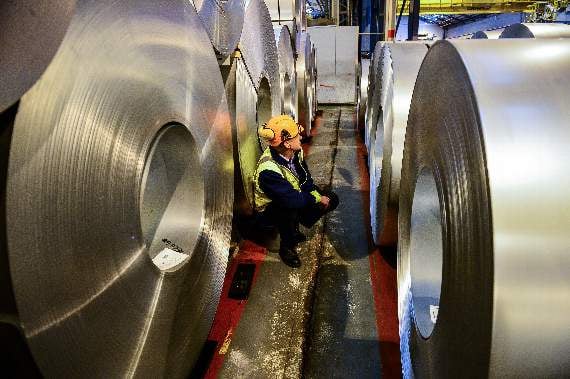
On the other side of the Atlantic, we are skirting with a possible trade war as the US unilaterally introduces tariffs on steel and aluminium.
A few years ago, these events could have sparked a major sell-off, but thus far there has been little impact on markets, with the VIX measure of volatility dropping to 14 from 35 in early February.
There are some positive spins one can put on these events. The fringe parties in Italy were expected do well in this election. Also, none of the Populist parties gained a clear majority (which was possible, and would definitely have rattled markets).
At the same time Five Star, which has historically had the same hostility towards the EU as Marine le Pen’s Front Nationale, has rolled back on its prior call for a referendum on Italian EU membership.
Against the background of a strengthening Europe, the Italian economy has been improving in the past year, growing at 1.5% - well below the average rate for the rest of the bloc, but an improvement on zero. The budget deficit is down to about 1.5%, also an improvement on recent years.
This is a far cry from 2011 when there was talk of Italy being stuck in a ‘debt trap’, with the real interest rate higher than the real rate of growth, a 10 year government bond yield at 6%, and the debt to GDP ratio headed inexorably higher.
If such a political outcome had struck then, there would doubtless have been mayhem.
As already noted, the other potentially destabilising event has been President Trump’s 25% tariffs on steel imports to the US.
This was a pre-election promise, and the Republicans have been looking since April to use ‘Section 32’ national security orders (high tariffs are contrary to WTO rules, unless ‘national security’ interests can be invoked).
Could this lead to a trade war? Could the EU, China and other powers introduce retaliatory tariffs on American goods, perhaps followed by the US imposing further tariffs on traded goods like cars manufactured in the EU?
Markets are currently figuring it won’t happen, given the strong likelihood it would result in a global recession. Sense will prevail…??
US imports of steel are estimated at 36m tonnes, against domestic production of 82m tonnes. Globalisation has seen US steel production drop to just 5% of the global total of 1,700 tonnes. The main producer, with about half of global production, is China.
About half of the 36m tonnes of US imports will likely end up being redirected to other world markets – or 18m tonnes, which is about 4% of world output. So potentially nothing too serious.
Whatsmore, the two main exporters of steel to the US, Mexico and Canada, are not currently subject to the tariffs, and may be excluded permanently from the measures in due course.
China itself currently exports very little to the US, given previous anti-dumping measures taken by the US, so ironically won’t be much affected either.
The wobbles we saw in global stocks markets in late January/early February were caused by inflation worries. The March Non Farm Payroll figures on Friday were strong, but showed annual wage gains dropping to 2.6% from 2.9% the previous month.
Calm prevails – for now.
The opinions stated are those of the author and should not be taken as investment advice. Any recommendations may not be suitable for all, so please contact your financial adviser for further guidance. The value of investments can go down as well as up.
Comments
This article has no comments yet. Be the first to leave a comment.