
Members of the Manx Whale and Dolphin Watch charity are taking on a challenge to go without using single-use plastics this month.
The charity is aiming to raise awareness of the problems of plastic pollution and its three core members Tom Felce, Jen Adams and Bryony Manley will be taking part.
Single-use plastics are items which are intended for just one use and to then be discarded, such as carrier bags, water/soft drink bottles, drinking straws, takeaway coffee cups (lids particularly), and food wrapping and packaging.
In 2016 Beach Buddies collected 2.4 million items (250 tonnes), most of which were plastic and mostly plastic bottles.



-(2).jpeg?width=209&height=140&crop=209:145,smart&quality=75)
Manx Whale and Dolphin Watch researcher, Bryony Manley said: ’We are attempting to give up as much of this single-use plastic as is possible, which in some cases will be very difficult, such as buying from the supermarket. Items like rice and pasta are almost always packaged in plastic for example.
’Many simple changes can be made, it just takes getting in to the habit of it.’
Bryony said that the team will be using tote bags, or long life bags for shopping instead of carrier bags, will have reusable water bottles instead of buying plastic water bottles, use reusable ’e-coffee’ cups and ’sporks’ made from bamboo (from Shakti Man in Ramsey) instead of using takeaway cups with plastic lids or takeaway plastic cutlery, and will refuse straws in drinks.
’Plastic takes a huge amount of time to break down in the environment, up to hundreds of years in some cases,’ said Bryony.
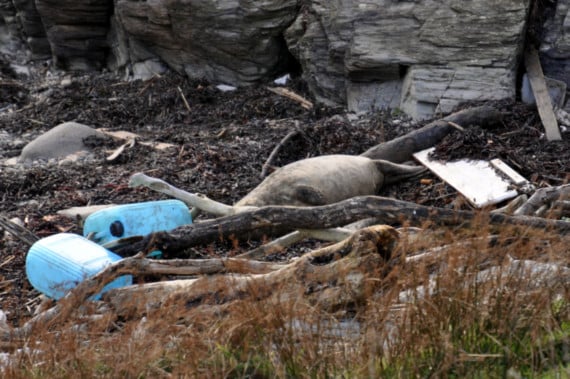
’In that time vast quantities of our plastic items end up in the ocean and impact on the marine life there, which as a marine research charity is obviously an angle we are particularly concerned about. Plastic will often break apart into tiny pieces, or ’micro-plastics’ which marine life can ingest. ’Even the fish we eat will ingest this plastic so we are actually eating our own rubbish. When dead whales, dolphins , porpoises, seals, turtles, and seabirds are examined they are all found to have plastic items in their stomach on a regular basis, in some cases having actually starved to death due to the lack of room for real food in their stomachs. Animals can also become entangled in plastic such as packaging straps or discarded fishing line which can cause serious injury or even death.’
The charity will be showing the film ’A Plastic Ocean’, which highlights this problem at Peel Centenary Centre on June 17.
For more information visit www.mwdw.net
Comments
This article has no comments yet. Be the first to leave a comment.