

A report into the Diocese of Sodor and Man has warned it is five years away from running out of money.
A working party chaired by Archdeacon Andrew Brown has reviewed how the church can engage with the ’mission of God’.
The financial consequences of the three-month Covid-19 lockdown, the report says has been ’catastrophic for the diocese’ and taken it to ’the brink of financial ruin’.
In the section of the report which outlined the Diocese’s financial position, is revealed that in 2019 a ’record number’ of parishes informed the church they would not be able to afford their shared ministry fund assessment in full.

.jpeg?width=209&height=140&crop=209:145,smart&quality=75)

It added: ’At this present rate of dwindling returns we will run out of money in five years maximum - sooner in reality as Parochial Church Councils will continue to run out of money and continue to give less of their shared ministry fund assessment.’
The report states that the Diocese’s current staffing levels ’remain relatively high per capita of population for the Church of England’, although this is reducing.
And the report says that in the island, about 75% of church income is from parishes’ giving. In England this is less than 50%.
’Our parishes have responded well to these demands but many are beginning to lose the struggle, and too many buildings is proving an unsustainable drain on resources’ it says.
The Diocese is, in terms of fundraising, a ’mid-table side’, however, it doesn’t have the resources or alternative funding sources available to neighbouring dioceses.
The report added: ’However, we believe that money follows vision, and that vision moves at the speed of trust.
’So long as people think that their money is being wasted on white elephant buildings or vanity projects, or so long as they will only give to their own building, then we will continue to head towards a financial black hole.’
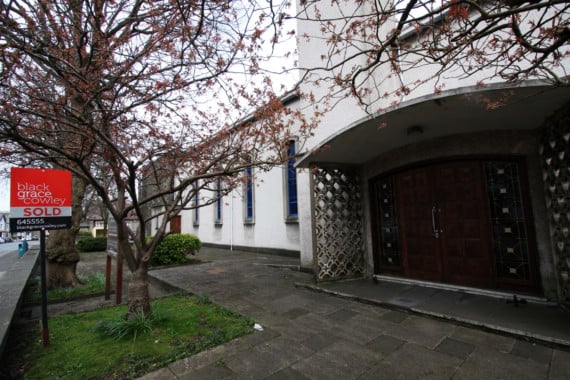
The Diocese currently owns 41 churches, as well as church halls, it is widely accepted in the report that not only ’we can’t afford all the church buildings’, but it also doesn’t need all of those buildings.
As a result, the Diocese is working to identify ’those buildings who have greater value in the marketplace than they do for the mission of God and the ministry of his church’.
It is anticipated that by selling off unused buildings, the church would be able to reinvest the money into its remaining property by way of installing green energy while putting more resources into the church’s mission.
The report has laid down several principles and recommendations for the church to be better utilised in the 21st century.
These have included reiterating a need for boots on the ground rather than continuing to own all of its buildings, working with other denominations (particularly Methodism) to share buildings and resources, and urging the ’Bishop and his senior staff to seek Government funding of heritage buildings, especially churches’.
Comments
This article has no comments yet. Be the first to leave a comment.