

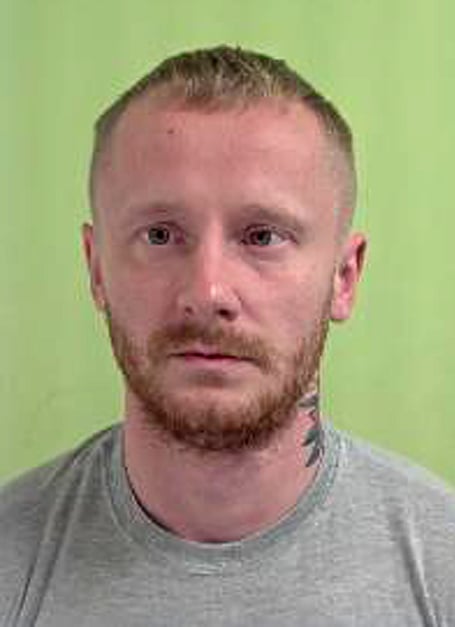
An appeal judge believes the Isle of Man should introduce a ‘dangerousness’ provision to extend licence periods for violent and sexual offenders.
Judge of Appeal Anthony Cross expressed the view during a hearing earlier this month after convicted rapist Jon-Paul Fayle challenged his prison sentence of almost 19 years.
Judge Cross and Deemster Michael Hopmeier dismissed the appeal and also considered imposing an extended licence, which would have increased the period Fayle remained under supervision following his release, but ultimately decided against it.
However, Judge Cross said an extended licence would likely have been considered by Deemster Graeme Cook had Manx legislation mirrored laws in England and Wales.




He said: ‘We are not surprised the probation officer came to the view he [Fayle] posed a high risk of serious harm to the public.
‘We are sure that had the island had an equivalent to the dangerousness provision in England and Wales, the sentencing judge would have given consideration to an extended licence.
‘This is the second case in our court recently and the absence of such a provision has been noticeable.’
The provision in England and Wales considers the level of danger posed by an offender.
Prisoners are often released after serving half or two-thirds of their sentence and remain on licence for the remainder.
An extended licence means offenders remain under strict supervision after release beyond the statutory licence period.
In the Isle of Man, legislation allows for extended licence periods for violent and sexual offenders, although the emphasis is on rehabilitation rather than public protection.
A spokesperson for the Department of Home Affairs said: ‘At present there are differences in the Isle of Man and UK legislation and there is no statutory “dangerousness” assessment here as in the UK at present.
‘That said, risk assessment is a core consideration in the Isle of Man criminal justice process. There is provision for extended licence periods here under current Isle of Man legislation for sexual or violent crimes.
‘Extended licence periods here are issued by the courts at the discretion of the judiciary up to a maximum of 10 years for sexual and five years for violent offences.’
The spokesperson also said risk assessment remained a key consideration for the Parole Committee and Probation Service.
They added: ‘When long term prisoners are released from the custodial element of their sentence, they will be subject to licence conditions for the rest of their sentence. This means that for any serious breach of those conditions the Department has the power to return them to custody.
‘For convicted sexual or violent offenders, this will often include an “Extended Supervision Licence Period” issued by the courts where they are supervised for up to 10 years past their custodial sentence, depending on the original offence.’
Serious violent and sexual offenders are also subject to Public Protection Arrangements involving police, probation, health, mental health and social services, as well as forensic psychologists.
Fayle, 32, of Douglas, subjected a woman to what the court described as a horrific and sustained attack during which she believed she would die. He was jailed for 18 years and nine months in January for rape, attempted rape, three indecent assaults, and coercive and controlling behaviour.