
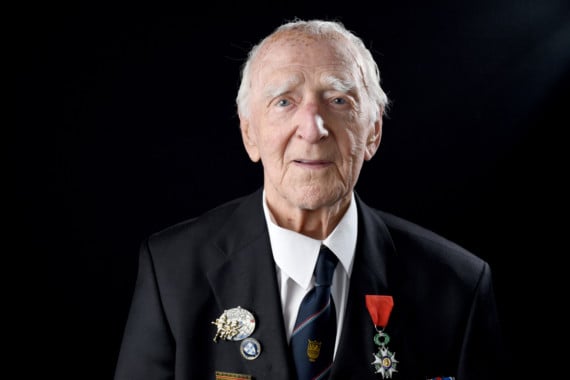
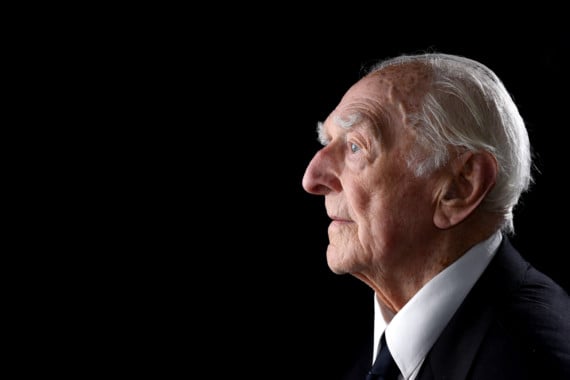
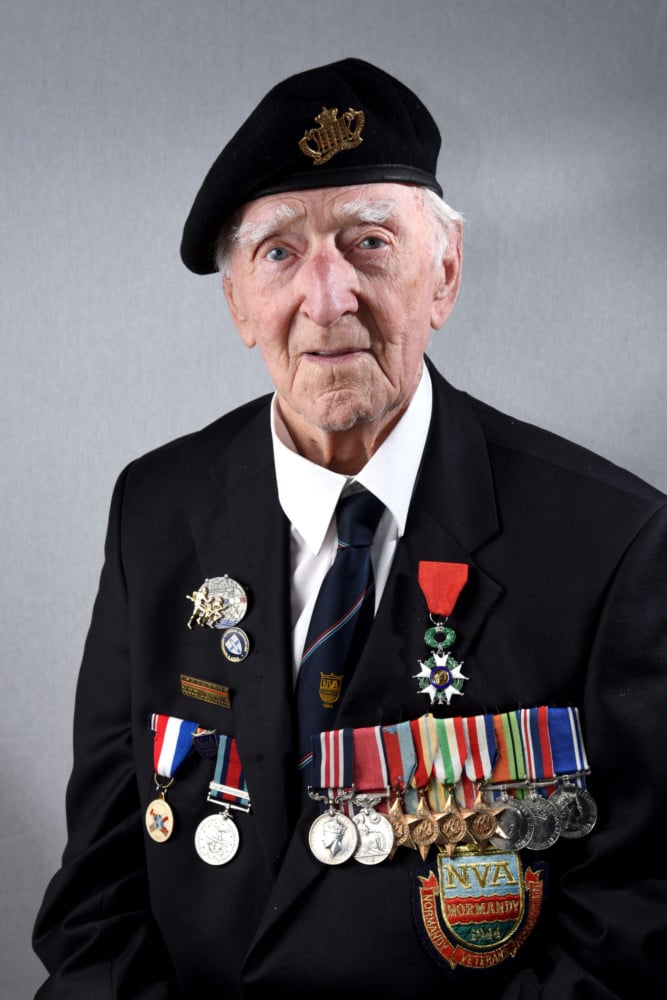
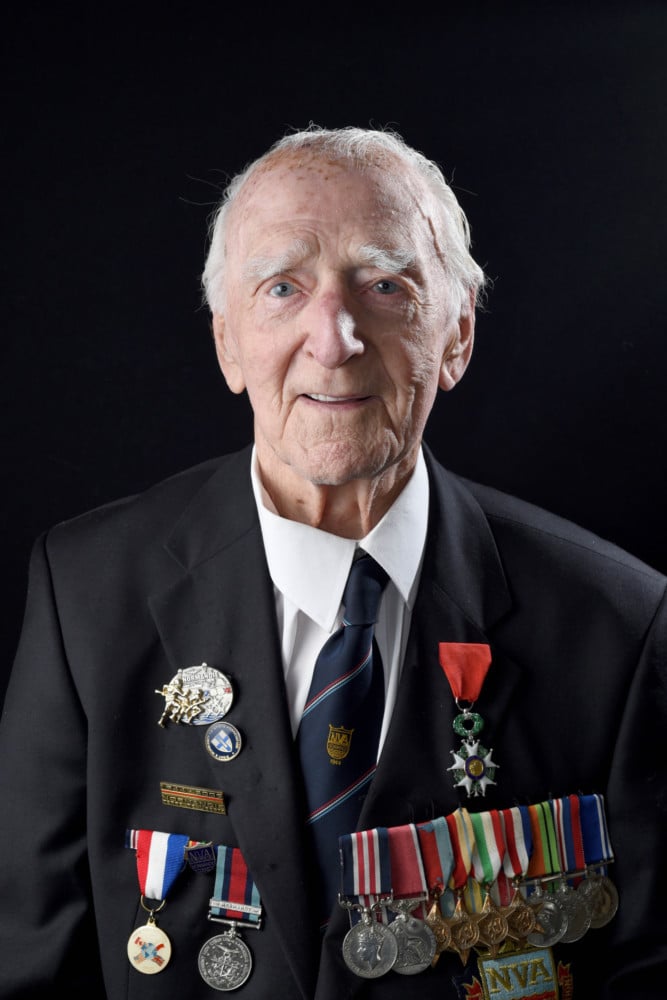
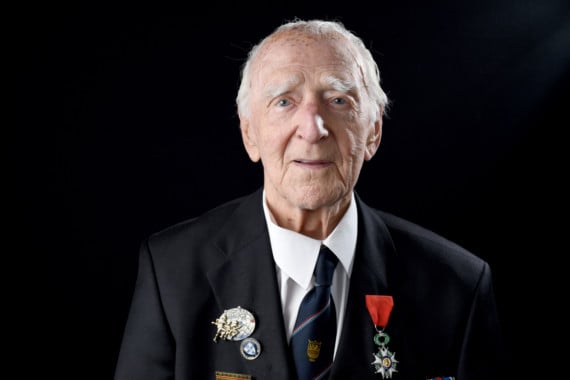
The Isle of Man will join commemorations held across the world for the 75th anniversary of the D-Day landings in Normandy. The Manx service, which takes place on Thursday (June 6) has been designed by survivor Hector Duff, who shared his story with reporter Jess Ward.
Seventy-five years ago Hector was one of thousands who jumped off a boat and ploughed into enemy fire on the sandy beaches of Normandy, France.
It was the largest combined land, air and naval operation in history.
An estimate of the number of Allied troops who were killed on that particular day in 1944 is 4,400, with more than 425,000 deaths in the overall Battle of Normandy.


.jpg?width=209&height=140&crop=209:145,smart&quality=75)

For these men there was no stopping, no time to let their fear overwhelm them - they had a job to do. To push back the Germans and try to survive.
’"The field of fire" we called it,’ Hector said.
’It’s written somewhere that the mightiest pen could not write and describe it. When you speak about it some people say "Is that true what you’re saying?".’
Now in his 100th year of life, Hector is lucky enough to be look back on the day while he prepares to pay tribute to them this Thursday.
The 50-mile long beach had been heavily-fortified when Hector landed alongside more than 160,000 Allied troops. Although he arrived with the 69th infantry brigade, his platoon was the 7th armoured division.
When asked what he focused on when he faced one of the toughest battles on record, he replied: ’You’re concentrating on yourself. They say you’re fighting for King and country, but you fight for yourself and the friends right next to you.
’You see a tank getting knocked out in front of you and you know that the gun that’s just done that will do the same to you if you’re not careful. The Germans had been there for four years before. They knew every pebble on the beach.
’The men [Allied troop bodies] were being looked after by conscientious objectors - stretcher bearers - who were putting them in death bags.
’When a boat became available they would put them on and from there they were taken back home to England to be buried.’
He summed D-Day up as ’unforgettable’.
’You have flashbacks. You think about it all the time,’ he said.
Born in the peaceful village of Sulby, Hector entered the war effort at the age of 20 where he trained at Carlisle for the infantry, but decided to join the Tank Corps in Africa.
After nine weeks of training he fought in Egypt, Libya and Tunisia and was later commissioned to fight in Salerno, Italy. D-day followed that.
While at war, his wife, Gladys, gave birth to a little girl, Marjorie. He didn’t meet his first child until she was aged three, but always kept a small photo in his pocket wherever he went during the effort.
Today, Hector lives in a bungalow in Onchan - quite a different life from the horrors that he once faced.
He has two surviving sons - Colin and Tony.
Tony tells me that his father didn’t start talking about his involvement in the war to his children until they were adults.
’I didn’t hear stories until maybe ten years ago. He kept it all quiet, he probably didn’t want to scare me,’ he said.
’When he did begin to tell me I was amazed and proud. My dad was amongst that lot! Wow!’
Tony often takes on the role of chauffeur for his dad who has attended hundreds of services in the island, UK, Belgium and France.
’It’s a lump in the throat job most times,’ Tony said.
’It’s heart-warming when you get to places and people are shaking his hands thanking him for saving us. Little kids asking for him to sign things.
’You thank your lucky stars that he got through or we’d not be here otherwise.’
The Second World War hero visits schools across the island frequently to share his stories. He says the children’s knowledge and questions always impress him.
’Teachers have passed it all onto them. The children have taken it up wonderfully well at primary schools and secondary schools,’ he said.
He passionately believes the servicemen who died should be remembered, saying: ’Don’t you think we have an obligation to say our thanks to them?’
Hector added that the survivors attend ceremonies not because they want to show off their medals, but because they get ’satisfaction’ in thanking the ones who tragically didn’t make it.
One of his hopes, he said, is for a D-Day memorial garden to be set up in the Isle of Man within his lifetime.
The former policeman and driving instructor, who is chairman of the Normandy Veterans’ Association, will be saying a few words at the 75th anniversary service in Douglas.
Douglas Council is marking the event on the North Quay, opposite the Little Fish Café, at 10.15am.
The service will be led by Monsignor John Devine, chaplain to the Mayor of Douglas, Jon Joughin, and will include the Last Post and two minutes’ silence followed by Reveille.
The Act of Remembrance will be recognised with a wreath being laid by the Mayor at the foot of the lectern and the service will conclude with prayers and a blessing.
A procession will then take place to the garden in Ridgeway Street adjacent to Douglas town hall to place their wreaths on the Normandy Veterans’ Memorial.
Road closures will be in place for a short time only to accommodate the service.
These will be at: the North Quay from Ridgeway Street to its junction with Queen Street from 10 until 11am and Ridgeway Street from James Street to North Quay from 10 to 11am.
For further details, contact Douglas town hall on Douglas 696300.
Comments
This article has no comments yet. Be the first to leave a comment.