
What do you do when you've survived potentially fatal blood clots in your leg and lung and you're coming to terms with the life-changing results of these? Well, you go to Morocco to trek across the Sahara desert. Obviously. Julie Blackburn talks to Dawne Archer, whose book describes her adventure.
Dawne, who lives in Castletown, knows she is lucky to be alive. More than thirty years ago she started to experience some of the symptoms of a pulmonary embolism but had no idea what was wrong with her and her doctor didn’t pick it up either, as she explains: ’The classic symptoms are redness, swelling and pain in the legs and if you have those you should certainly go to your doctor. But I didn’t have any of that: 80% of blood clots in the legs don’t present any symptoms; it is only when the embolism travels to the lungs that pain comes on.
’Then it’s extremely painful and 25% of people fall down dead immediately at that stage. I was misdiagnosed initially and for two weeks I lay at home in considerable pain. Finally she was taken into hospital where she was put on an anti-coagulant drip to disperse her clot.
’It’s still very tricky to spot an embolism and many people are still misdiagnosed and people are losing their lives because of it.’
.png?width=209&height=140&crop=209:145,smart&quality=75)
When her father died from an embolism in 2001 Dawne discovered that she had inherited Factor V Leiden, not just from him but from both her mother too. She said: ’I understand about 20% of the population carry the same gene. It doesn’t mean they are going to have an embolism.
’I’m a bit unlucky because both my parents had it but my mother is 84 and has never had a clot.’ Living with this has changed her life and there are certain situations in which she has to take extra care. She says: ’When I fly my condition makes me more than 88 times more susceptible than other people.
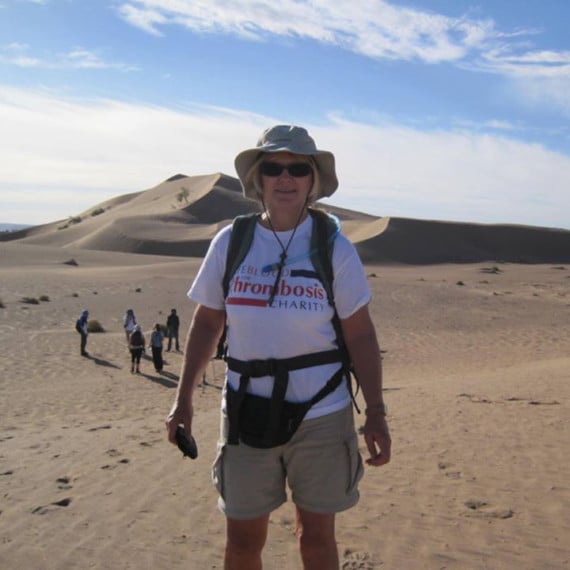
’Normally I don’t take any medication but if I’m going on a flight that’s longer than four hours I inject myself with an anti-coagulant.’ Having dealt with all this you might expect that Dawne would not be about to go looking for any more adventure but a chance meeting with an old schoolfriend, Sarah, after 35 years changed everything. Sarah and Dawne dared each other to take on a challenge which took them on a trek across the Sahara Desert.
This might have seemed an incredibly dangerous thing for someone with Dawne’s condition to do but there was one factor in her favour: exercise is the best way to prevent blood clots as she explains:
’For me, keeping active and keeping moving is key but that applies to everyone: if we sit for more than one and half hours we lose 50% of the blood flow in our legs.
’It’s now become a big problem for kids sitting for a long time on their computers. They’re getting something they call "ethrombosis".’
As it turned out it wasn’t a blood clot that caused her problems on the trip but the fact that she had put her back out just before she left. She says: ’I was very active when I was on the trek so that was fine - my back was more of a problem. Towards the end of the trip I couldn’t walk so it was more of an adventure than I’d expected it to be!
’When we did come to the end it was absolutely overwhelming. We all decided to hold hands and walk into camp together. It was very emotional because we were all there for a reason. Everybody was in tears. I was jubilant but at the same time it was poignant because I was remembering my father.’
Dawne adds that it was partly because of him that she had decided to to the trek but there was also another reason: ’I wanted to show other embolism survivors that you may have had a blood clot but you can still go and do lots of things.
’Everything has changed and this is the new normal but there’s still a life out there. Many people are changed forever by it and some even suffer post-traumatic stress disorder afterwards.’
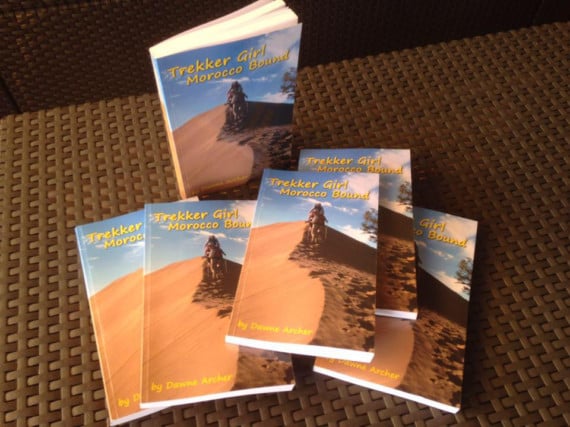
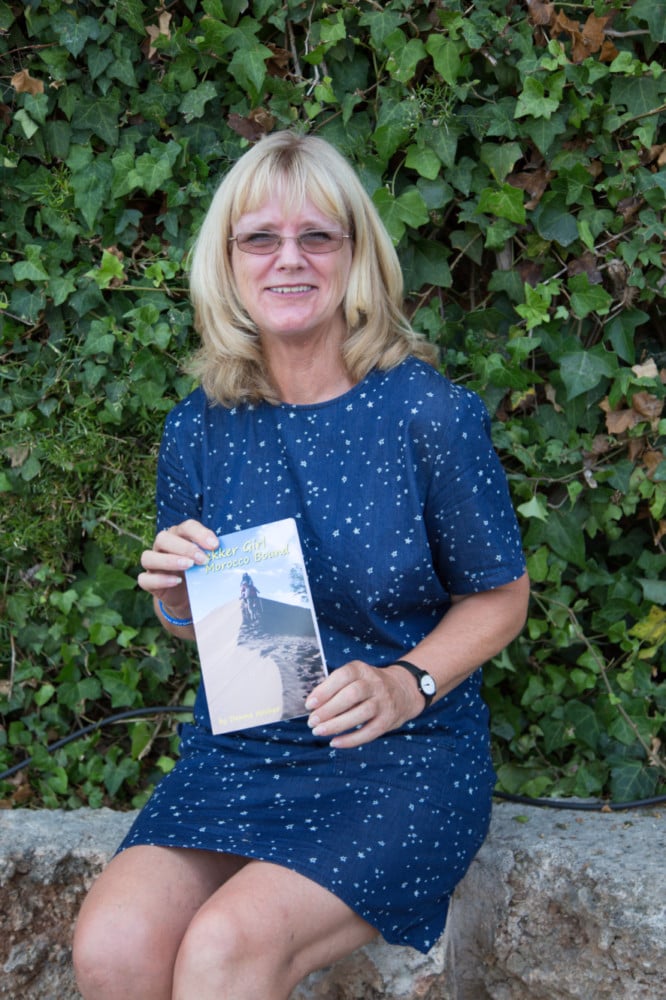
Dawne has written a book about her experiences and the profits are going to Thrombosis UK who are trying to tackle the problems of lack of awareness and continued misdiagnosis of embolisms.
’This is why the money that Thrombosis UK raises goes primarily to training GPs and other healthcare workers to spot the signs of a clot.’
But the book is certainly not all doom and gloom. Dawne has road-tested the book on her friends who she says were moved to laughter as well as to tears by it. She says: ’There’s some sad parts but there’s also some laughs - it’s a good read.’
Trekker Girl Morocco Bound: Life after Blood Clots or How I Learned to Live and Love Life as a Thrombosis Survivor by Dawne Archer is available from Amazon.co.uk: Kindle Store.
Comments
This article has no comments yet. Be the first to leave a comment.