

A Deemster reached the wrong legal conclusion when he found in favour of claimants in a failed luxury homes case, the appeal court has ruled.
The overturning of the high-profile high court judgment exonerates the three Isle of Man-based directors who had been accused of fraudulent misrepresentation.
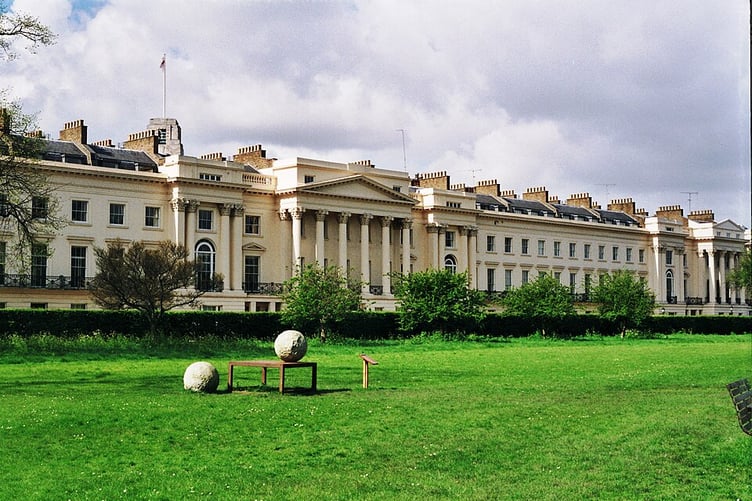
The case involves the £200m-plus redevelopment of Grade 1-listed Cornwall Terrace on the edge of London’s Regent's Park.
Developers the Isle of Man-based Oakmayne Group were behind a scheme to convert the building to prime residential properties to sell to high-net-worth individuals.
But instead of making a profit, the project was hit by increased building costs and construction delays, resulting in a loss of some £43m.
Claimants Matthew Wickers, Dennis Lavin and John Tinsley had been persuaded to invest sums totalling £1.2m, £1.25m and £1m respectively.
Each of them lost their money when the project failed.
Following a six-week trial Deemster Alan Gough handed down judgment in June last year in which he concluded three claimants were duped into investing.
Deemster Gough found that the investment opportunity brochure was a ‘fraudulent document’ which mis-stated facts and deliberately omitted or disguised matters, not least a £3.7m ‘success fee’.
Defendants David Humbles, Michael Riddell and Guy Wiltcher, all directors of Oakmayne Properties (Regeneration) Ltd, now in liquidation, were subsequently ordered to repay the claimants’ respective investments plus £4.35m in other costs.
.jpeg?width=209&height=140&crop=209:145,smart&quality=75)


But now the appeal court has ordered the judgment be set aside after ruling Deemster Gough had erred in law.
It concluded: ‘This is a case where, in our judgment, there is a demonstrable failure by the Deemster to consider relevant evidence which was sufficiently serious to undermine his finding.’
A focus of the appeal was the wording of a directors’ statement contained in the investment brochure.
This said that the directors did not accept responsibility for the information contained in the document but to the best of their knowledge and belief, the information was in accordance with the facts.
The appeal court judges concluded that Deemster’s understanding of the statement was an error of law as the wording make it clear the directors had no responsibility for the information in the brochure.
They said investors were intended to rely upon their own judgement and independent advice and not to rely upon the contents of the brochure.
And they said Deemster Gough had not asked the right question - i.e. whether the investors would have invested anyway.
‘There was a strong case that had the directors’ representation in the brochure not been made, the investors would still have invested,’ they said
‘The brochure invited investment in a property venture in central London where a profit over 60% was expected in 26 months. The investors took little time to make their decision and did not seek independent financial advice.’
Knowledge of the success fee would not render the statements in the brochure untrue or affect its implicit meaning, the appeal court found.
The directors had denied that they knew that matters had been omitted from the brochure.
And the appeal court judges expressed surprised that Deemster Gough made no reference in his judgment to the directors’ denials when allegations of dishonesty were put to them.
They said the Deemster ought, as a matter of procedural fairness, to have explained whether he accepted this evidence or not, and if not, why not.
And they said Deemster Gough had also made no mention of the questions of character, propensity and motive when considering the question of honesty.