

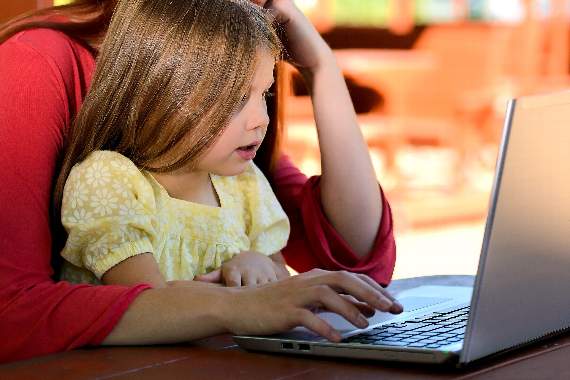
Concerns have been raised by parents about potential changes to the law on home schooling in the island.
A new draft of the Education Bill has passed consultation level, with it proposing stronger measures on home learning.
Currently there are no powers to find out whether a home-educated child has taken an exam, but the proposed bill would allow government to have the right to know more.
Sara Hogg, from Peel, has home schooled her five children and continues to do so for three of them.

.jpeg?width=209&height=140&crop=209:145,smart&quality=75)


She believes it would be unfair for the Department of Education, Sports and Culture to measure home-taught children’s progress based on its own system.
‘It’s bizarre that the government wants to monitor us. What criteria are they using to make an assessment? They’re using criteria used in school that’s measurable, but for my children it wasn’t measurable,’ she said.
‘I saw my child disappear when I put him in nursery. He completely retreated and I didn’t see the little boy I knew at home.’
Seeing their eldest’s behaviour change in a private nursery, the parents tried half days in a school nursery. ‘But he didn’t thrive,’ she said. ‘It wasn’t healthy so I made the decision to bring him home.’
Their eldest was home-schooled until he reached A-levels where he went to Queen Elizabeth II High School in Peel. He is now studying space, science and robotics at Aberystwyth University.
Some of her children, she said, have ‘complex learning differences’ and she is certain that the education system would not have met their individual needs and therefore would have caused them harm.
‘For me the primary place I started from was that I was responsible for my children’s education. It was up to me to make sure that their needs were met as best we could as parents.
‘Most people I know want to home educate to see their children flourish the best they can.’
Her younger children are studying their A-level and GCSE subjects through an online school. One is taking up carpentry at the University College Isle of Man.
‘The fact that home schooling is alternative doesn’t mean it should be seen as unnatural.
‘You do have the extreme religious people who feel their children may be contaminated by other people and on the other side you have the hippy families that think “my children will learn by osmosis”.
‘My experience of five kids is that extremes don’t do the job. It’s incredibly hard work. You have to carry the weight of responsibility.’
Being part of the home schooling community, she said that the thought of the government being involved makes parents fearful of what might happen with their children.
However, she thinks a mechanism should be in place to help monitor home-educated children.
‘The only way it could work is if we had somebody as a mentor who is extremely understanding of home education and wasn’t in government. In my 24 years of home education experience I’ve seen some children who were not having their needs met and there was danger to them in my opinion.
She added: ‘There have been times that I needed support, which I’ve paid for, to understand how children learn. I’m financially able.
‘Psychologists are not accessible for home learning and I think that’s wrong. We need some kind of drop in centre where we can ask for advice. I would love to have a drop in centre.’
Mrs Hogg has felt ‘thoroughly welcomed’ into the island community having moved from the UK. Iin particular she thanks the Western Swimming Pool for being ‘a real centre of gathering for home learners’.
New parents Graeme and Leah Brooks, from Laxey, have chosen to undertake ‘child-led’ home learning and both oppose the proposed law changes to home education in the island.
‘How is the Department of Education going to define what a “good education” is when home schooling is a different approach? How can you measure against their benchmark?’ Mr Brooks said.
‘The fact that the assessment is undefined is a big one for me. It’s a really sweeping remit. There are plenty of other ways that parents can be checked [in cases of neglect] than by an assessment of their child’s education, such as health checks.’
The couple explained that child-led learning would involve lessons while out and about and would give them that opportunity of bonding with their kids while learning with them.
Mrs Brooks said: ‘It’s letting the child learn what they want to learn how they want to learn at the pace they want to learn it at. Our children might never sit formal exams, but that’s their decision.’
Their own experience of state school education prompted them to look at home learning as they were either not challenged enough or did not have enough support as an individual.
‘If our son is really clever like his dad, then we want him to be pushed. If he’s dead average then we still want him to be pushed and want someone to put in those hours to help him,’ said Mrs Brooks.
Comments
This article has no comments yet. Be the first to leave a comment.