

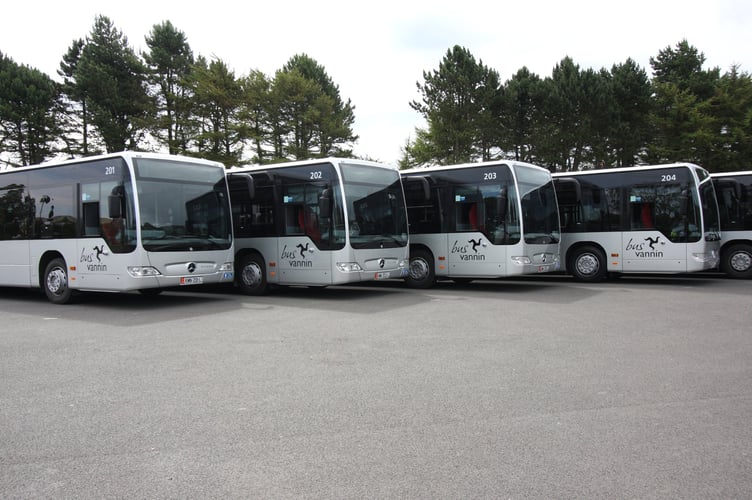
The infrastructure minister says his department couldn’t shield bus users from operational costs anymore.
Bus fares increased mere weeks after the £2 fare cap trial ended.
The single use 60p ticket rose to £1.10 per journey and there have been increases of £4 and £5 for the five-day and seven-day saver tickets.
However, the one-day saver ticket remains unchanged.
.png?width=209&height=140&crop=209:145,smart&quality=75)
Chris Thomas was asked in Tuesday’s Tynwald sitting what the core factors were which influenced the rise.
He said: ‘The cost of operational overhead such as fuel and maintenance have been rising at an exceptional rate over the last 18 months.’
Mr Thomas explained that the Department of Infrastructure had tried to ‘shield’ its customers from this.
‘Rising costs have to be reflected in prices,’ the minister added. ‘It has been mooted for some time that the 60p fare had had its day.’
The minister says the abolition of the 60p fare isn’t ‘a revenue measure at all’.
He said: ‘There won’t be a great deal of extra revenue from the 60p fare not being available.’
Mr Thomas was also questioned on the long-term strategy for increasing the use of public transport and how this aligns with the recent bus fare increase.
He said the transport strategy is ‘scheduled for Tynwald in 2024’.
Key aspects of this include possible scenarios for decarbonising transport, providing infrastructure for potentially 100,000 people, and making it socially inclusive.
He added that one in 100 single journey tickets were paying 60p three stop fare before the rise.
‘Some of those routes are pretty short,’ he said. ‘I hope people can understand that 60p was a very cheap fare. It’s not been increased, it’s been abolished.’
Comments
This article has no comments yet. Be the first to leave a comment.