
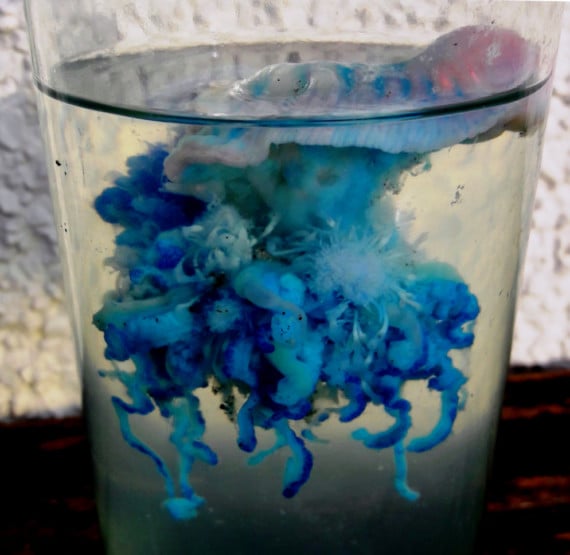
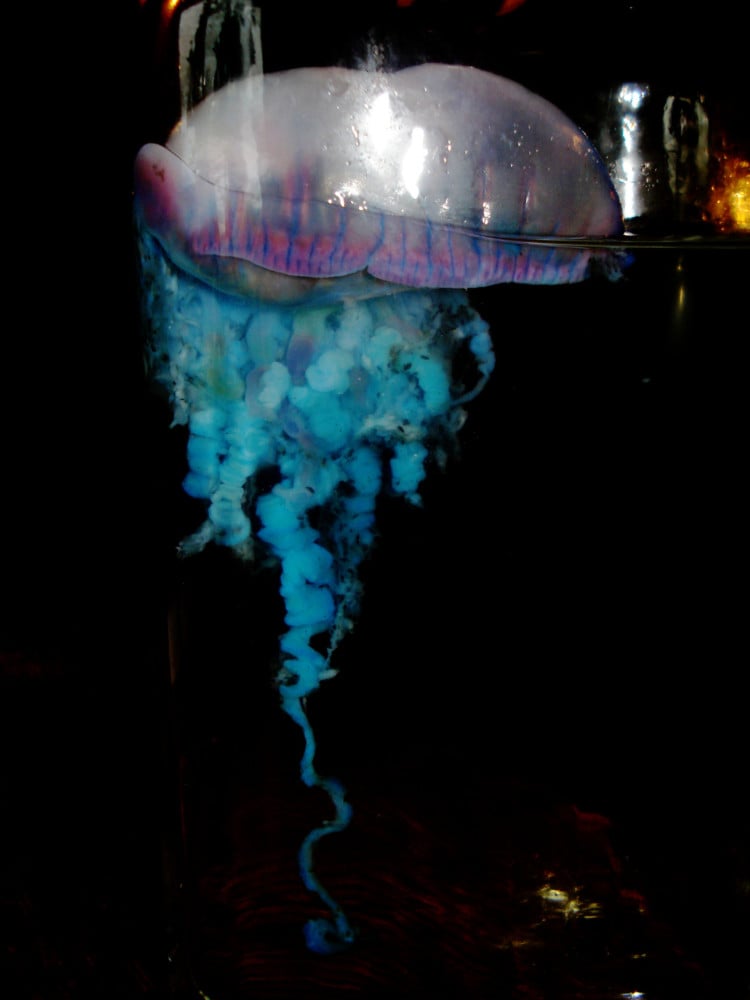
A warning has been issued to everyone using the island’s beaches after beachcomber John Collister discovered a Portuguese man of war at Langness.
The Department of Environment, Food and Agriculture has urged anyone that sees one of these creatures not to touch it.
John took the creature that he found washed up on the beach to DEFA’s headquarters at St John’s, where the specimen has been preserved and where there are now plans to take it to public engagements.
A DEFA spokesman explained: ’DEFA has received reports of the creatures being washed up in Douglas, too.



.jpeg?width=209&height=140&crop=209:145,smart&quality=75)
’Strandings are uncommon, but they have been recorded several times before, particularly in 2009 and in 1954, both after big storms.
’They are carried here from the tropics by strong southerly winds.’
The spokesman continued: ’It is important to note they should not be handled as their stinging cells can remain active after death.
’Their feeding tentacles can be more than 30m long, and are equipped with stinging and sticky food-capture cells.
’Stings can cause severe pain, although rarely are they fatal.’
The Portuguese Man of War is not a jellyfish, although related to true jellyfish and corals.
It is made up of a colony of many individual animals, each with a specific role.
It has a gas bag called a pneumatophore, which is filled with a mixture of gases, and is used for flotation and as a sail. It can be up to 30cm long.
Portuguese Man of War are eaten by other occasional visitors to the Isle of Man such as Ocean sunfish, the world’s heaviest bony fish, and the leatherback turtle, the world’s largest turtle.
Comments
This article has no comments yet. Be the first to leave a comment.