

A review of remote learning during lockdown reveals a big disparity in the experience of staff and pupils.
Surveys carried out as part of a review found 86.7% of staff reported feeling satisfied or very satisfied with the quality of remote learning provided, compared to just 44.1% of parents, carers and pupils.
Some 92% of staff felt satisfied with the volume of learning provided, compared to less than half of parents/carers (48%) feeling the same.
All schools shut on March 23, with the exception of 14 educational hubs kept open for the most vulnerable and children of key workers.

.jpeg?width=209&height=140&crop=209:145,smart&quality=75)

The majority of schools remained closed for three months with no face-to-face lessons carried out.
Quite suddenly, much of the responsibility for supporting school learning was transferred from the classroom to the home.
There was criticism for parents about the lack of live remote teaching.
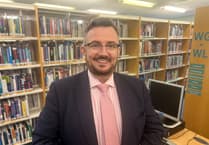
And this has been borne out in a report commissioned by Education Minister Dr Alex Allinson.
It makes 10 recommendations and establishes a consistent set of standards for remote learning should schools have to close again with if the virus returns.
The report says that the department should be clear on a single platform for the delivery of live lessons, check-ins and assemblies - and recommends this should be Microsoft Teams.
Some schools used this platform well during lockdown but others reported technical or training difficulties.
And some insisted on using another platform not endorsed by the department.
The use of ’Zoom’ to conduct live interaction encountered several security breaches early on in the crisis, notes the report.
Some 40% of island parents and pupils felt most or all of the learning set was enjoyable, while 25% said very little or none of it was.
The report says it is clear enjoyment of learning increased where schools either began with, or moved to direct interaction with pupils using a platform such as Itslearning or Google classroom.
In response to another issue highlighted by the report, the government has launched a laptop scheme to help ’digitally disadvantaged’ pupils.
Some 16% of families experienced either a lack of, or no devices, available at home with which to access remote learning, a survey carried out for the report found.
A further 17% reported issues with network/broadband access.
’Not having the appropriate learning resources, technology or space with which to learn at home has certainly affected many pupils and perhaps made the existing disadvantage gap more pronounced,’ notes the report.
Secondary school pupils in exam years will be able to borrow laptops and get help accessing the internet as part of the new scheme launched last week.
E-Pass (the E-Learning Pupil Access Subscription Service) is aimed at those studying for their GCSE or A-level exams, and are eligible for free school meals.
They will be able to borrow a new laptop and a router to connect it to the internet in a scheme funded using a charitable donation from the Scheinberg family.
Dr Allinson said: ’I am really pleased that the E-Pass scheme will help digitally disadvantaged pupils.
’We are very grateful to the Scheinberg family, whose donation has enabled us to pilot the lending of brand new devices, which may pave the way for further provision in the future.’
Comments
This article has no comments yet. Be the first to leave a comment.