
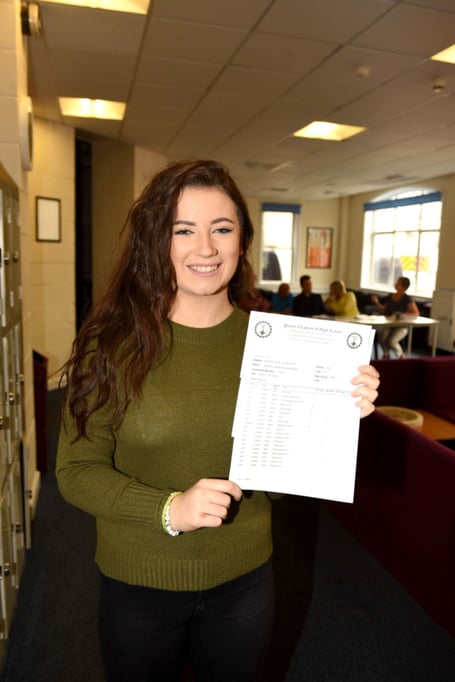
GCSE results were strong at the island’s five secondary schools the Department of Education and Children (DEC) has said.
More than 800 Year 11 pupils sat GCSE and equivalent examinations in May and June with entries in approximately 50 separate examination titles.
Nearly every student was entered for maths and English and also had at least one entry in science.
A considerable majority of pupils attained higher passes in key subjects, and a good percentage of pupils attaining five A*-C grades, including English and maths.



The total number of full GCSE (or equivalent) entries was approximately 6,500. Around one third of these were International GCSEs.
Provisional analysis shows that 56.3 per cent of island pupils gained five grades A*-C including English and maths.
This is down on last year, but higher than most previous years.
Approximately 18 per cent of the entries produced A or A* grades. This is down slightly on last year’s figure, but in line with previous years.
68.8 per cent of all island GCSE entries were graded at A*-C. This is down on the last two years, and in line with other years.
98.7 per cent of full course passes were graded A*-G.
The average number of subjects entered by pupils was 8.7 GCSEs or equivalent, which is down from 9.2 in 2016 and reflects a reduction generally in the number of entries per person at GCSE level.
Joel Smith, DEC school improvement adviser, said: ’This is a strong set of results for our schools, set against the backdrop of curriculum reform nationally over the past two years. Outcomes today reflect the huge effort our young people have put in when approaching this significant juncture in their lives.
’In the key subjects of English and maths, pupils have performed exceptionally well and given themselves a wide range of choices when approaching their continuing education and future employment.’
The DEC statement said that there are reports from the schools of pupils attaining a mixture of all A* and A grades.
Graham Cregeen MHK, Minister for Education and Children, said: ’The island’s pupils and our schools have continued the pattern of success we’ve enjoyed over several years, while meeting the challenges associated with changing qualifications.
’This has resulted in an impressive percentage of passes at higher grades.
’I would like to congratulate all of our young people on their achievements and thank the teachers and school leaders for their continued hard work and determination to maintain good outcomes for our pupils.
’Whether they are looking to undertake post-16 courses in our five secondary schools, take up a place at University College Isle of Man (UCM) or, for a smaller number, seeking take up employment, I wish them well on their continuing lifelong learning journey.’
The DEC statement continued saying: ’The results published are not comparable with results released in the UK this week. The UK results include all exam entries, including those from pupils in the Isle of Man as well as UK selective schools, independent schools and further education colleges.
’The Isle of Man data relates solely to 16-year-olds who have completed Year 11 in the DEC’s five secondary schools.’
This year saw a difference in presentation from the way in which students in England get their results.
The Isle of Man is sticking with A* to G grades, but English pupils are being graded one to nine, with nine as the highest grade.
Wales is sticking mainly with A*G, while in Northern Ireland there is a new C* grade introduced on it’s A* to G scale.
Pupils in Scotland sit Standard Grades instead of GCSEs.
The relevant exam boards offered the Isle of Man a choice of which grading scale to use and it opted to stick with the original formula.
Tuesday’s Isle of Man Examiner will include results from all the schools, including King William’s College and Univerity College Isle of Man.
Comments
This article has no comments yet. Be the first to leave a comment.