
King William’s College students will be able to spend more time listening to and speaking foreign languages thanks to a donation from a former student.
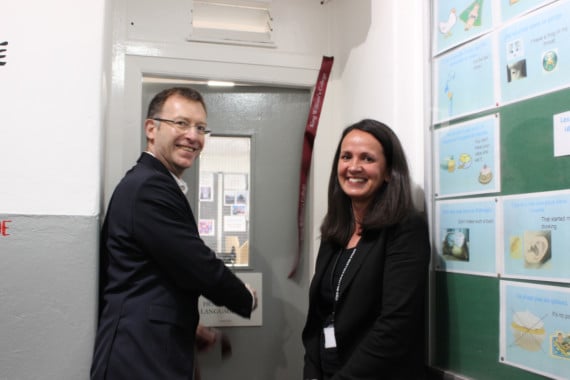
Henry Kelly, who studied French and German at the college, opened a 16-computer language lab in the school’s modern foreign languages department.
It’s designed to help train young people in vocabulary, expression, grammar and pronunciation and allow them to listen to and speak different languages more than is normally possible in a traditional classroom environment.
College principal Joss Buchanan said: ’At King William’s College we realise just how important and in demand language skills are.




’When Mr Kelly approached the department a few years ago willing to make a donation, we considered how the school would benefit most from his kind offer.
’Language labs have been universally shown to be extremely effective in supporting educational success in languages and allow young people to spend significantly more time carrying out language-practice exercises.
’This is a first-class facility and the MFL department has named the language lab in honour of its generous donator to thank Henry Kelly for this opportunity.’
In the lab, students can actively participate in language learning exercises and receive instant feedback from vocabulary tests.
Teachers can also use the associated computer programme to create a wide range of activities, track the progress of each student and receive reports of strengths and weaknesses to better adapt classroom activities.
As well as aiding IGCSE students in speaking and listening exams, it will also help those studying French and Spanish IB which is adding a new listening exam, worth 25% of the final mark, to its syllabus from June 2020.
Head of modern foreign languages France Heckel explained: ’There is no subject quite like languages. Students are actively encouraged to speak with each other during class.
’Our language lab allows them to practice without the fear of judgement or making mistakes. They can work at their own pace and learn their language in context.
’This is particularly motivating for our young people who can see first-hand how their language skills benefit them in real life situations.’
Comments
This article has no comments yet. Be the first to leave a comment.