
Each month, Ruth Keggin-Gell, the Manx language officer, or yn Greinnedyr, with Culture Vannin catches up with a Manx speaker based off-island, to find out where their journey began.
Manx has seen an upsurge of interest in recent years, on-island and internationally.
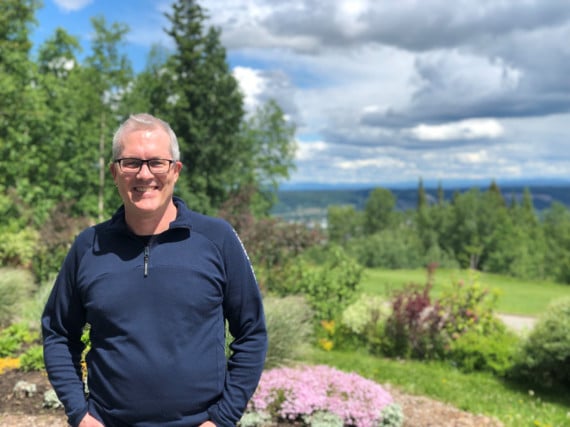
Each month, we’ll be catching up with a Manx speaker based off-island, to find out where their journey began. This month, it’s the turn of Dr Gary Wilson, in Canada.
Tell us a bit about yourself:



.jpeg?width=209&height=140&crop=209:145,smart&quality=75)
I work as a university professor in the department of political science at the University of Northern British Columbia.
Most of my research is centred around work in the Canadian arctic, looking at indigenous self-government and self-determination.
As a child, I lived in England until I was 12 before my family moved to Toronto.
I’ve now lived on the west coast of Canada for 20 years.
How did you become interested in Manx?
While doing my research, I’ve met a lot of people who are interested in revitalisation of their indigenous languages, which are under threat.
I’m aware of other communities and peoples who have lost their culture because of changes such as colonisation, urbanisation, and globalisation.
That’s partly where my interest in learning Manx comes from, but it’s also very much a personal mission for me.
My Mum’s parents were both from the Isle of Man and I know that my own grandparents didn’t speak Manx - they lost the language.
For me, learning Manx is another way to try to regain some of my culture and language that was lost when my family left the island, and I’m grateful to Culture Vannin for providing me with the opportunity to start learning the language.
Tell us more about your connection to the island
I have an active research programme on the Isle of Man.
I’ve published a number of articles on language revitalisation in the Isle of Man, have done interviews with parents at the Bunscoill Ghaelgagh, and am currently working on articles with colleagues in the Isle of Man.
These research projects are personal for me and I feel really invested in them.
I have no personal connection to my other research, in the Canadian arctic.
I always wanted to have a family or personal connection to the research that I did, which is why I got interested in Manx studies.
As someone who has links to various places around the world, how might you describe your identity?
My Manx identity has grown a lot as a result of doing research, learning Manx, and from visiting the island a number of times and seeing some of the positive changes that have happened with regards to culture and language.
Seeing the work that has been done over the last few years has been really inspiring; particularly the change in attitude towards Manx and seeing how the language has been revitalised from the ground up.
Of course, I also identify as being Canadian and British, but in many respects, my heart is in the Isle of Man.
Do you have any tips for anyone who wants to learn Manx?
Being able to speak and interact with other people during (Culture Vannin) Zoom Manx lessons has meant that I feel like I’ve made so much more progress in my learning in the last six months than at any previous point.
It depends what kind of learner you are, but I’d recommend trying to get involved in classes to engage in active learning; it’s nice to have a community of people to learn along with.
You can find out more about learning to speak Manx at learnmanx.com
Comments
This article has no comments yet. Be the first to leave a comment.