
Manx crosses - one of the greatest legacies of early Christian faith and Viking settlements and conversion in the island - have been digitised in a painstaking project.
Manx National Heritage has published detailed 3D laser scans of the entire collection of 200-plus stones in a move aimed at making the crosses more accessible.
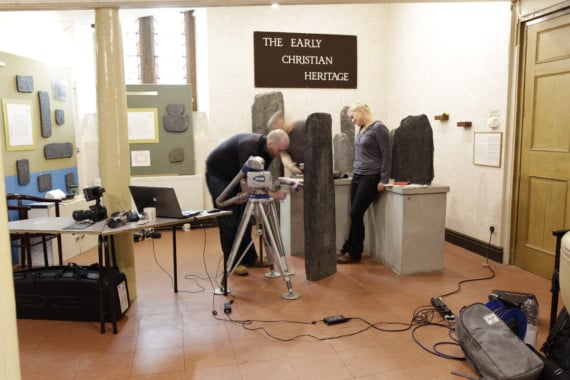
The stones were scanned and photographed last summer in a three-week fieldwork project, after which several months of painstaking processing produced a detailed digital file for each object.
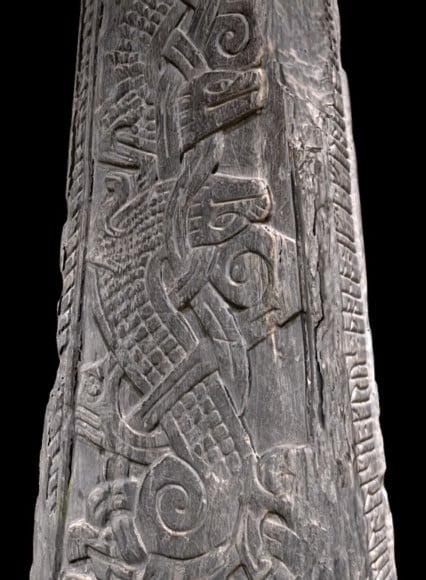
Viewers can rotate and spin the 3D models and zoom in on the highly detailed images.



-(2).jpeg?width=209&height=140&crop=209:145,smart&quality=75)
Andrew Johnson, MNH’s inspector of ancient monuments, said: ’These crosses are a source of great local interest and pride to communities up and down the Isle of Man.
’They are also of international significance to archaeologists, art historians and linguists for what they tell us of the island’s medieval past and the people that commissioned and made them.
’It is our responsibility to protect the stones but also to promote and interpret them, and for the crosses to become available and accessible to so many by this means is a godsend.’
The 200-plus crosses include grave-markers, memorials and altar-fronts.
They are mostly carved in local stone, the decoration of which ranges from simple incised crosses to complex interlace and depictions of Christian and Scandinavian themes.
A large number are marked with inscriptions using Ogham, Roman and runic scripts. Some of the stones are protected in churches and shelters across the island, while others stand in the open air of churchyards and even fields; yet more are displayed in the Manx Museum in Douglas.
The digital project was initiated and funded by MNH to provide a baseline condition survey of all of the monuments, so that further decay or damage can be detected in the future.
As statutory guardians of the stones MNH is responsible for their protection.
Using state-of-the-art equipment, the crosses were laser-scanned and photographed by contractor Archaeovision, to a specification agreed by MNH and academic partner Lancaster University, which exceeds the published guidance from Historic England - Metric Survey Specifications for Cultural Heritage and 3D Laser Scanning for Heritage.
This is intended, in a fast-developing technical field, to ensure that the record made will stand the test of time and be usable well into the future.
Christopher Weeks, collections care and conservation manager for MNH, said: ’We need to know whether the crosses are deteriorating, but first we had to find a way to record them in fine detail.
’What we have ended up doing is unprecedented in its scale and ambition.’
Such is the level of detail - down to 0.025mm - that some of the laser scans of the most complicated stones record the coordinates of more than a billion points in space, and so painstaking was the level of recording that it sometimes took several hours to record just one cross.
The digital images can be found at https://sketchfab.com/manxnationalheritage.
Comments
This article has no comments yet. Be the first to leave a comment.