
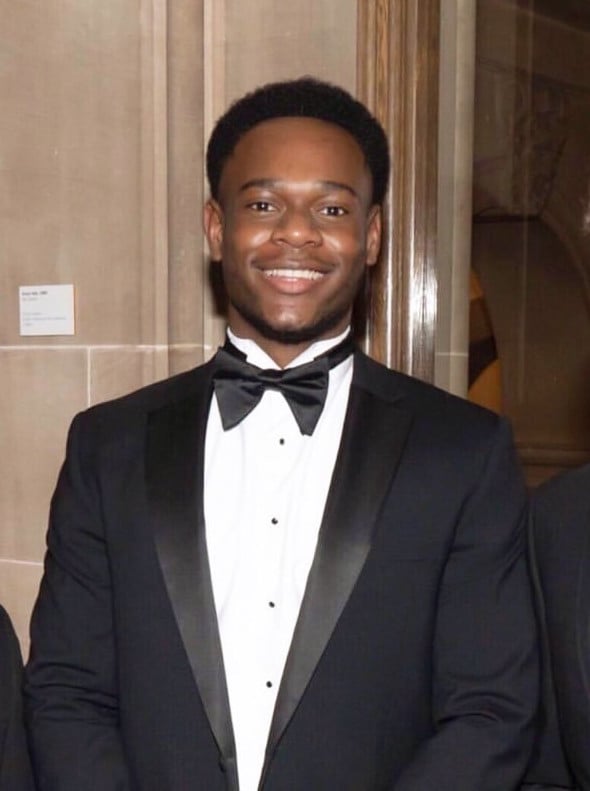
Culture Vannin has released a series of interviews with six young people of colour (PoC) about their different experiences of growing up on the island.
The heritage charity described the material as an important addition to more than 100 hours of Manx oral history which is already available, which will make for ’fascinating and thought-provoking’ listening to serve as a benchmark for future generations.
They were originally recorded by local activist group POC Isle of Man, and cover everything from primary school friendships to relationships with people off the island.
James Franklin of Culture Vannin said: ’I was shocked by how different these stories of growing up in the island were from the youth I was privileged to enjoy.



’These sorts of recordings are very important to who we are as a nation.’
He said that the oral history collection aims to capture the ’changing face of the Isle of Man’.
He continued: ’The interviews were carried out by POC IoM, an organisation set up within the last year as a support group for people of colour in the island.
’It was an honour to take part in this project with Culture Vannin, and it will be really interesting to see if over time things do change.
’We interviewed a black Manxman who grew up here in the 70s, and his stories hardly differed from ours.
’We think these interviews will be a great gauge as to how the Manx community reacts to all the work we have been doing.’
One of the young people interviewed was Joel Padi, who went to St Ninian’s High School.
He spoke about his initial experiences as a black person moving to the island from London and starting at St Mary’s primary school.
’I remember on the island feeling distinctly different, which was quite concerning,’ he said.
’I remember getting the weirdest questions.
’I think all negative connotations with blackness and Africa came from those first few days where people asked me those ridiculous questions.
’Like people asked if I’d lived in mud huts, if I lived with monkeys - it was just confusing, and something that I’d never had to contemplate in my life.’
Contrasting the island with England, he said: ’I’ve never been overtly abused in the UK (but) people have shouted things towards me on the Isle of Man - just as I was going about my day.
’Even my flatmate was telling me it’s happened to him. He’ll hear someone shout something from the window of their car and drive off.
’We both have friends who have been refused to be served [in pubs] because they were black.’
Having now moved to the UK for work, he was asked if he would ever move back to the island in the future, and said: ’I wouldn’t advise someone to raise black children in this environment, unless they could regularly expose them to a different environment where they were more accepted - and they weren’t the "other" one.’
Catherine Reid, who went to Castle Rushen High School, talked about growing up on the island as a mixed-race woman and a competitive runner.
She is the sister of Manx athletics star Joe Reid.
Catherine recalled one incident during a school careers day where she described all the other students talking about careers in law, teaching or accounting.
When she said that she wanted to be a professional athlete, her form tutor responded: ’Oh, I guess a person of your culture would have to put all their eggs in a basket like that, as if I was totally incapable of achieving anything else,’ Catherine added.
’But I had a lot of comments where people attribute my success in my field just down to my skin colour, like that’s all they see.’
Catherine called for a place for students of colour to go to report incidents of racism, and for there to be a move on the part of teachers and senior members staff to set down policies on where they stand on racism.
Dominique Moran, as the only person of colour in her year at Cronk-y-Berry primary school, said she was often confused with, or assumed to be a relative of, another mixed race girl in an older year.
One of her earliest experiences of being made to feel different was when she attended a fancy dress Disney princess party as Snow White, and was laughed at - with people ’wondering why she didn’t come as Pocahontas or Princess Jasmine (from the film Aladdin).
Later when she moved to St Ninian’ High School s, she described a very negative initial impression on her induction day.
There were a group of young boys who were throwing fallen apples at each other in the playground, and when one hit her as she was passing by, she heard a boy say ’Ah, she’s black - 50 points’.
However, she adds that she was later taken aside by a teacher and told that the boy had been suspended for the incident - and not to be apprehensive about starting at the high school because they would not stand for it.
Later on in the workplace, Dominique heard it joked that as a woman and a person of colour she ’ticked two boxes’ and felt that she had to ’just sit there and laugh’ because it was her boss that said it.
Dominique is now actively involved with PoC IoM, and is calling for black history to be taught differently in Manx schools (for it to be taught just as history, rather than a separately), and for MHKs to legislate against hate crime - she concluded that she hoped that ’when you listen to these recordings available in the future, hopefully some of those goals will actually be in play’.
The full recorded interviews are available to listen to on the Culture Vannin website.