
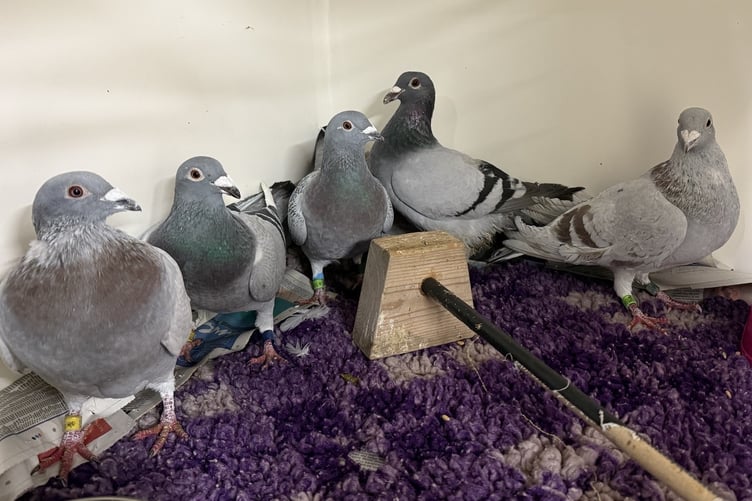
This is not usually the time of year when racing pigeons are on our agenda, because most races take place in the summer, but we ended up with five of these amazing birds in our aviary as 2025 came to a close. They had come into our care over the previous few months (between June and October) from different parts of the island and for a variety of reasons: two were exhausted and waterlogged, one had been ‘catted’ (a word we use to describe a feline inflicted wound), and two had injuries likely to have been caused by a bird of prey. All were very lucky to still be alive, and even luckier that they didn’t subsequently succumb to infection.
The birds’ rehabilitation periods were lengthy, and so we couldn’t simply release them once they were well again and hope that they would be able to find their way back to their respective homes (which were in both the UK and Ireland). Nor could we simply release them into the wild – racing pigeons are not like their feral cousins and they do not have the necessary survival instincts (although the occasional bird has been known to ‘go native’).
In past years, we have been able to relocate racing pigeons to a local pigeon fancier, but he is no longer able to take new birds; and on the odd occasion we have managed to contact a pigeon’s owner using the information on the bird’s leg rings, and they have paid for the bird to be transported home. Some racing pigeons are very valuable, and there is a huge Chinese market that has pushed up prices to over a million euros for certain birds, but ones with a poor racing record are not worth much and so owners won’t pay for them to be brought back home (let alone fund vets’ fees).
This was the sad reality for our five ‘failed racers’ and so we had to think of another plan before our aviary started to fill up again with this year’s intake of wild birds. We eventually managed to find a bird sanctuary in Cheshire, the RSPCA’s Stapeley Grange Wildlife Centre, that was happy to rehome the birds and keep them in a large enclosure. And so earlier this month the birds were duly transported by one of the ManxSPCA’s animal care officers, by sea rather than by air, to live out the rest of their lives in an appropriate environment.




So, what should you do if you find a racing pigeon in your garden? Simply give the bird some fresh water in a dish, along with some bird seed, crushed cornflakes, or uncooked rice or lentils (but not bread, which has little nutritional value), and before too long it should resume its journey home. However, if the bird doesn’t leave after ten days or so, you may be able to find the owner’s contact details on the ring on the bird’s leg. At the very least there will be a registration number that you can then report to the Royal Pigeon Racing Association via their website www.rpra.org/stray-reporting. They can also be contacted on 01452 713529.
The best way to pick up a racing pigeon is to gently throw a towel over it, and then to place it in a ventilated box. These birds are used to being handled and so should not be too stressed by human interaction, although handling should be kept to a minimum (and strict hygiene measures should be observed given avian influenza is ever present). If the bird is visibly injured you should take it straight to a vet who will give it emergency treatment free of charge, but please remember to phone ahead.
We’re hoping that 2026 is a year when fewer pigeon races take place between the UK and Ireland - races which involve crossing the Irish Sea and which therefore make the Isle of Man a perfect place for a pigeon ‘pit-stop’. It’s highly likely, though, that we will end up with some sick or injured birds that will not be able to make the journey home, and so if you have a large aviary or suitable pigeon loft and you are interested in rehoming a racing pigeon, please let us know.