
After statistics showed a big increase in the number of suicide verdicts last year, Helen McKenna talks to one bereaved father who is trying to make a difference after the death of his son
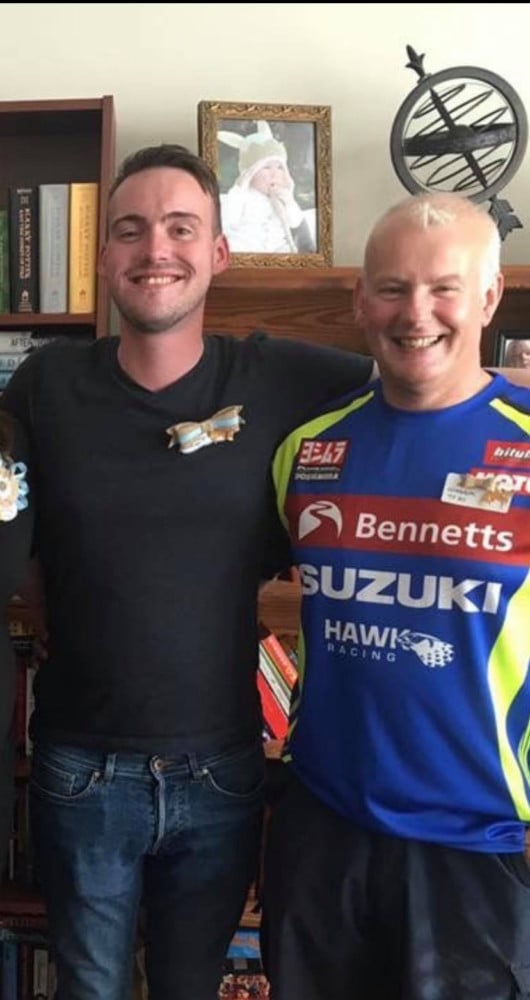
David Higson lost his son Martin in June 2018 when he decided to take his own life at the age of 30.
Mr Higson said: ’I’d never experienced a loss through suicide before and I was overwhelmed by the devastation of the grief that I felt. It’s carried on, to varying degrees even now, three years on.’
Martin had studied engineering at University College Isle of Man and then politics at the University of Winchester.
.png?width=209&height=140&crop=209:145,smart&quality=75)

He grew up in the island and was living in Greenville, South Carolina, United States, at the time he killed himself.
Mr Higson has now started the Bereaved Survivors of Suicide group to help others.
’I couldn’t do anything about saving my own son, it was too late and he’d made the decision,’ he said.
’But I wanted to try to help in some way others who had been affected by the loss of somebody through suicide and, hopefully, it would prevent other people taking their own life. [Statistically] it’s more likely that someone bereaved by suicide will do the same.
’It was a very lonely place with the grief to begin with, I didn’t know where to turn and I can’t explain the devastation you feel.
’It’s like a bomb going off in your life, which turns everything upside down. I thought it would be better for other people going through similar to walk alongside them and share with each other in their grieving journey,’ he added.
Mr Higson said that when he first started looking for support, there weren’t a lot of options
’I contacted one charity and there was a waiting list of six to eight weeks and I couldn’t wait that long. Another 12 months into the grief, I decided to go to a group meeting, which was helpful.
’I decided to start a Facebook group to keep in touch with people who wanted to be supported. I wanted to create a safe place for people, to provide a bit of hope and pass on information about other helpful organisations and a place where there’s compassion, empathy and love.’
Mr Higson said that Martin struggled with mental health issues as well as a chronic health problem.
’He developed type one diabetes when he was 28, which can cause mood swings,’ he said.
’He had a "cocktail" of a few issues which led to his decision to not carry on with his life.
’Unfortunately, he never really let us know how bad things had got for him and it was a total shock when we found out [that he’d died]. He had recently a new baby with his wife in the US and was working, but he just had problems which he felt couldn’t be resolved.
’When he was last on the island, he didn’t open up to me about how he was feeling and I feel bad about that.’
Mr Higson thinks that there is a lot of reliance on mental health charities rather than the Department of Health and Social Care.
’It seems that we’re relying quite heavily on charities for people to get through their problems and they are under a lot of pressure and there’s a lack of resources.
’Hopefully, things will change and mental health services will receive more funding and help to cope with the demand.
’We shouldn’t rely on government to provide the solution to the problem, although it can be part of it. I think it’s a community problem as well as a governmental problem.
’We all need to have a think about suicide and the stigma that’s attached to it and people’s willingness to accept it [as an issue] - it’s becoming more prevalent and it’s something that can’t be swept under the carpet.
’The pandemic will have increased the number of suicides. I think we need to educate people about mental health in school and do it differently to how it was done years ago, like coping mechanisms and signs for people to be aware of their feelings and what can be done to help open up to secure the future of children.
’I just hope that one day, people won’t even contemplate suicide as a way to escape a problem. I hope we can create a society that’s caring and understanding. I’d rather hear that someone is struggling than that they’ve died from suicide.’
Mr Higson added that some people who are considering ending their lives are likely to feel trapped and ashamed of their problems and don’t tell anyone.
’It’s heartbreaking that there’s been 22 suicide inquests [in the Isle of Man] last year. So many people are affected by one person’s death from suicide. I think it’s about 108 million people per year are bereaved by suicide globally, as the World Health Organisation announced that an estimated 800,000 people commit suicide a year every 40 seconds. It’s so tragic.’
A report was laid before Tynwald last year by retired politician David Cretney, which outlined research into the number of suicides on the island between 2008 and 2017, possible causes of suicide and ways to prevent it from happening.
Mr Cretney said: ’It’s a worrying trend.
’It’s something which, when you have dealt with people who have subsequently taken their own lives, or whether you’ve dealt with people whose families are affected on a permanent basis because a family member has taken their own lives, you can’t help but feel strongly about the subject and want to do what you can to help them.’
The report highlighted that between 1996 and 2017, 58 suicides were male and 21 were female. It also noted that the suicide rate for the male 15 to 24 age group had increased during the sample period, whereas in the UK the rate for that group had been decreasing owing to a targeted campaign at the national level.
Tynwald will hear from the Public Health Directorate in early March about the latest strategy to prevent suicides.
Mr Higson hopes there will be a suicide prevention charity eventually in the island, but has been helped by mental health such as Quing, who allows his group to meet at its premises in Douglas every second Monday of the month in the evening at the Old School on Finch Road in Douglas.
He said, ’It’ll be three years in June and I’m mostly OK day-to-day, but it’s complicated. It’s like walking through glue, pushing an elephant up a hill some days, but speaking to others in the group is helping everyone.’
His Facebook group is named ’Bereaved Survivors of Suicide IOM’ and can be joined by request.
Mr Higson’s website is at www.bereavedsurvivorsofsuicideiom.co.uk and his email is [email protected].