
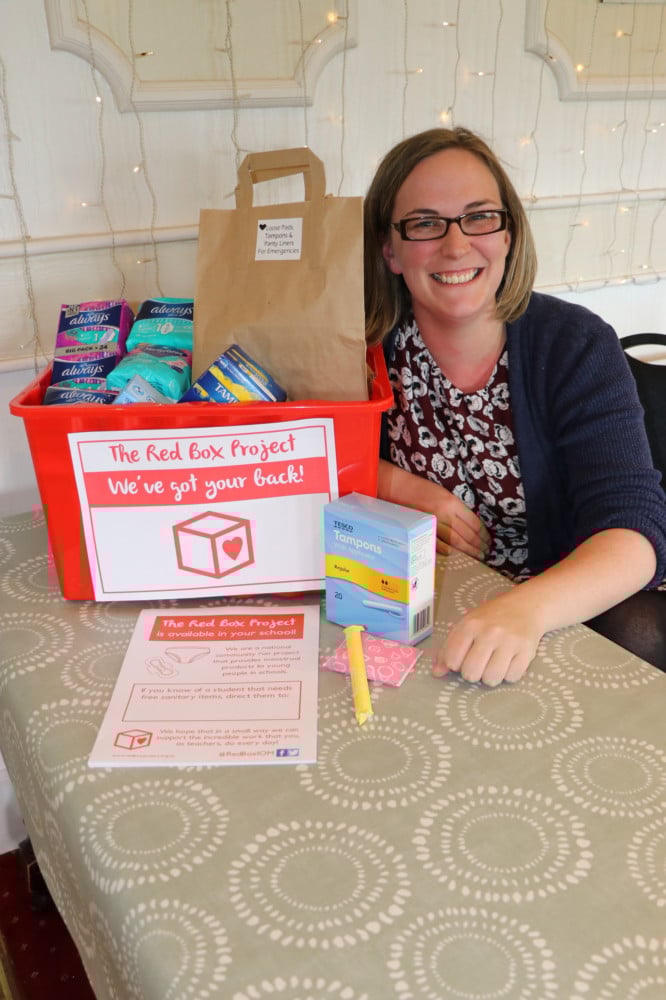
An initiative to end ’period poverty’ in the island has officially begun in schools.
The Red Box Project Isle of Man (RPB) sent out boxes filled with tampons, pads and other sanitary products to the high schools in the island as students returned from their summer holidays.
This is to ensure that pupils can access free supplies and therefore can concentrate on their lessons instead of worrying about whether they have ’got enough pads or tampons to last them throughout the day’.
Becki Gelling, one of the project founders, said that work on the project began in July, with the initiative coming into fruition this month.



-(2).jpeg?width=209&height=140&crop=209:145,smart&quality=75)
’We’ve just delivered five boxes into schools last week and when stocks get low we will refill them,’ she said. ’If the products never get used then it’s amazing because it means there isn’t anyone experiencing period poverty in school.
’The project has received a very positive response from schools, which is fantastic.’
She told the Examiner that donation points are all around the island. Members of the public have been dropping off tampons, pads and unused underwear into the red boxes.
These drop-off points include Port Erin Commissioners, Port St Mary Commissioners, Port St Mary Golf Pavilion, Philip Christian Centre and Pilates Isle of Man Studio in Peel, Out of the Blue Hair Studio and Snaefell Doctors’ Surgery in Douglas and The Nutty Chef Cafe in Onchan.
suggestions
They are yet to find a place in the north of the island and are welcoming any suggestions. The donated supplies are then given to schools where students can then help themselves to as many as they want with ’no strings attached’.
Becki said: ’Being a charity we’re able to include the Manx community. It’s everyone pulling together to make this happen and that’s what I love about the Isle of Man.’
RBP is also being supported by the Foodbank, which has already donated a number of crates full of sanitary wear.
Currently high schools are being supplied, but this is soon to be expanded to all schools island-wide with a designated staff member or nurse from each school being the point of contact for those seeking out sanitary products.
However, only high school students will have access to tampons - which will come with a leaflet about toxic shock syndrome - to help pupils understand the risks of using them for too long.
Researching into period poverty, Becki was shocked to find out that many students in the UK had used sanitary towels or tampons for longer to save money. Others had used contraceptive pills longer than recommended for the same reason.
In 2017, Plan International UK carried out a survey in which 1,000 young women aged 14 to 21 took part.
It found that 14% had said they didn’t know what was happening when they started their period, 27% had used sanitary products longer than intended because they couldn’t afford fresh ones and that 68% said they felt less able to concentrate at school, college or work.
’Once you go down the rabbit hole with some of these stats, it really does show you how much projects like the RBP are needed to end period poverty and let the young people in our society get on with being kids and young adults instead of worrying about something that happens every single month,’ she said.
Although RBP’s main mission is to stop what it calls ’period poverty’, the project members have a further campaign. They have been placing posters about periods on the outside of toilets around all schools.
Becki said: ’Part of what we’re doing is trying to break down the stigma behind periods and this way it’s getting it into people’s consciousness without them realising it.
’The taboo around periods has been around forever.
’Advertising pads is done with blue liquid. This all plays into subconscious message that periods shouldn’t be talked about and that it’s unnatural. However, some companies are starting to realise that red isn’t such a bad colour.
’I remember at school whenever we had "the period talk" the girls were huddled away into the hall with a lady telling us about the time of the month. Why half of the population is cut out of this talk, I don’t know! It reinforces that periods are something that we should hide.
’Even if people don’t experience periods themselves, they are still affected by it as they will have mothers, sisters, girlfriends and others in their lives that do.
She added: ’People shouldn’t be ashamed about how their body works.’
For more information, search @RedBoxIOM on Facebook.
Comments
This article has no comments yet. Be the first to leave a comment.