

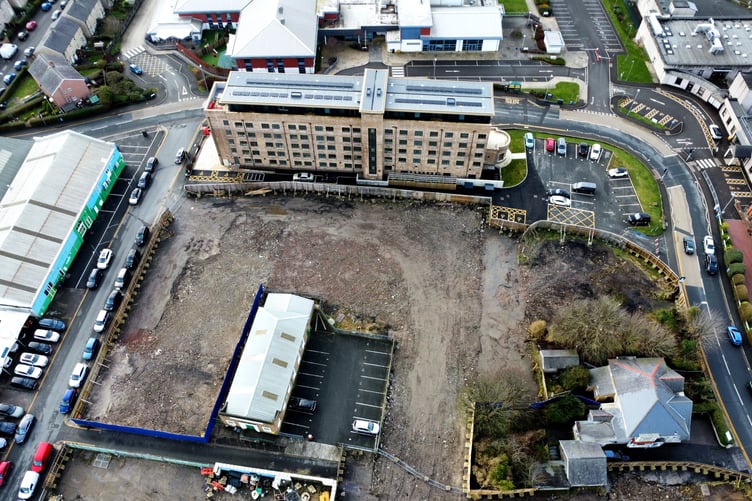
A review is being carried out into the future function, role and operating model of the Manx Development Corporation.
It comes as a report reveals that spiralling construction costs, labour shortages and structural market challenges are having a ‘significant and systemic impact’ on the viability of brownfield regeneration in the island.
Policy options on the future of the MDC and government intervention are being drawn up for consideration by the next administration.
An interim report on the pressures facing brownfield regeneration states that the island is the joint 16th most expensive place to build in the UK.
Construction costs in the Isle of Man are now comparable with Outer London.
This is driven by the need to import most construction materials and the use of off-Island contractors with the additional costs and risks involved.
Island-based contractors and consultants believe that tender prices will rise by 7-7.5% this year and next.
The report highlights a lack of suitable skilled workers and says projects have to be large enough to attract labour from the UK.
‘While the standard of work is better than the local contractors it comes at an extra cost,’ notes the report by consultants AtkinsRéalis.
The report also highlights delays in planning approvals and inconsistencies in decision-making which it says introduced additional uncertainty and cost risk.




MDC was set up in March 2021 as an arm’s length government-owned company to revitalise brownfield sites. It has yet to turn a profit.
Its first project, the £11m refurbishment of the former Nurses’ Home was completed in early 2025.
Member for Treasury, Gary Clueit MLC, told Tynwald in May that the project had not proven financially successful.
MDC’s next project is the conversion of the former Nelson Hotel on Mona Drive in Douglas into eight luxury apartments.
It has spent about £2m buying property to make way for the Westmoreland Village scheme, but still does not own the whole of the site.
The government’s Island Infrastructure Scheme offers grants or loans of up to 25% towards development projects. There has been criticism that taxpayers’ funding is being used to build luxury flats.
AtkinsRéalis said this funding was critical to whether projects proceed or are abandoned but its impact is only partial without wider market reform.
Its report calls for targeted financial support mechanisms, investment in skills and labour capacity, and more flexible approaches to land and partnership structures.
Treasury Minister Chris Thomas said the report provided an important evidence base for understanding the challenges facing brownfield regeneration.