

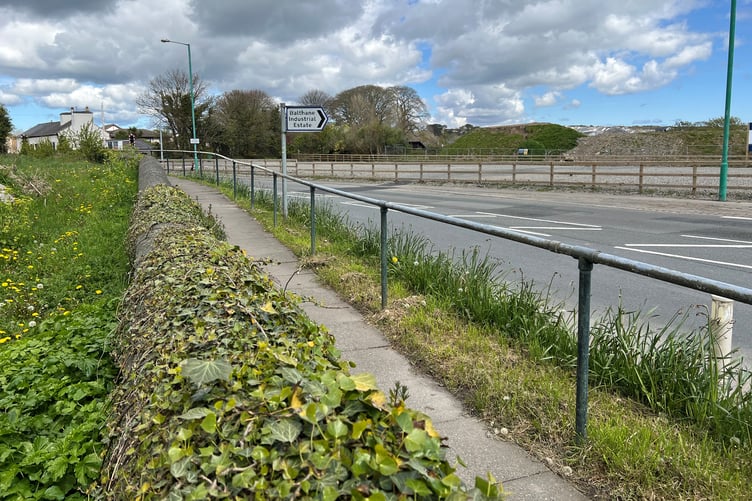
Plans to process contaminated asphalt at the Old Turkeyland quarry have been approved by the planning committee.
The decision, made this week, clears the way for work to finally begin on a roundabout needed to complete the Ballasalla bypass.
The committee also approved a separate application for the storage of hazardous construction waste, including plasterboard, fibreglass, low-level radioactive waste from school laboratories and potentially up to 19,000 tonnes of dredged silt from Peel marina.
Progress on linking the Ballasalla bypass to a new roundabout at Balthane Corner had been delayed due to difficulties disposing of asphalt contaminated with hazardous coal tar.
.jpg?width=209&height=140&crop=209:145,smart&quality=75)
Currently, the Isle of Man has no licensed facility able to process or accept the material, which is being stored in sealed skips at sites around the Island.
A further 375 tonnes is expected to be produced during construction of the bypass roundabout.
Under proposals submitted by the Department of Infrastructure, the coal tar-contaminated material, together with around 1,000 tonnes already stored elsewhere, will be transported to Old Turkeyland quarry where it will be crushed, mixed with cement and reused during construction works at Balthane Corner.
The planning committee heard the roundabout project is expected to take between six and eight months to complete, with transport of the contaminated waste carried out in two separate phases lasting around two weeks each.
Work is scheduled to begin in September.
The DoI’s application (25/91197/B) was unanimously approved by the committee on Monday.
Alongside the temporary arrangement, the department is also developing a long-term strategy to create a licensed facility at Turkeyland quarry for the permanent storage and treatment of coal tar-contaminated asphalt.
That proposal will be subject to a future planning application.
Meanwhile, the committee also unanimously approved a second DoI application (25/91204/B) covering the first stage of redevelopment works at the Old Turkeyland site, including construction of three hazardous waste landfill cells.
The landfill had previously been used to process and dispose of incinerator bottom ash from the Island’s Energy from Waste Plant, although that operation has now ceased.
Annual waste inputs of around 1,747 tonnes are expected to include gypsum, plasterboard, insulation materials such as rockwool and fibreglass, along with contaminated soil and stone.
The site could also receive up to 19,000 tonnes of dredged and dewatered marine silt every two to three years.
In addition, around two tonnes of low-level radioactive waste from high schools, the government laboratory and Manx Care is expected during the first year.
Planning officers said the applications would provide an important interim solution for hazardous waste management while helping facilitate progress on key infrastructure projects, including the long-awaited completion of the Ballasalla bypass scheme.
The landfill cells will have a combined capacity of around 67,000 cubic metres and are expected to last between 10 and 34 years before final restoration work is carried out.