

Another Covid-19 related death was confirmed in the island yesterday as confirmed cases topped 1,000.
The death brings the island’s total number since the start of the pandemic to 81.
It’s as the current trend of reported positive results is increasing. That’s according to the government’s weekly surveillance report released on Thursday, which blamed patterns of travel around half-term and changes to testing requirements for the uptick in cases.
The current seven-day average for reported positive results is 109 – nearly double that of the same time last week, when the average was 61.



.jpeg?width=209&height=140&crop=209:145,smart&quality=75)
The effective reproduction number (Rt) is 2.14 – up from 1.77 last week and 1.00 the week before.
On Thursday there were 1,010 active cases in the island – up from 604 at the same time last week and 345 the week before.
There is also an increase of people in hospital with the virus, with six patients confirmed within the report.
There are still no cases in the intensive care unit. The weekly report stated: ‘We have seen a continued overall increase in case numbers this week.
‘The reproduction rate has risen to 2.4, indicating a further rise in transmission.
‘As seen last week, most of the increase has been in the age group 20 – 59 years.’
Of the 1,010 active cases on Thursday, 207 had been detected since Wednesday – 19 were detected via PCR testing, and 188 via LFT.
At the end of the month, the island will drop the majority of its remaining coronavirus restrictions, much like the rest of the states in the Common Travel Area (CTA).
The government made the decision as a result of the island’s high vaccination rate.
Guernsey dropped legally mandated self-isolation for cases and the removed all border restrictions on February 17.
The government there similarly decided that it was ‘no longer proportionate or necessary to continue utilising emergency regulations to manage the implications of Covid-19, largely because of the high vaccine uptake amongst the community resulting in very few hospitalisations due to the virus’.
As of Tuesday, there were 1,527 active cases in Guernsey. The government there releases figures only weekly– on Tuesdays.
Given the high transmission rate on the Isle of Man at present, the Isle of Man Courier asked the government if the March 31 end-of-restrictions date is subject to change.
A spokesperson stated that they were not aware of any changes at this time.
restrictions
Jersey is also expected to lift all of its remaining Covid restrictions on March 31, despite a surge in cases there.
Its Health Minister, Deputy Richard Renouf, confirmed to the Jersey Evening Post that they are still ‘on track’ to stick to that date.
That is despite three hospital wards being shut to visitors due to a surge in the virus and an outbreak of the norovirus sickness bug amongst hospital patients.
On Tuesday (March 8), there were 44 patients in hospital there with Covid.
When the Courier went to press, there were 2,182 active cases on the island – 96% of these were in the community, 2.3% were in care homes, and 1.7% were general hospital cases.
Fears of similar levels of infection impacting our health service here in the Isle of Man are clearly present, as Manx Care reintroduced social distancing and mask-wearing on Wednesday evening ‘with immediate effect’.
In a statement, it said: ‘Manx Care is increasing its preventative measures to ensure that service provision can be maintained, as the number of Covid-19 cases continues to rise within the community.
‘Social distancing, along with the wearing of IIR fluid-resistant surgical face masks, is being reintroduced with immediate effect at Noble’s Hospital, Manannan Court and Ramsey District and Cottage Hospital.
‘Face masks must be worn throughout these locations from entry into the building until exiting the building.
‘Face masks must still be worn in all patient-facing wards and departments on entry. This includes ward and department corridors and offices.
‘Social distancing must be observed in all clinical and non-clinical areas. Posters will be displayed at all sites.’
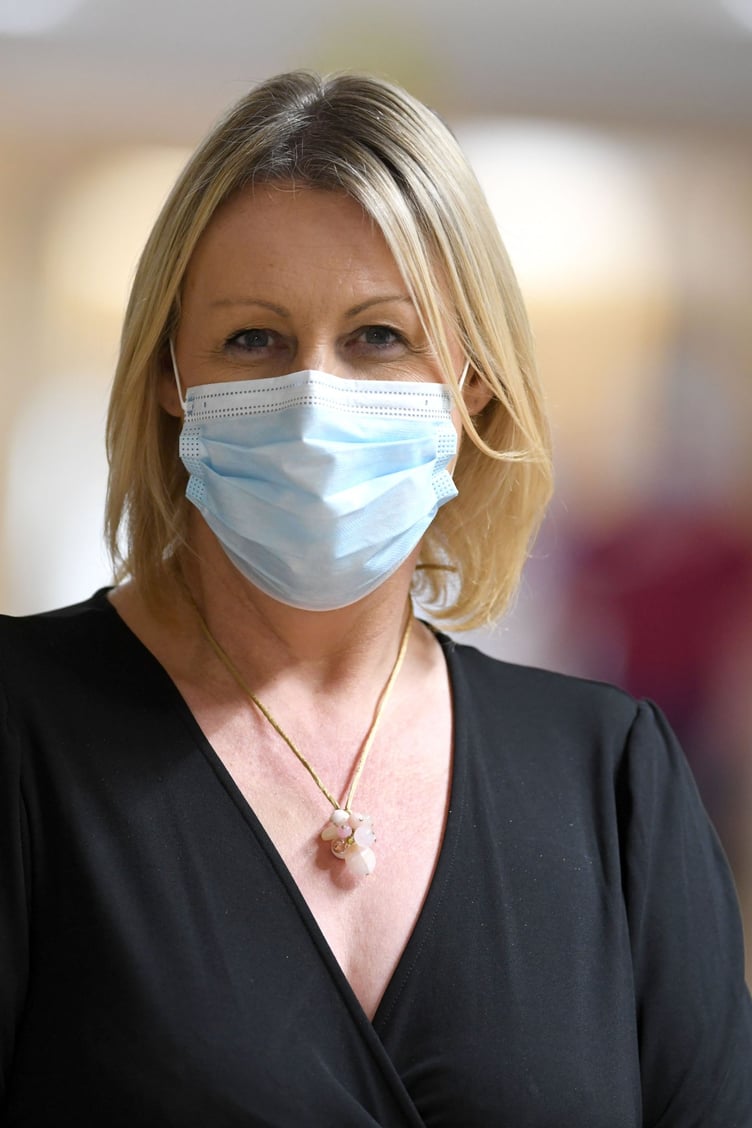
Manx Care’s chief executive, Teresa Cope, added: ‘While it is disappointing to re-implement this policy we need to ensure both staff and patients’ needs are at the centre of our care.’
The Covid-19 swabbing centre will officially relocate later this month.
Manx Care has confirmed that the testing/swabbing centre currently at the Grandstand will move to The Crookall Centre, Kensington Road, Douglas (the old Finch Hill GP surgery).
Testing will commence in this location from Monday, March 21.
From this date, all appointments will be at The Crookall Centre, not at the Grandstand. It will not be a drive-through facility.