
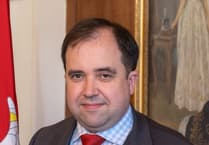
Health Minister David Ashford says that the Department of Health and Social Care is still ’reviewing the guidance’ around a cancer test that has been available in the UK since 2013 and which cancer experts believe should be made available here immediately.
The Oncotype DX test is used for patients in the early stages of breast cancer.
The test, which was recommended for use by the National Institute for Clinical Excellence (NICE) in the UK in September 2013, looks at 21 genes which have been shown to predict the risk of the cancer returning and can therefore determine whether or not a patient diagnosed with breast cancer will need chemotherapy as part of their treatment plan.
The test, which costs £2,500, is available on the NHS in hospitals in the UK.
.jpeg?width=209&height=140&crop=209:145,smart&quality=75)

The Courier understands that at least four patients in the island have already paid for this test out of their own pockets and that medical professionals have been pushing for it to be available free here for several months.
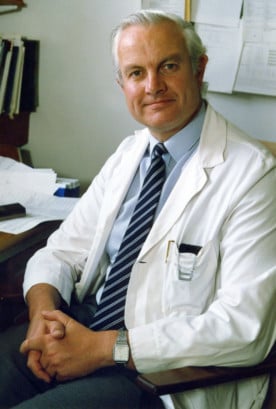
We spoke to retired Professor John Scarffe, a medical oncologist who now lives in Castletown, about the test.
Professor Scarffe spent 26 years at Manchester University Cancer Research Campaign Department of Medical Oncology based at the Christie Hospital. He was promoted to Professor of Medical Oncology in 1995 by Manchester University. Over his 35-year career he was involved in the development of new treatments.
He said the findings of a major trial, published this month in the US, showed that as many as 70% of patients with early breast cancer can be identifed by the test to be safely treated by hormone therapy alone, without chemotherapy.
Professor Scarffe said: ’These findings should have an immediate effect on clinical practice, enabling doctors to select patients who do not require chemotherapy by using the Oncotype DX testing alongside other routine tests of the cancer.
’The Isle of Man Department of Health and Social Care should introduce Oncotype DX testing as a matter of urgency to prevent patients undergoing toxic chemotherapy which is not required.’
Local cancer charities believe the cost of testing patients pales into insignificance compared with the cost of a full cycle of chemotherapy, which can take eight months; the side effects of the treatment, and the disruption to patients’ lives.
Julie Stokes, chairman of Manx Breast Cancer Support Group, said: ’This test is available to NHS patients in Clatterbridge and Liverpool and UK hospitals. It is only available on the island if patients pay privately. This means Manx patients are severely disadvantaged and we feel that it should be available to local breast cancer patients now.’
Mr Ashford said his department has yet to make a decision about making the test available on the Manx NHS.
He said: ’Chemotherapy can be debilitating for the patient and expensive: both in terms of the cost of medicines and time off work.
’Better targeting of its use will therefore have several benefits.
’The department will review the guidance following the trial from bodies such as NICE and then determine whether to adjust its breast cancer management pathway in accordance with that guidance.
’Further statements will therefore be made in due course.’
It is also hopee this test will soon be available to help decide the treatment plan for patients with other types of cancer. The Oncotype DX prostate cancer test is now covered for qualified patients by Medicare in the USA, giving nearly 60,000 prostate cancer patients the opportunity to personalise their cancer treatment.
Professor Scarffe said: ’New techniques are being developed that will enable patients to receive management tailored to their individual cancers, improving the outlook for patients with early and late stage disease.’
’The test should be introduced as a matter of urgency to prevent patients undergoing toxic chemotherapy which is not required’
Comments
This article has no comments yet. Be the first to leave a comment.