

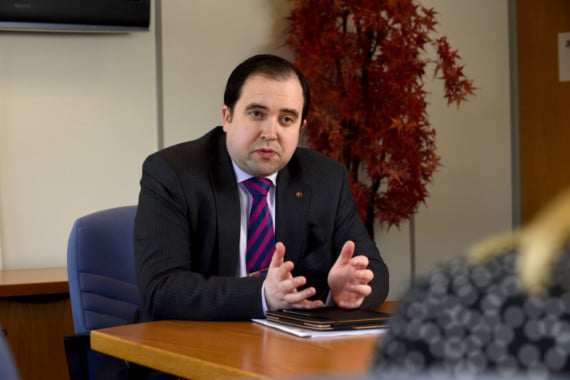
Tynwald will be asked next week to approve £8m of extra funding for the island’s consistently overspent health service.
It will be the fifth consecutive year that the Manx NHS has gone into the red - despite a promise by Health Minister David Ashford that he would ’grasp the nettle’ by introducing reforms - and despite the DHSC getting an extra £5.1m in the Budget.
Last year Tynwald approved extra funding of £4m and the year before it had to plug a shortfall of £9.5m.
In 2017, Tynwald provided a supplementary vote for £11.1m and the year before that the figure was £9.9m.

.jpeg?width=209&height=140&crop=209:145,smart&quality=75)

Only in December, Mr Ashford said his department was projecting an overspend of £5.4m.
But next week, Tynwald will be asked to approve a supplementary vote not exceeding £8m.
The Department of Health and Social Care is currently going through a huge transition period following Tynwald’s approval of Sir Jonathan Michael’s review report and its 26 recommendations for reform.
His report allows for increased funding in the future but that any increases are linked to efficiency savings.
The transformation programme suffered a blow in December when the man appointed to oversee it quit after just over two months in the job.
One of the DHSC’s objectives in the coming nine months is to establish an appropriate baseline budget and then identify the level of efficiency savings that can be built into that budget in future, an explanatory note to Tynwald members states.
It blames this year’s budget overspend in part on recruitment difficulties across the NHS, with agency and bank staff having to be drafted in to fill vacant posts, which stood at more than 500 at the end of November.
There has been a saving of over £1m in agency costs over the last two years but overall payroll costs continue to rise.
Another ’unusually high’ area of cost pressure is patient treatment in the UK for serious mental health issues and other conditions that cannot be treated on-island.
In previous years spending on UK referrals has been fairly static at about £21m but in the current year costs are expected to be around £4.4m over the budget of £19.3m.
This is a result of various factors including increased patient numbers, several highly-specialised cases (such as proton beam therapy and transplants) and high-cost complex patients including cancer treatments and cirrhosis surgery.
There has also been an increased demand for medical services on-island, endoscopy services being a prime example.
Spend on medicines in NHS England has grown on average at 5% each year but the DHSC actually saw a decrease of more than £0.5m in 2018-19 compared to the previous year.
The DHSC said that while the transformation programme takes shape, it recognises ’it cannot be complacent and continues to develop initiatives to help redress the budget imbalance’.
It said a cost improvement programme has identified savings estimated at £6m, with around £1m of that likely to be delivered in the current financial year.
The creation of a community care directorate is being billed as the first step in the development of an integrated care model which has seen a successful pilot completed in the west of the island.
Treasury has recently allocated a further £1.2m from the healthcare transformation fund for the second phase of the integrated care strategy.
The 2018-19 actual net expenditure for the DHSC was £220m but is forecast to be £230m in the current year - an increase of 4.5%.
This level of growth may not be sustainable, the department says, but it adds that is considered to be within the normal range for health and care.
Comments
This article has no comments yet. Be the first to leave a comment.