
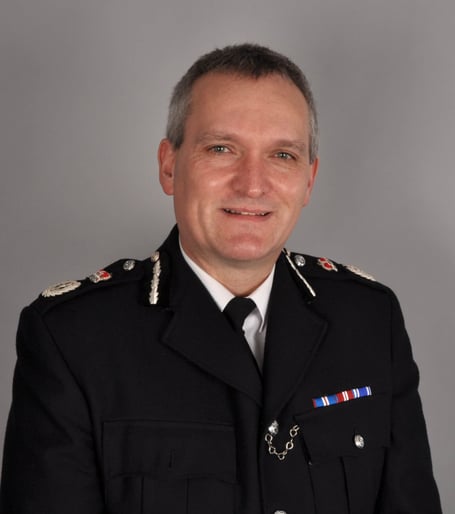
Chief Constable Gary Roberts told a Tynwald select committee that employers have a duty to look at their staff’s mental health.
He was speaking at the social affairs policy review committee as part of its inquiry into mental health.
Also giving evidence at the sitting were David Ashford MHK, Minister for Health and Social Care (DHSC), Dr Malcolm Couch the chief executive of DHSC and director of community care Angela Murray.
When asked about how employers could be supporting staff members’ mental health, the Chief Constable said: ’If they work on preventative basis, that will have a significant impact on the demands on my service and other public services.

.jpeg?width=209&height=140&crop=209:145,smart&quality=75)
.jpg?width=209&height=140&crop=209:145,smart&quality=75)
’As a combined public service, our goal should be to reduce the numbers using our service, I think the private sector and the government as a large employer has a role to play in that.’
Mr Roberts praised the Manx police force’s closer relationship with mental health services.
Trainee officers receive mental health training and future access to a crisis member of the mental health department will improve not only his officers’ health but how they serve the public. However, he doesn’t expect to see results overnight, saying the changes are for the long term.
’It is too soon to say yes it’s been a success, but things are going in the right direction,’ he said.
He added that this doesn’t mean there won’t be continuing challenges to the force as he believes about 20% of all issues the police deal with contains some element of mental health problems, but merely recognising this doesn’t solve anything.
’Once we have released someone, from a legal perspective, there is little else we can do, even if they have mental health issues.’.
He added the only lawful pathway currently available to police would be the Mental Health Act.
Mr Roberts also echoed comments by Her Majesty’s Chief Inspector of constabularies and fire and rescue services Sir Thomas Winsor, who said that mental health needs to be given the same priority as physical health.
DHSC director of community care Angela Murray, also spoke in depth at the committee in regard to the current state of the island mental health. She explained the system operates under a five-step care mode.
Mrs Murray said that there are currently 26 residents who are off-island for care, predominantly at St Andrew’s in-patient mental health service in Birmingham, although others are off-island for more specialist care in other facilities.
She explained that the island has a general mental health service and it isn’t practical to have specialist beds.
Before the Manx NHS sends a patient off-island for treatment, their case is considered by a panel, similar to a tribunal.
Following a question from committee member Julie Edge MHK, she revealed the island currently has a block-booked amount of time for patients at St Andrew’s. It will be up for tender soon following a year-long trial.
Health Minister David Ashford said that historically mental health patients had been failed but the 2015 comprehensive review will allow the service to improve.
He said he was open to change in any area as long as it can be proved to be beneficial.
He also confirmed Sir Jonathan Michael’s review into the island’s health service will be able to explore mental health, but its primary focus is on physical health.
The former chief executive of three NHS Foundation Trusts in the UK who was knighted in 2005 for services to the NHS was appointed in March to spearhead a 12-month independent review of the island’s healthcare system.
Comments
This article has no comments yet. Be the first to leave a comment.