

With the row over the so-called ’dementia tax’ making headlines in the UK, the issue of funding social care will be one of the key issues in next month’s general election.
Forced to make a humiliating *-turn, Theresa May pledged that nobody will have to sell their family home to pay for care and her party will consult on an absolute cap on contributions.
The Tory manifesto does set out a lower limit such that pensioners will stop paying for their own care once their savings and assets are down to £100,000. At present only £23,250 is protected.
So what is the situation in the Isle of Man?

.jpeg?width=209&height=140&crop=209:145,smart&quality=75)

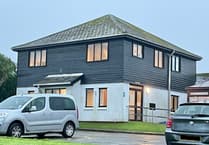
Here, just as in the UK, many feel strongly that people should not have to sell their homes to pay for the costs of nursing and residential care.
And the costs are staggering - with nursing homes charging as much as £950 a week, equating to £50,000 a year.
The island currently has an over-65 population of around 17,000 but demand outstrips supply for both nursing and residential care.
There are just over 900 beds in some 27 homes, 19 of which provide residential care only, six that provide nursing care only, and two that provide both.
Seven residential homes are operated by the Department of Health and Social Care while the others, including all nursing homes, are privately run.
Around half of the people currently in such homes are on income support.
But those who are not may be forced to sell their homes to cover the cost.
In November last year, Tynwald debated a select committee report into the funding of social care.
It set out how people who cannot afford to pay for their own nursing or residential care get help from the state through the benefits system.
If they need help from the benefits system, but own a house which no-one lives in any more, the house is taken into account through a ’property tariff’ system.
In theory, the person who needs the care is not required to sell their house. But their benefits are reduced - and the balance would have to be found from somewhere.
Under the property tariff, the value of the house is completely disregarded if it continues to be occupied, for example by the claimant’s partner.
But otherwise a weekly amount of assumed income is calculated based on 5 per cent of the property value up to £150,000 plus 10 per cent of the remaining value.
A home worth £265,000, for example, would be assumed to generate income of £19,000 a year or £365.38 a week.
There is also a capital tariff, with every £250 of capital over a £13,000 threshold assumed to provide an income of £1 a week. So a claimant with £20,000 in the bank would be assumed to have income from that of £28 a week.
There is no equivalent to the property tariff in the UK.
And the select committee questioned whether this is the best system for the island.
But its recommendation that ways of ’exploiting’ capital assets as a source of funding should be investigated raised hackles in Tynwald.
Instead, the court unanimously accepted an amendment by Health and Social Care Minister Kate Beecroft that the Council of Ministers should investigate setting up a separate nursing and residential care fund, together with options for an equity release scheme, and report back to Tynwald in July this year.
unfairness
During the debate, Douglas North MHK David Ashford set out what he saw as the unfairness of the current system.
He said: ’I have never really been comfortable with the fact that you can have people who work all their lives and work hard, and then in later life, actually feel like they can end up getting penalised because they require care, whereas you can have other people who do not work particularly throughout their entire lives, but automatically qualify for that support.
’I really do think that is the nub of it.’
The Tory manifesto does set out a lower limit such that pensioners will stop paying for their own care once their savings and assets are down to £100,000. At present only £23,250 is protected.
Comments
This article has no comments yet. Be the first to leave a comment.