
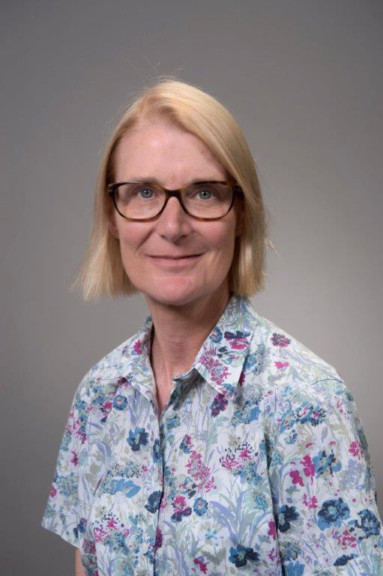
The director of public Health Dr Henrietta Ewart has said that four of the island’s key health indicators are ’significantly worse’ than England’s.
Women’s healthy life expectancy, breast feeding rates, the number of preventables and male preventable deaths all rank worse than across.
Dr Ewart’s third annual health report focuses on the question of ’are we an equal society and does that matter for health and wellbeing’?
The report explored how variations in health and wellbeing are linked to differences in socioeconomic status and details some of the indicators that have been developed elsewhere to measure inequalities.


.jpg?width=209&height=140&crop=209:145,smart&quality=75)

In recent years, the public health team has produced indicators for health and wellbeing in the Isle of Man.
These form a standard data set, the Public Health Outcomes Framework (PHOF), which not only helps understand levels of health and wellbeing in the island but also lets comparison be made with England.
Dr Ewart said: ’For four out of these nine key indicators, our outcomes are statistically significantly worse than England.
’We need to understand what is behind these poorer outcomes for our population if we want to address and improve them’
Among the areas which are worse off in the island than in England is women’s healthy life expectancy at birth which is 57.9 years in the island compared with 63.8 years in England.
’Healthy life expectancy’ measures the time at which significant health problems affect a person’s quality of life.
In the island, 68.4% of women breast feed compared with 74.5% in England.
The number of deaths from preventable causes is higher in the island at 206.4 per 100,000 compared with England’s 181.5. The figure is bad news for men for whom the island level is 269.7 per 100,000 compared to England’s 228.6.
For women, the 144.4 figure is higher than England (137.4) but not significantly so.
In her report, Dr Ewart poses the question of whether the island is an equal society. She said: ’The short answer is we don’t know and it does matter.’
’At present we simply do not know what inequalities there are across our population, whether our current policies and interventions are addressing and changing these, or whether we have gaps that we are not currently addressing at all.’
Throughout her report, Dr Ewart says that the island lacks the data necessary to determine how ’health and social inequalities are distributed across our population, or measure the impact of actions to address them until we have a data set of indicators that will show where we are now and what are the priority issues for action’.
She added: ’We then need to set up systems to collect the data for these indicators, so this is a project which will require long-term commitment and will have a time lag until the full data set can be available.
Data
’This work is essential if we are to deliver on the Programme for Government objectives related to inequalities and it will support and strengthen the work around poverty, homelessness, cold and hunger that is already underway.
’It will also ensure that health outcomes are an integral element in the resulting policies.’ Dr Ewart made recommendations which included the creation of high level board to take strategic and policy ownership of health and social inequalities.
Board members should include political representatives and chief officer level representatives from across government, the third and private sectors and community organisations.
Recommendations
And she recommends the island should:
â?¢ Design and deliver an Isle of Man core data set to measure inequalities in health and socioeconomic status.
â?¢ Test the feasibility and usefulness of designing a geographically based Isle of Man Index of Multiple Deprivation, bearing in mind the limitations of this approach for rural populations.
â?¢ Explore the potential of working with others to maximise learning relevant to our population.
This could be achieved by working with the Crown Dependencies of Jersey and Guernsey to share capacity and improve understanding of the specific context of small nation islands.
Dr Ewart added: ’As a small island nation, we have an extraordinary opportunity to co-ordinate social and health policy at all levels to address inequalities, in a way which cannot be done in larger nations.’
Comments
This article has no comments yet. Be the first to leave a comment.