
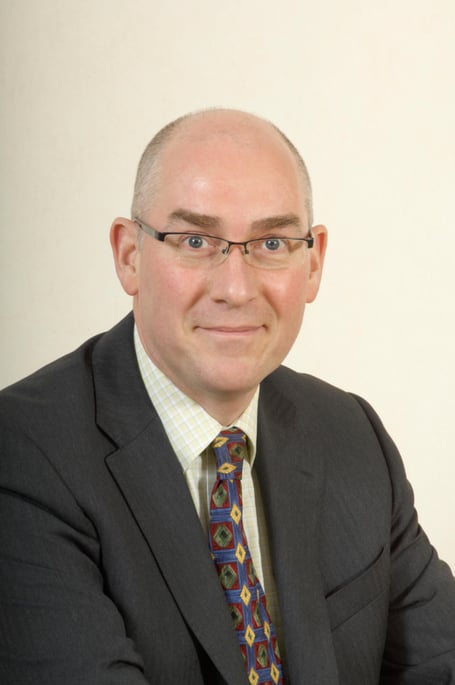
The chief executive of the Department of Health and Social Care admits there has been a reluctance in his department to discuss incidents where things have gone wrong.
Dr Malcolm Couch told the social affairs policy review committee that for lessons to be learnt from mistakes, ’the first challenge is people reporting issues’.
He was responding a question from committee chairman David Cretney MLC who quoted the West Midlands Quality Review Service final report about whether lessons are learned and shared across DHSC.
The report stated: ’We were unable to identify whether trends and themes of incidence were being considered and appropriate lessons learned and shared.’
.jpeg?width=209&height=140&crop=209:145,smart&quality=75)
.jpeg?width=209&height=140&crop=209:145,smart&quality=75)
Mr Cretney asked Dr Couch and Health and Social Care Minister David Ashford MHK if they recognised the concerns and if so what had they done about them?
Dr Couch responded: ’I think there is a natural reluctance in health and care services not to talk about incidents where things may have gone wrong or come close to going wrong, because if we get things wrong, we could harm people.’
However, he added that the island does have a ’reasonable’ reporting record for mistakes.
He said some are unavoidable as ’humans make mistakes’.
Dr Couch noted how mistakes such as the breast screening scare and endoscopy recall show the responsive nature of the island’s health system and how it can and has learned from mistakes of the past.
Dr Couch said he wished the incidents had never happened, but noted that each had improved the system.
Speaking about the breast screening error which was revealed earlier this year, he said: ’We spotted a pattern of incidence in five women that triggered a system wide review of everyone who had been cared for by a particular physician.
’We told all of the affected people, told Tynwald and told the public and we got on and fixed it.’
A total of 1,213 cases were subsequently re-examined and, from those, 26 women were found to require further examination.
Dr Couch insisted no-one was harmed by issues in endoscopy when patients who should have been invited for a follow-up, weren’t.
Julie Edge MHK asked how many incidents were reported both internally and externally and asked whether there was any benefit in combining the two systems.
Mr Ashford said while it was an idea that could be explored, there are different levels of complaints and incidents. He added: ’We’ve to be careful not to get a large amount of data that really show us very little.’
Comments
This article has no comments yet. Be the first to leave a comment.