
Moves towards an ’opt-out’ system of organ donation rules took a further step this week.
The Human Tissue and Organ Donation Bill passed its first significant hurdle in the parliamentary process on Tuesday, when it was granted a second reading in the House of Keys.
The Bill, being brought by Martyn Perkins (Garff), will put an ’opt-out’ system into law.
He explained: ’The legislation is known as a soft opt-out option.
-(1).jpeg?width=209&height=140&crop=209:145,smart&quality=75)



’Everyone over the age of 18 will be considered opted-in unless they opt-out of organ donation.’
England, Scotland and Wales all have opt-out systems.
Mr Perkins said the main aims of the bill would be to modernise the law on consent to organ donation, enable more organs to become available to save and improve lives and also clarify the process and reduce stress for donor families.
Mr Perkins said the UK NHS organ donor database had agreed to record the wishes of Isle of Man residents, at no cost to the Isle of Man.
’Vitally it’s a quick and convenient one-stop shop for the medical team to ascertain your wishes,’ he said. ’Time is of the essence when organ donation is taking place.
’The easiest way of making your wishes known is to go on to the UK NHS organ donor database and register your decision. You can opt-out with no stigma attached or you can opt-in and choose which of your organs you wish to donate by ticking the relevant boxes.’
There is also a dedicated phone line for people who do not have computer access.
A potential donor’s family will always be consulted.
Mr Perkins said: ’Currently the question that is asked is, "Will you give permission for your loved ones organs to be donated?"
’If the legislation goes through the question will be different, it will be along the lines of, "Did you ever hear your loved one say they did not wish their organs to be donated?" - as indeed the donor may have changed their mind the week before and told their relatives, in which case donation would not take place.’
He added: ’If you have not expressed your decision to opt-out of donation and are not in an excluded group, it will be considered that you consen to donate your organs.
’So even if you don’t record that you want to be an organ donor, it is important to let your family know what you want.’
The Bill does not cover ’exotic transplants’ such as faces or whole limbs.
Already, more than 13,000 Isle of Man residents have registered their decision on the NHS database, including 133 who have opted out completely.
The Bill will also update legislation on human tissue, which Mr Perkins said was ’sadly lacking’. It will update the laws and provide a legal framework for health managers, including mortuary and path lab managers.
It will modernise Manx law on post mortem examinations and the retention of tissue and organs. It will permit the analysis of a person’s DNA if necessary for certain specific purposes, such as when a rape victim wants more medical information but the perpetrator is dead.
Mr Perkins said: ’I consider the bill to be one of the most important pieces of social legislation that this administration will bring forward.’
He was supported by Dr Alex Allinson (Ramsey) who said: ’What this Bill does is really champion those tenets of choice, autonomy and, above all, communication, to make sure that people, individuals have their choice respected.
’Organ donation is a life saver. I have personally seen the benefit it can have to people on our island, who are struck, particularly with liver disease, kidney disease, heart disease or lung disease.’
Mr Perkins said there were a number of people in the island whose lives had been changed by organ transplants.
’I am also very much aware of the relatives who have lost loved ones and have had to make the difficult decision to donate their organs at a time of family trauma,’ he added.
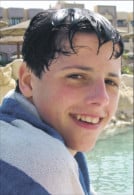
’Daniel Boyde was a young Manx lad who tragically lost his life following a car crash in 2007. His mum Diane Taylor bravely gave permission for his organs to be donated which helped four other people.’
Since then Diane has campaigned on organ donation and raised money to fund a memorial garden in Noble’s Hospital to commemorate all donors from the island.
Mr Perkins said for that reason he wanted the Bill to remember the 15-year-old and be known unofficially as ’Daniel’s Law’.
The Bill will require the Department of Health and Social Care to provide Tynwald with an annual report, and also to publicise the benefits of organ donation every year, on or around March 15, which was Daniel’s birthday.
Comments
This article has no comments yet. Be the first to leave a comment.