
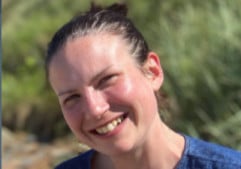
Two island speech therapists are looking to organise a group for those suffering from Parkinson’s Disease (PD), with the aim of improving communication.
Amy Howse and Rebekah Traynor, who are both qualified, are inviting people to get in touch.
Ms Traynor, who previously set up a Parkinson’s Disease Communication Group while she was working at NHS hospital in Rugby, said that in addition to improving communication and confidence, such groups can also help by providing a place where people can ’meet others in a similar situation facing similar challenges’.
Ms Traynor explained: ’Parkinson’s Disease can affect communication.


’It can change the volume, clarity and intonation of speech and can reduce the ability to change facial expressions.
’Sometimes this is not always recognised and can seem like a partner or friend needs to have their hearing checked or they are perceived not to be interested in the conversation. ’These changes in communication can be exhausting and can also lead to reduced motivation to contribute to conversations.
’People have described a loss of confidence and a reduction in their social activities due to their changes in communication.
’Sometimes it is not recognised that a speech and language therapy programme can work on different aspects of communication and help to build confidence and encourage people to expand their social opportunities.’
The therapy programme will run over six weeks, with attendance twice a week.
It will involve work on: speech volume, clarity, facial expression and warm-ups, conversation skills, whilst also being a place to meet others.
Anyone interested in joining the group can contact Amy and Rebekah by emailing [email protected] or phoning 312999.
Amy Howse and Rebekah Traynor, who are both qualified, are inviting people to get in touch.
Ms Traynor, who previously set up a Parkinson’s Disease Communication Group while she was working at NHS hospital in Rugby, said that in addition to improving communication and confidence, such groups can also help by providing a place where people can ’meet others in a similar situation facing similar challenges’.
Ms Traynor explained: ’Parkinson’s Disease can affect communication.
’It can change the volume, clarity and intonation of speech and can reduce the ability to change facial expressions.
’Sometimes this is not always recognised and can seem like a partner or friend needs to have their hearing checked or they are perceived not to be interested in the conversation. ’These changes in communication can be exhausting and can also lead to reduced motivation to contribute to conversations.
’People have described a loss of confidence and a reduction in their social activities due to their changes in communication.
’Sometimes it is not recognised that a speech and language therapy programme can work on different aspects of communication and help to build confidence and encourage people to expand their social opportunities.’
The therapy programme will run over six weeks, with attendance twice a week.
It will involve work on: speech volume, clarity, facial expression and warm-ups, conversation skills, whilst also being a place to meet others.
Anyone interested in joining the group can contact Amy and Rebekah by emailing [email protected] or phoning 312999.
Comments
This article has no comments yet. Be the first to leave a comment.