
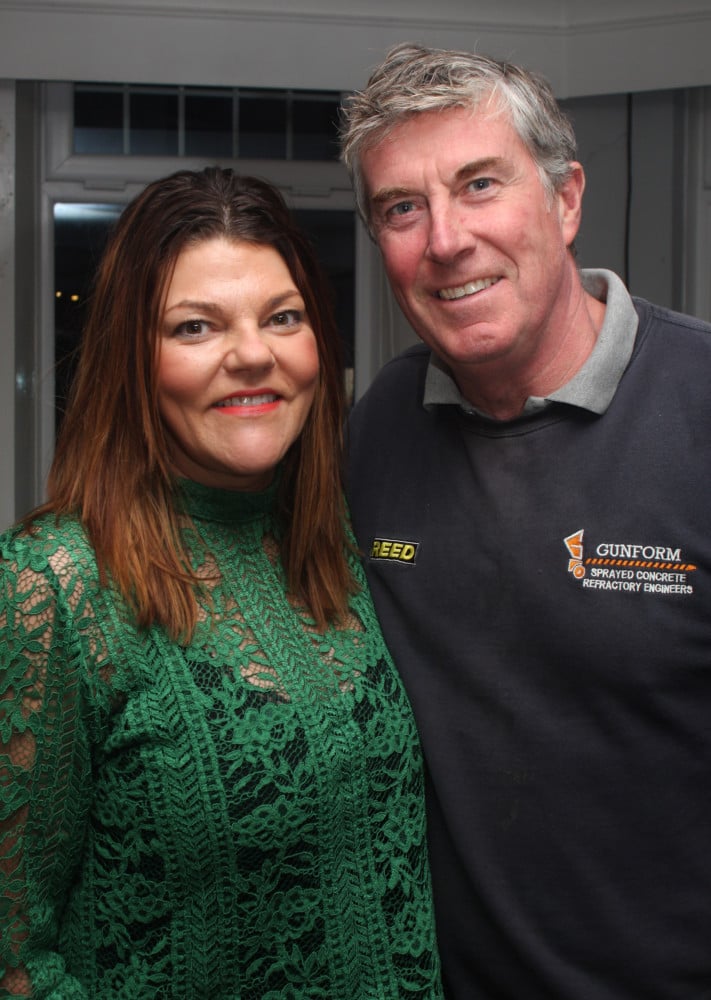
It’s not something I’ve hidden, not something I’ve been private about. I’ve been quite open about it, says Steve Royle.
Steve was just 52 in April last year when he was diagnosed with prostate cancer.
The director of a building firm, he is married to Jane and they have two daughters.
Steve, who lives in Laxey, said: ’I didn’t have any symptoms really. I went to the doctor about something else and, when he sent me for a blood test, he said: "Have you ever had your PSA done?".’
Prostate-specific antigen (PSA) is a substance made by cells in the prostate gland (both normal cells and cancer cells). PSA is mostly found in semen, but a small amount is also found in the blood. Most men without prostate cancer have PSA levels under 4 nanograms per millilitre (ng/ml) of blood. The chance of having prostate cancer goes up as the PSA level goes up.
Steve said: ’The doctor said: "We’ll get your bloods done and get your PSA checked over". It came back high so they sent me for another one and said: "It shouldn’t be anything to worry about" and the next one came back slight lower, I think 11.9.’
The doctor sent Steve for a biopsy, still assuring him that "it should be fine", as Steve was at the lower end of the age spectrum for prostate cancer.
Steve says: ’Then it came back that I had cancer in both sides of the prostate.’
It is estimated a diagnosis of prostate cancer will be given to one in eight men in the UK at some point in their lives. Men aged 50 or over, men with a family history of prostate cancer and black men are more at risk of getting prostate cancer.
Although younger than most of them, Steve’s risk was slightly increased by the fact that his mother had had breast cancer.He was sent to Clatterbridge to see a team where he was offered a choice of treatments: hormone therapy and radiotherapy or removal of the prostate. ’Although you’re quite young it is probably better to have it all removed,’ was the recommendation. Steve opted to have it removed along with 14 lymph nodes that were also found to be cancerous.
This was followed up with further PSA tests every three months which, after initially showing levels going down, showed them starting to rise so a seven-week course of radiotherapy was recommended.
Steve said: ’My PSA level was 0.08 and they said I didn’t have to have it done till it got to between 0.2 and 0.5. I was going to put it off but in the end I went ahead and had it done.’
The treatment was carried out at Clatterbridge. ’They were amazing,’ Steve said.
The Isle of Man company he is a director of has a sister company on the Wirral so he was able to carry on working.
’They advised me not to but I just wanted to keep my mind active,’ he said.
’Luckily I had no side effects, though towards the end I was starting to feel tired.’
The radiotherapy worked and Steve’s PSA levels dropped to 0.00 where they have remained since, though he still has three-monthly checks. He knows he was lucky to have been diagnosed without having shown any of the usual symptoms.
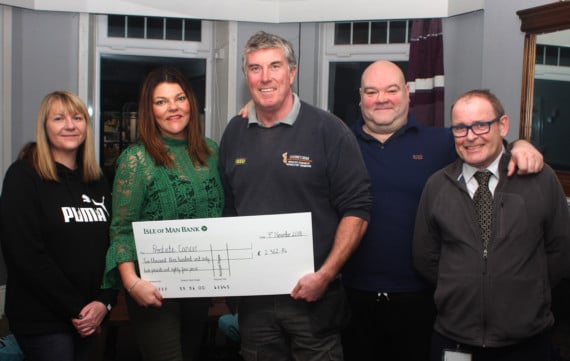
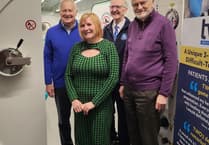
’You’ve got to catch it early,’ he said, adding that any man who experiences any of the symptoms should see his GP straight away. Steve and Jane held a fundraiser at the Bridge Inn in Laxey last month in aid of Prostate Cancer UK.
Jane said: ’We wanted to raise not just awareness but money to go towards the charity that helps people and their families with this - luckily Steve was able to work but not a lot of people can work when they’re in Clatterbridge - so Steve and I and a few friends got together and organised it.’
When asked if he felt relieved that his cancer has been cured Steve said: ’I am for now - touch wood.’
â?¢ Visit Prostate Cancer UK at https://prostatecanceruk.org/
Comments
This article has no comments yet. Be the first to leave a comment.