

For more than a decade, island residents not diagnosed in childhood have been left to manage the effects of their neurodivergent conditions on their own due to the lack of formal recognition or support for them.
Now, a new charity - Isle of Neurodiversity - has been set up to try and plug that gap.
Founded by Jade Boylan, Matt Quine, Aalish Leece and Selina Sheild, the group aims to support adults who are dealing with the consequences of having little or no access to diagnosis or services.
.jpg?width=209&height=140&crop=209:145,smart&quality=75)
-(2).jpeg?width=209&height=140&crop=209:145,smart&quality=75)
‘We’re all very aware that there’s kind of no support for adults over here,’ he said.
The idea for the charity developed from conversations between people with lived experience of neurodivergent conditions, many of whom had encountered similar barriers.
Both Matt and Jade sit on the government’s autism strategy steering group and began exploring how they could provide support beyond formal systems.
Jade, an arts engagement officer for the Isle of Man Arts Council, was diagnosed with autism around 10 years ago, when a pathway was still available through Manx Care.
But she says the situation has since changed dramatically.
‘It can be quite obviously very frustrating and confusing to know why in the 10 years since we now actually have nothing,’ she said.
For many, the only option now is to seek a private diagnosis - something that comes at a significant cost.
Assessments can exceed £600, with further expenses for follow-up appointments and medication.
For those diagnosed with ADHD, ongoing prescription costs can range from £60 to £150 or more, depending on the treatment required.
Singer Alice Ashe, who was diagnosed in 2024, said paying privately allowed her to access support quickly - but at a price.
‘Reviews are £60 each time to be written a new prescription, which is basically every two to three months,’ she said.
‘My medication costs £75 a month until I was on a stable dosage, then it went to £70.’
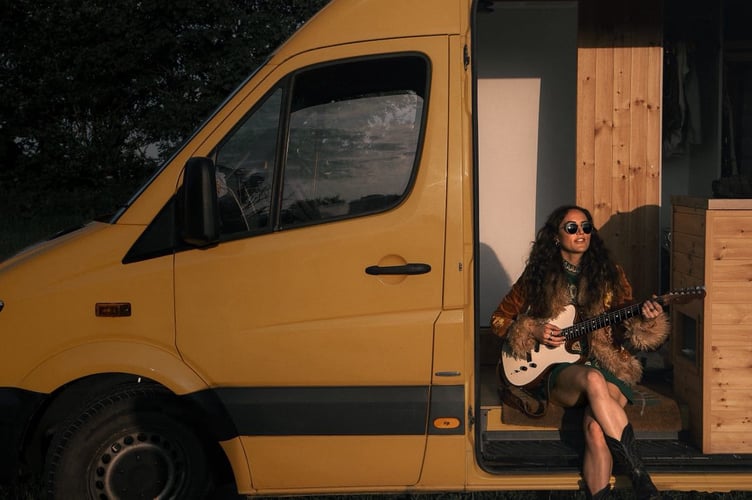
While she described the medication as having a positive impact, helping her feel more connected and reducing anxiety, the financial burden remains a concern.
‘At the moment I’m really struggling with the costs of it and basically feel that it’s almost going to come down to having to come off it,’ she said.
‘I feel stuck.’
The absence of an NHS pathway has left many in similar situations.
‘These things can be seen as just quirks or slight differences, but they are disabilities at the end of the day,’ she said.
She added that while there are organisations on the island providing valuable support, many are focused on children or those with more severe learning disabilities.
‘There is a gap on the island in terms of support for adults without severe learning disabilities,’ she said.
In response, Isle of Neurodiversity has been working to create a sense of community and shared understanding.
Over recent months, Isle of Neurodiversity have been running peer support groups, both online and in person.
Aalish said one of the most important aspects of these sessions is helping people realise they are not alone.
She said participants often come to understand that they are not ‘wrong’ or broken but simply experience the world differently.
This shared understanding, she added, can be a powerful and reassuring experience.
The charity has also developed an online resource hub and blog, offering information based on lived experience.
The aim is to provide something more relatable than traditional sources, such as NHS guidance.
Customer experience and proposition manager Aalish said many of the people they meet struggle with maintaining employment or relationships.
Often, she said, the issue lies not with the individual, but with the systems around them.
‘These people are amazing humans that are perfectly capable, intelligent, wonderful, kind, vibrant,’ she said.
‘But in those systems where there are not adjustments in place, such as in the workplace, it can be difficult.’
She is a strong advocate for simple workplace adjustments, which she said can make a significant difference.
In her own role, receiving meeting agendas in advance helps to reduce anxiety and uncertainty.
She noted that such measures are often low-cost or free and can benefit everyone, not just neurodivergent individuals.
The group is also working with organisations across the island to promote more inclusive environments.
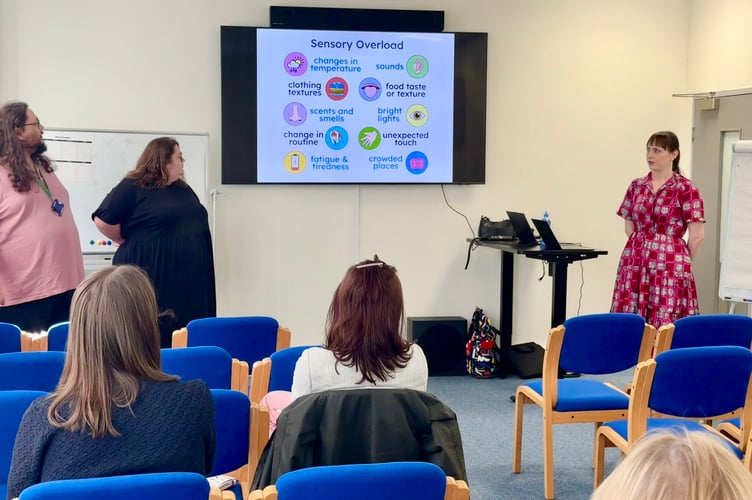
Matt pointed to recent work with the Department for Enterprise, where the autism strategy steering group supported a ‘quiet hour’ at the Isle of Man’s Young Adult and Graduate Fair.
The initiative was designed to create a more accessible environment for those who may find busy or noisy settings overwhelming.
Alongside the charity’s voluntary work, there are signs that formal support may return in the future.
Plans have been approved in Tynwald to develop a new NHS diagnostic pathway, subject to funding of £2.8m.
A diagnostic centre for autism and ADHD could also be established by April 2027, with a broader, all-age pathway in place by 2029.
The plans also aim to improve support across services such as healthcare, education and employment, with a focus on earlier identification and clearer guidance.
However, for now, no such pathway exists.
Manx Care confirmed that adult diagnostic services are not currently included in its mandate.
A spokesperson said it therefore cannot provide or commission an NHS adult diagnostic service on the island.
The organisation acknowledged the role of third-sector groups and the challenges faced by individuals and families.
The Department of Health and Social Care said progressing a diagnostic pathway would be the first step towards a comprehensive service.
It is also exploring the potential for a community-based assessment model to complement more complex care provision.
Until those plans are realised, charities such as Isle of Neurodiversity are stepping in to provide support where formal services are absent.
Matt said the focus is on empowering individuals.
‘It’s about helping people realise what they’re capable of,’ he said.
In the absence of a formal diagnostic pathway, that support is a lifeline for many, helping those who have fallen between the cracks in the system.
You can find out more through their website: https://www.isleofneurodiversity.com/