

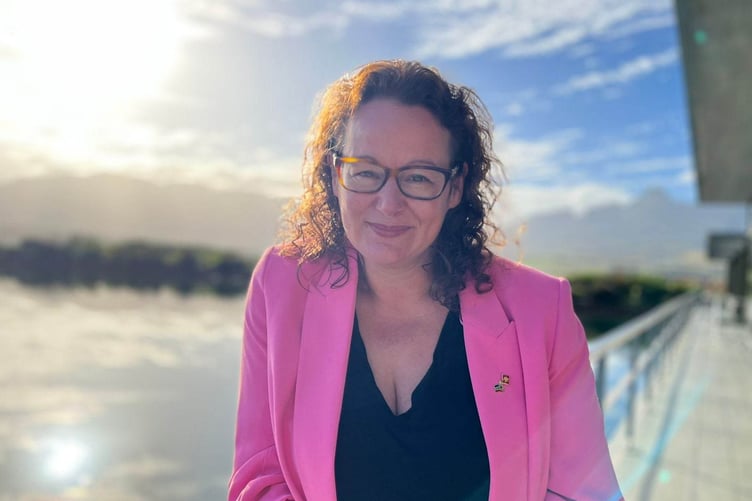
Government never factored in the consequences when it embarked on a project to liberalise immigration policy.
Immigration advocate Maria Bridson, giving a presentation to the Positive Action Group, said the changes made in 2018 had ‘stripped away a lot of the safeguards in the system’.
The changes introduced a new worker migrant visa route and relaxed work permit conditions.
Between 2011 and 2016 the Manx government issued around 57 worker visas plus 16 dependents each year, supplemented by EU workers.
 22 reception pupils in the Isle of Man were not toilet trained in September last year
 Manx National Theatre brings Fand’s Story to the Gaiety Theatre later this year
.jpeg?width=209&height=140&crop=209:145,smart&quality=75) Cost of Steam Packet fares could rise due to UK's proposed 'net-zero' emissions tax
Cost of Steam Packet fares could rise due to UK's proposed 'net-zero' emissions tax.png?width=209&height=140&crop=209:145,smart&quality=75) Family-friendly orienteering event planned at Bradda Glen
Family-friendly orienteering event planned at Bradda Glen
But by 2019, 300 worker migrant visas were being issued for people entering the country and by 2023-24 this had risen to 1,082 entry clearance visas.
Between 2020 and July 2025, some 6,026 worker migrants and their dependants had moved to the island, the meeting at the Manx Legion Club was told.
‘It could be said, in fact it is said, that this government liberalisation programme was really successful.
‘Its mission was to bring in skilled workers, fix labour shortages, add younger people to the demographic and it achieved all those things.
But, said Mrs Bridson, the unprecedented high levels of immigration had consequences.
She said while the low level of checks that existed within the immigration system didn’t matter very much when there were only 57 new people coming in each year, this didn’t work very well when you scaled up the numbers.
She said: ‘Nobody stopped to question why the Isle of Man really needed so many cleaners or so many chefs, or where all the software engineers that were coming in for the gaming companies, were going, or what they were doing every day.’
Mrs Bridson said the system didn’t flag up patterns of concern, there was no requirement to provide a 10-year DBS check or qualification certificates, and it wasn’t the immigration officers’ role to ask if a job was genuine.
She said: ‘The government did not know who was here, what jobs they were working in, what they earned, how many dependents they had and whether these people were in fact safe or being abused.’
The system itself became a target for abuse by criminals and there were ‘pretty awful’ consequences for migrants, she said.
Mrs Bridson insisted most migrants moving to the island work hard, contribute and abide by the law.
Although net economic contribution is not the only factor, she said, most of the new arrivals are low earners.
And while they are not allowed to claim benefits until they are granted permanent residency, they do have access to free healthcare and free education.
Earlier groups of migrants had come on their own, leaving their families overseas and remitting funds to them but there has since been a 37% increase in the dependency ratio.
’It comes with extra difficulties and an extra cost which weren’t really factored into the initial project,’ she said.