
Light - and how it is used - is the essential element in every photograph.
The word ’photography’ is derived from the greek ’photo’ meaning light and ’graphy’ meaning writing - so literally writing with light.
But the light that we see - visible light - is a form of electromagnetic radiation and just part of a broad spectrum defined by wavelength and which varies from radio waves, microwaves and infrared at one extreme to ultraviolet, X-rays and gamma rays at the other end.
A photograph is created by capturing the light reflected from the subject onto our film or digital sensor - so an understanding of light and its properties is fundamental to photography and will help in achieving better images with that ’extra wow’ factor.


.jpeg?width=209&height=140&crop=209:145,smart&quality=75)
Light has physical properties such as direction - and hence we see shadows - but light can also be absorbed or re-directed by reflection off other surfaces.
It can be strongly directional with heavy shadows as with a midday sun, but in can also be soft as in an overcast day when the light is diffused and giving weak or no shadows at all.
It has a temperature which is measured in degrees kelvin - daylight typically at around 5500-6000K degrees, but this varies enormously through the day. And differences in the kelvin temperature produces interesting opportunities for photography.
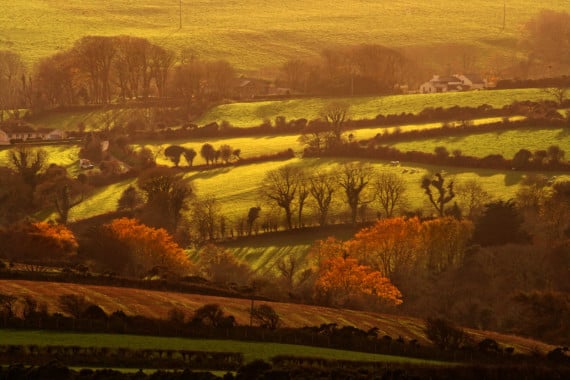
There is a period around dawn and soon after and shortly before sunset that has long been known to photographers as the ’golden hour’ - which gets its name from the warm tones of reds, oranges and yellows present in light at these times and gives the light a golden glow with wonderfully soft shadows particularly good for portraits and landscape images.
The time of an hour is very approximate - it may vary from a few minutes close to the equator to many hours in much higher latitudes as the effect is best seen when the sun is low on the horizon.
At such times, sunlight must travel further through the atmosphere to reach the earth than at midday when the sun is more directly overhead - and in travelling further, the light rays are scattered in the atmosphere by items such as dust and water droplets.
But the blue and violet (cooler) wavelengths are scattered more than the warmer, leaving more of the red and orange wavelengths to reach our eyes, and producing that golden glow.
The golden hour can never be guaranteed. It will depend on the weather and atmospheric conditions.
So here on the island, careful planning will be essential when wishing to take advantage of the golden hour, as the opportunity is likely to be short and the light conditions to change quickly, requiring speedy amendments to your camera settings.
You should have a clear idea of the images intended whether shooting portraits or a landscape - the vantage point from which to take your shots, the exact direction in which the sun will rise or set, the best angles at which to shoot, and what to include (and exclude) from the image.
And given the usually short time available, have your equipment set up in advance ready to go - so arrive early!
And if its an evening shoot, hang around - there are other great shots waiting at sunset and into the twilight, of which more in a later article.
Belonging to a camera club such as the Isle of Man Photographic Society will give opportunity to swap experiences with fellow members and to develop your skills. Have a look at our website - www.iomps.com or our Facebook page for lots of ideas to stimulate your interest.
Comments
This article has no comments yet. Be the first to leave a comment.