
Last week I covered the subject of high key photography - a technique using lights, and lots of it, to create almost shadowless images, usually with white or almost white backgrounds.
The intent with high key work is often to generate a mood of cheerful optimism, happiness, and of a ’feel good’ factor - particularly useful in portraits and advertising images - and to eliminate the drama of images dominated by shadows.
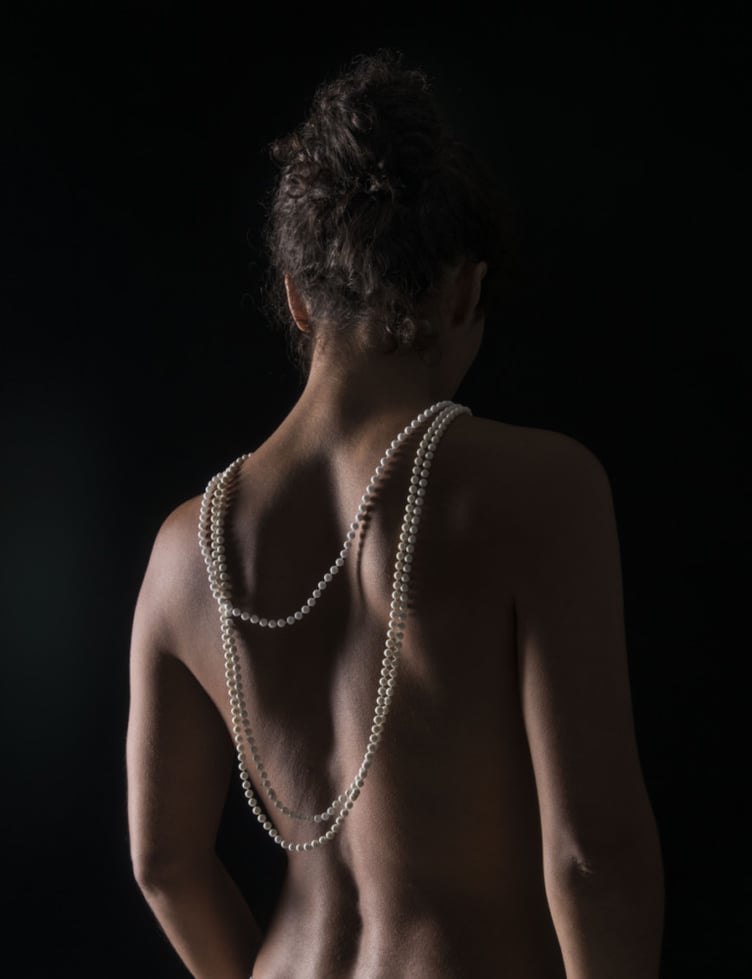
Low key photography is thus the opposite of high key - it uses shadows and deep blacks to create intrigue, tension, moodiness and impact to ensure attention is focussed on the lit areas of the image.
Whilst monochrome black and white might appear a logical outcome for low key imaging, it is equally applicable to colour where a strong colour such as red, blue or yellow will grab the eye.


.jpeg?width=209&height=140&crop=209:145,smart&quality=75)
It is important that the background remains dark so the direction of the lighting on the subject is often sidelighting or rim lighting (from the rear, behind the subject) - but which also necessitates the photographer having firm control of the areas not being lit.
Side or rear lighting will also add drama to your images and enable the interplay of shadows and highlights of your subject to be put on display - giving great modelling, shape, depth and an almost 3D effect to your images.
The fundamental guideline is to experiment with the lighting - its strength and its direction until you achieve the desired result.
A dark background is helpful and perhaps the easiest way to achieve low key photography but is not essential - careful control of the lighting ratio, and ensuring the subject is lit well in front of a background which is not lit or receiving very little light will still give a low key result.
Shooting in RAW format is always recommended as this maximises the detailed information in your image.
A low ISO should also be used if possible - this is because noise (the ’graininess’ and chromatic aberration seen in the purple and green fringeing of a digital image) increases with high ISOs.
Low key photography is particularly effective at introducing texture and intrigue to your images - the lines and creases in an elderly male face will give character, for example, whilst the muscles in a bodybuilder or the curves and shapeliness of a female bodyscape will be emphasised.
But it is not just portraits which benefit from a low key approach - bottles, glass, fruit and other still life subjects, for example, are also eminently suited to the process.
A good photograph of whatever style will have an impact, perhaps tell a story or evoke an emotion - and low key photography is just another technique in the photographic toolbox to create a relationship with the viewer and a shared vision with the photographer.
Why not consider joining a camera club such as the Isle of Man Photographic Society and take the opportunity to gain experience and skills?
Members of the Isle of Man Photographic Society will always give a warm welcome to new members and be happy to share their knowledge, and give advice to help develop your skills. Have a look at our website - www.iomps.com or our Facebook page for lots of ideas to stimulate your interest.
Chris Blyth
Comments
This article has no comments yet. Be the first to leave a comment.