
Business sectors and nature conservationists must work together to keep the Irish Sea healthy.
This was the overall message shared at the Irish Sea Centre’s (ISC) open event, which introduced the new charity aiming to conserve the sea’s eco-system for future generations.
About 100 people attended the event at the Manx Museum which saw speakers from different sectors - that rely on the eco-system - give talks.
Dr Ken Milne, the government’s director of energy policy; Peter Duncan, senior marine environment officer for DEFA; and chief executive of the Manx Wildlife Trust, Tim Graham, gave talks on their sectors.



Peter Duncan also spoke about marine biodiversity, Craig Whalley on basking sharks and seals, plus Erica Spencer gave a talk on river migrants such as eels and salmon. The event was sponsored by ’2018 Year of Our Island’.
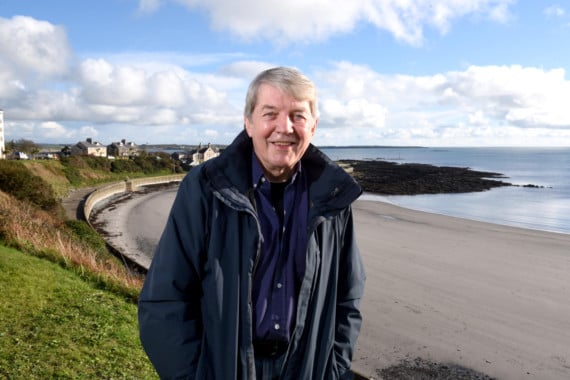
Dr Roger Pullin opened the ISC’s event along with Terry Holt. Both are former members of the Port Erin Marine Laboratory that closed in 2006. The response to the event was ’extremely positive’, Mr Pullin said.
’People are genuinely interested. It’s quite something for people to take on board - a whole Irish Sea eco-system perspective which includes fishing, tourism, transport... anything to do with the sea.’
It was highlighted that nature conservation should be a sector in its own right.
’It really needs as much attention as policy-making, planning and the financial sectors,’ said Mr Pullin. ’When we’re using the same patch of land and resources you have to work together.
’An eco-system works as a unit. It’s about keeping the Irish Sea healthy and making this last into the future.’
He added: ’I expected some questions about the Ramsey Marina development, but I think people want to go to the meeting first.’
Mr Pullin added that he is going to the consultation at the Mountain View Innovation Centre in Lezayre on March 6.
’We really need to look at what’s being proposed and consider the up side and down side of it,’ he said.
The marine biologist showed a video at the event called ’Ridge to Reefs’ which looked at how poor land-based practices have a negative impact on marine life and fisheries.
In the film, a Dr Richard Hamilton from The Nature Conservancy in Australia showed how logging in the Solomon Islands caused soil erosion and silted up coral reef fish nurseries. He expressed that there is a need to promote a ’Ridges to Reefs’ approach to policies and practices not only related to the sea, but also on land.
’We’ve got to look at this eco-system from the hills to the sea bed,’ said Dr Pullin. ’We’re not just looking at the water but what we’re putting into it and how the sea and its various organisms will be impacted.’
He added: ’Public awareness of how precious marine life and ecosystems are I think it’s really grown tremendously. The time is really right for pushing forward and catching the tide now that initiatives have kicked off.’
Comments
This article has no comments yet. Be the first to leave a comment.