
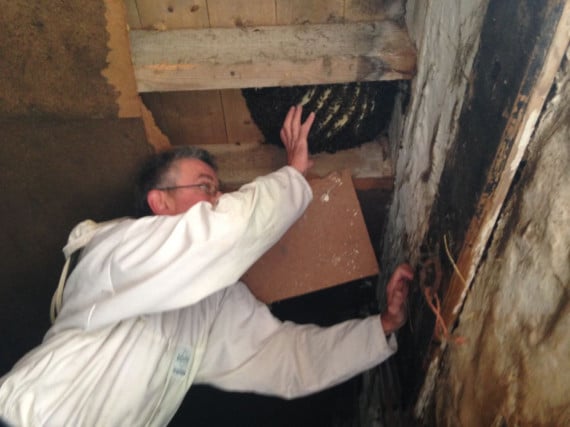
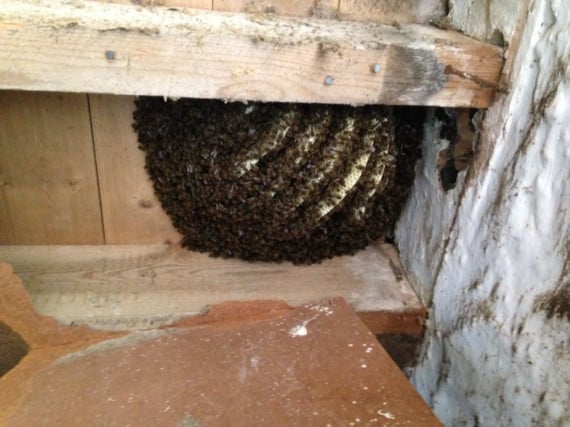
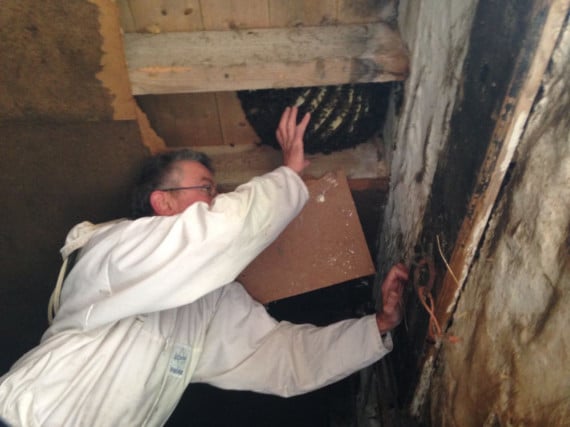
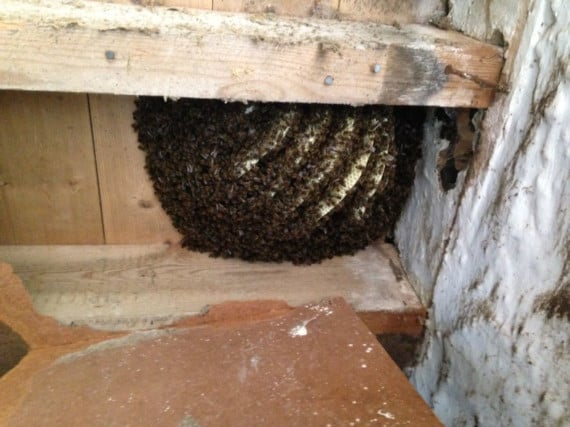
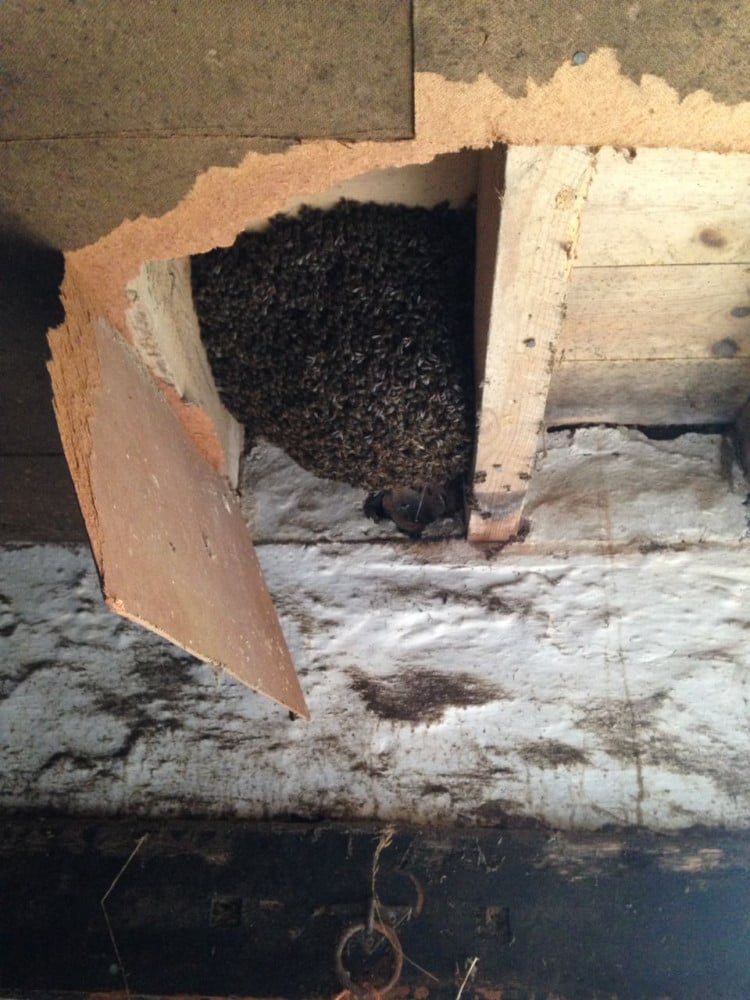
A beekeeper has told how he removed a hive from a house in the island that potentially had up to 10,000 bees.
Robert Wright of Crosby said he was contacted about a hive in a house at Ballacallin Beg where a swarm of bees had made their home.
Mr Wright said: ’There were probably between 7,500 and 10,000 bees, which is a reasonably large hive number.
’They had come in through a pipe in the wall into a stable that has accommodation up stairs.’
.jpeg?width=209&height=140&crop=209:145,smart&quality=75)
swarming
He said that swarming was entirely natural at this time of year.
’When the bees swarm, the queen leaves the hive and takes 50 to 60% of the bees with her and they go to find a new home.’
Mr Wright said the first task is to examine how many bees there are and then decide how to deal with them.
He said that to remove a large hive in a confined space it is sometimes necessary to kill the insects.
However, in this instance, the owner of the house gave Mr Wright permission to remove a panel to remove the bees alive.
Taking great care, he gently swept aside the bees and removed the honeycomb using a hive tool to cut it out.
He then removed the comb and placed it inside a man-made hive.
Mr Wright said that luckily the bees he worked with this time were calm, but in his 40-plus years’ experience he had dealt with angry and aggressive bees.
He describes bee keeping as a hobby and called the ’ancient craft a labour of love’.
Mr Wright spoke further on bees in the wild and their role within the Manx way of life.
’In the wild, bees will live in trees, in old barns or holes in walls and them their home,’ he said.
’A church on the island actually has wild hives in its ceiling and it does not harm at all.’
However, he did warn it was important to know what you’re doing with bees due to their nature, as bees, like humans, have moods and traits.
Mr Wright has been a been keeper for more than 40 years. He follows in his father’s footsteps and as a result was familiar with bees at a young age.
Anyone who discovers a hive is advised toeither contact the Department for the Environment, Food and Agriculture or a beekeeper. People shouldn’t try and deal with it on their own.
In reflecting how bees were good for the Manx way of life, Mr Wright offered some words of advice.
He recounted a short poem that was recited by farmers who kept bees.
’A swarm in May be worth a load of hay.
’A swarm in June be worth a silver spoon.
’A swarm in July is not worth a fly.’
He added in his opinion, honeycomb honey is the best both in terms of taste and nutritional value as it is the most pure honey.
honey
Manx honey can be useful for those who suffer from hay fever as well, as the pollens which affect sufferers go into the honey, it is like a inoculation jab where a small dose of the pollen can reduce the effects of hay fever.
Mr Wright said he saw bee keeping as a therapeutic, being a calming and relaxing craft.
Manx bees are special as they are free of a paristic mite, varroa, which hasinflicted severe damage to bee populations in the UK and across Europe.
Partly because the island has remained free of the parasite, it is illegal to bring foreign bees into the Isle of Man.
Comments
This article has no comments yet. Be the first to leave a comment.