
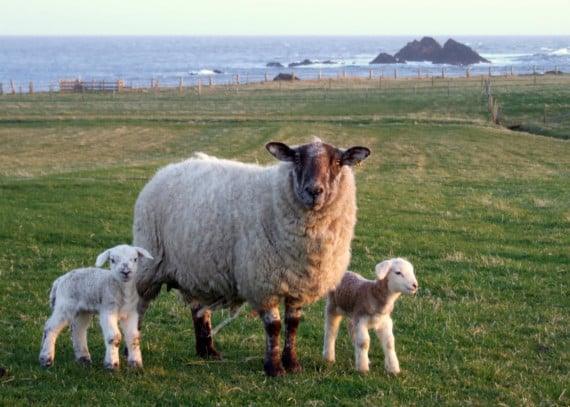
The end of February and the beginning of March are peak times for lambing, and the sight of newly-born lambs taking their first steps and gamboling around their mothers is one of the highlights of spring.
However, UK and Manx farmers reported an increase in the number of sheep worrying incidents in 2019 resulting in a range of consequences - dead or mortally wounded sheep and lambs, ewes that aborted their lambs due to shock, and lambs that were abandoned by, or separated from, their mothers due to stress.
The simple presence of a dog nearby can cause this stress, and the abandoned lambs can die of starvation or hypothermia if their mothers fail to find them.
In the Isle of Man 91 sheep have been killed by dogs in the last two years alone, and a further 21 injured (and there may be many more cases that have not been officially reported to the police).
The National Sheep Association has undertaken research that concluded that most attacks are carried out by single dogs.
The research also concluded that farmers feel that the most likely cause of attacks is that dog owners assume that their pet will not attack livestock, or cause any damage if it does. The second most likely cause is that owners do not keep their dogs on a lead.
It is every dog’s instinct to chase, even if they are normally obedient with good recall skills, and enjoy being around other animals.
Please observe the Countryside Code when you are out walking your dog and keep your dog on a lead when you are near sheep. Remember that a farmer may legally shoot a dog that is attacking or chasing livestock under certain circumstances.
The law also takes this matter seriously - it is an offence to allow your dog to worry sheep, and may lead to prosecution and a fine of up to £2,500.
Given the Isle of Man is a semi-rural environment, none of us lives very far away from a flock of sheep.
Is your dog under control at all times, even when it’s at home? Is your back garden secure? Do your gates shut properly? Do you know just how high your dog can jump?
Some particularly agile breeds like collies and greyhounds can easily jump as high as six feet.
Another issue linked to dogs and the countryside is that dog faeces can cause serious, sometimes fatal, diseases in sheep.
So, it is vital to pick up poo not just on paths and pavements, but also when walking in the depths of the countryside.
Farmers often place signs on gates warning dog-walkers that they are coming onto pathways that are near livestock, but it is important that farmers don’t leave signs in situ all year round when they rotate their livestock.
The signs become weathered but, more importantly, walkers stop noticing that they’re there, or think: ’There were no sheep in that field last time, so there won’t be any this time.’
If you see a stray dog, whether it’s near sheep or not, then please advise the government’s dog warden service on 686688 between 9am and 5pm, Monday to Friday (and maybe keep this number stored in your mobile phone). We will do our best to assist at week-ends, and we also encourage the use of our Facebook page ’ManxSPCA Lost and Found Pets’.
If the dog is scared then there is little chance that anyone will be able to catch it other than its owner but a friendly dog that is simply disorientated may allow you to keep it in a garden or garage (with water) until help arrives.
Comments
This article has no comments yet. Be the first to leave a comment.