
We discussed last week how multi-cat households are, potentially, very stressful for the cats concerned, and suggested ways to minimise this stress.
When introducing a new cat into a household there are additional measures that an owner can take to minimise the stress caused by the new arrival.
It is really important to take time, plan carefully, and have lots of patience in order to promote good feline relationships.
The existing cat is likely to see the new cat as a threat to its territory, rather than being its new best friend.

.jpeg?width=209&height=140&crop=209:145,smart&quality=75)

.jpeg?width=209&height=140&crop=209:145,smart&quality=75)
The first stage of a successful introduction is to ensure that the cats can cope with each other’s scent.
Scent is extremely important to cats, and they often rub their scent glands all over us, and the house, to make themselves feel safe.
So, before the new cat arrives rub him or her with a soft cloth and then leave the cloth in the vicinity of the existing cat. Over the next couple of days rub the cloth over furniture at cat height so that the cats’ scents mingle.
At the same time, ensure that the new cat gets used to a cloth that has been scented by the existing cat.
If you can do this before the new cat arrives, keep the cats in separate rooms.
It is important that the existing cat’s routine is maintained and that it receives the amount of attention it is used to.
The second stage of the introduction involves enabling the cats to cope with seeing each other.
A wire mesh or net door fixed to an existing door frame is ideal for this. Passive responses should be rewarded with treats, and toys should be used to encourage the cats to play, so that the cats associate seeing each other with activities they enjoy.
Once the cats are relaxed in each other’s company, the final stage is to remove the barrier between them in a room that has lots of hiding places for them to retreat to.
These introductions should be done for just a few minutes at a time and end before the cats have a chance to become agitated.
In the end the cats’ temperaments will determine whether they become best friends or not, but at the very least (and following a careful introduction as outlined above) they should be able to coexist and tolerate each other’s company.
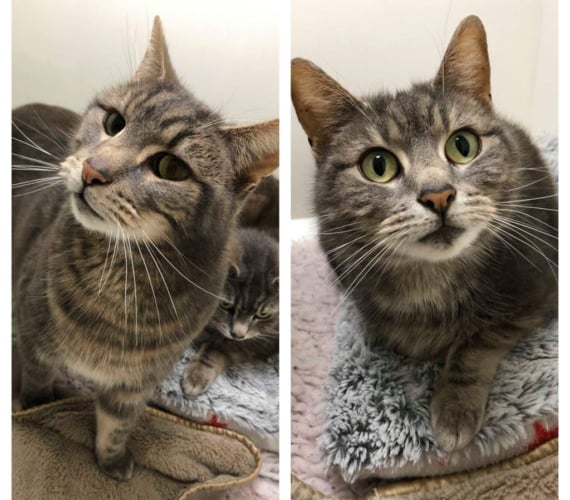
We have several pairs of cats in our cattery at the moment who are very definitely the best of friends.
Bracken (male) and Bramble (female) are eight-year-olds who have always been together, but their lives were completely changed when their owner died and there were no family members able to take on these two lovely cats.
They are well socialised and friendly, and are ’ready-made’ pets.
We’re pretty sure they would cope with any type of household, be that a quiet one or a busy family one.
And given the right introduction, using some of the techniques outlined above, they would probably adapt to living with a dog.
Cheese (male) and Toast (female) are another pair of short-haired tabbies, but they’re only six months old.
They came to us as farm kittens and so they will need time and patience as they learn to trust humans.
They have already started gaining in confidence, reflecting the time that the cattery team and volunteers have invested in them.
Their new owner will need to carry on with their socialisation programme - they will undoubtedly repay the investment made in them and make a wonderful addition to a home.
After all, a house is not a home without a cat!
Comments
This article has no comments yet. Be the first to leave a comment.