
Readers of a certain age will remember how common tortoises were as pets in the 60s and 70s, when they were often imported from warmer climes in terrible conditions, packed on top of each other in wooden crates, with many dying along the way from cracked shells or lack of water.
Welfare concerns led to a 1984 European Union ban on the commercial import of tortoises causing an immediate decline in the legal trade.
It is now illegal in the UK to import or sell wild-caught tortoises and breeders can sell only captive animals bred from parental stock in their care. New-born animals must be identified with a microdot and adults with a microchip or other appropriate method.
But as tortoise numbers have declined, their selling price has increased in line with their rarity, and this has contributed to an increase in their illegal trade.




Before 1983, Mediterranean tortoises sold for about £10 each - now they can change hands illegally for several hundred pounds.
Wild-caught tortoises do not make suitable pets and nine out of ten die within four years because their owners are unable to provide the environmental conditions they need to survive.
We have had several enquiries recently from people who want to acquire a tortoise, and we do our best to dissuade them. If you are tempted to buy a tortoise over the internet, then be prepared to spend large sums on veterinary fees.
Tortoises are often very slow to exhibit signs of illness (which makes the time-based refund offered by commercial sellers of little worth), and it is not easy to judge the health of a tortoise from initial observations.
Conversely, a well-cared for tortoise can live for up to 100 years and outlive you - and so this is also a consideration.
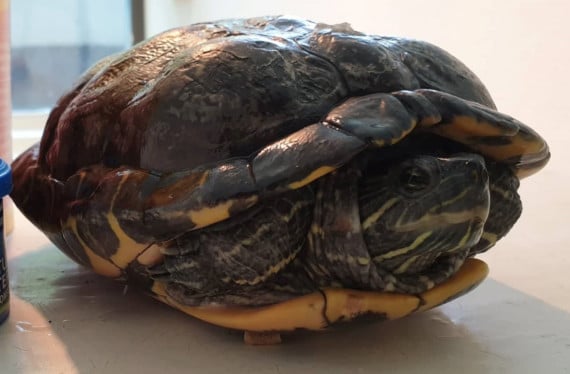
Thankfully we come across very few tortoises at Ard Jerkyll, but we do have a number of terrapins, like the one pictured, brought to us every year because they have been dumped in a local pond as unwanted pets and then found by a concerned member of the public.
Although some terrapins are able to adapt to the wild, most succumb to illness (usually shell rot) due to an inadequate diet and cold conditions.
Given the number of unwanted terrapins (they need a heat lamp in cold weather, they can grow to the size of a dinner plate, and they can live for up to 30 years) it is completely unnecessary to purchase them over the internet.
If you really are interested in keeping terrapins, far better to adopt one and give it a second chance by contacting us (we can keep your name on a waiting list until the next terrapin is brought in) or the British Chelonia Group - www.britishcheloniagroup.org.uk.
We always encourage people to ’adopt don’t shop’ and this can often mean that a prospective adopter has to wait a while before a suitable animal becomes available, but this has the advantage of allowing them to undertake the necessary research about how to look after their pet correctly.
Given the terrapin’s complex welfare needs, this is an essential prerequisite for ownership.
The number of terrapins dumped into our local ponds and lakes has resulted in the terrapin (or, more specifically, the red-eared/yellow-bellied terrapins or ’sliders’, Trichemys scripta) being classed recently by the European Union as an invasive alien species.
There is great concern that they will have an adverse impact on native species such as other reptiles, insects and aquatic fauna.
So, it’s not only cruel to dump an unwanted terrapin because the likelihood is that it will die slowly from malnutrition and disease, it’s also the wrong thing to do from an environmental perspective.
Comments
This article has no comments yet. Be the first to leave a comment.