
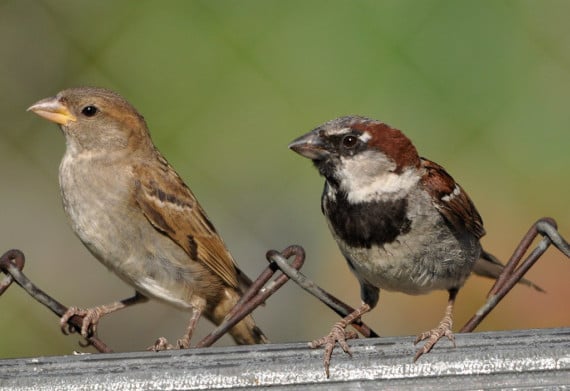
This can be a tough time of year for our garden birds.
Even if you are a regular bird feeder, you may not know that different species will prefer to eat from different feeding stations.
The little sparrows and tits like the hanging feeders, ground feeding is preferred by blackbirds, robins and thrushes (although this is to be avoided if you have cats), and most enjoy the traditional, flat bird table.
These should be placed in areas where the birds have a good view of their surrounding area so that they can watch for predators, and within a couple of metres of a hedge or a tree so that they have somewhere to escape if they feel threatened.
-(2).jpeg?width=209&height=140&crop=209:145,smart&quality=75)
.jpeg?width=209&height=140&crop=209:145,smart&quality=75)


Keeping your bird feeders, tables and baths clean is even more important than usual at the moment, because there is an outbreak of the trichomonosis infection on the Isle of Man.
This disease is spread by the trichomonosis gallinae, a microscopic parasite that affects many species of bird, but which is not a risk for humans, or mammalian pets and wildlife.
Pet birds are, however, at potential risk.
The parasite lives in the digestive system of the infected bird, and it causes a swelling that slowly blocks the bird’s throat meaning that it cannot swallow food and eventually starves to death.
Outward signs of infection include swelling around the bird’s face and throat, and matted, wet plumage around the head area.
The infection is spread via the bird’s saliva, which is why it is so important to keep feeding stations clean. The more birds you have visiting your feeders, tables and baths the greater the likelihood that the disease will spread unless you take precautions.
These include:
rotating feeders and baths around your garden so that there isn’t a build-up of potentially infected old food and droppings on the ground
cleaning and disinfecting feeders and baths at least once a week, and allowing them to dry out thoroughly (which will kill the trichomonosis parasites, and other bird diseases)
changing the water in baths daily.
Trichomonosis disease is reported most frequently in birds that are the most common visitors to our gardens - the chaffinch, in particular, is very vulnerable.
This species came ninth in the RSPB’s 2019 Big Garden Birdwatch, which counted more than eight million birds thanks to almost half a million people sending in their observations.
The house sparrow came top of the list for the 16th year running, with an average of four spotted per garden, and a million counted overall.
But being spotted more than other birds doesn’t mean that all is well for sparrows - sightings have fallen by nearly 60% in the 40 years since the Birdwatch project started.
It is well-documented that loss of habitat and a reduction in insects are the main causes of this decline in house sparrow numbers, as is the impact these environmental changes are having on other species such as bees.
While we can all do our bit by ’re-wilding’ our gardens, feeding our garden birds daily at this time of year can have a direct influence on their numbers, particularly if good hygiene is maintained.
So, keep your bird feeders well stocked with nuts and seeds, and maybe consider buying a bird-feeding kit from the ManxSPCA for just £2.
These kits are a great way to encourage children to get involved with helping wildlife, and they would make ideal stocking-fillers. They will be on sale at this Sunday’s (November 17) Christmas fair, alongside a huge range of crafts and Manx produce.
The fair is on from 1pm to 4pm, in the Playbarn at Ard Jerkyll, and is a wonderful way to start the festive season.
Comments
This article has no comments yet. Be the first to leave a comment.