
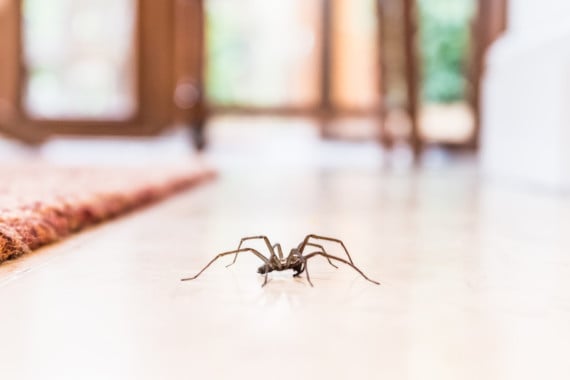
Have you noticed more spiders in your home recently?
They typically mate in the autumn months and so they are at their most active during September and the beginning of October as males seek out the more sedentary females.
Eighty per cent of the house spiders you see at this time of year will be male.
The warm and unusually wet summer increased the number of insects, particularly flies, in our homes and gardens, and this additional supply of food has also boosted spider numbers - and so people are reporting that they are seeing more of them than usual this year.

.jpeg?width=209&height=140&crop=209:145,smart&quality=75)


According to research, 7.35pm is the most likely time to see a spider on the go during the mating season, followed by 6am.
If your first instinct when seeing a spider is to kill it then please think again, even if you’re really scared. Fear of spiders is the most common phobia we have, but it’s unfounded.
There are lots of reasons why you should simply take a deep breath and allow the spider to carry on its way.
It will soon disappear back into the nooks and crannies where it came from.
Spraying it with furniture polish or sucking it into a vacuum cleaner is cruel and very definitely not the right thing to do, but did you know that using the ’beer glass and card’ technique and putting a house spider outside may also kill it?
Releasing a house spider into the cold is almost certainly a death sentence.
They need to stay indoors, and if you leave them alone you’ll find that they perform a very effective pest control service for you.
House spiders kill and consume insects, including:
Clothes moths and their lava (that may be about to ruin your most expensive coat or curtains)
House flies (that carry 41 human diseases which they will readily transmit to our food and to our kitchen worktops)
Fleas (that will make your life a misery if they live in your carpets, from where they will keep re-infesting your pets).
But house spiders are completely harmless to humans.
They are not bloodsuckers and they are not interested in biting anything that is too large for them to eat, unless they perceive that their own life is at risk.
The Eratigena and Tegenaria species, to give the house spider its correct names, can live for three years.
They have venomous fangs with which to kill their prey, but even the largest spiders do not have jaws strong enough to pierce human skin.
At the very worst they may nip a human finger.
Sometimes they need our help and you may be called upon to rescue a spider - if they fall into a bath tub or a kitchen sink, they can’t scale up the smooth sides, and so you should create a make-shift ladder out of some toilet paper or a tea towel.
Many people think that spiders climb up drains and so put a plug into their bath or sink, but it is much more likely that the spider has dropped down from above, in pursuit of water.
Apart from being good at keeping unwanted insects at bay, spiders are also an incentive for you to declutter your home, especially if you don’t want a spider to take you by surprise - they love to crawl under piles of clothes, for example.
On the subject of clothes, our charity shop in Buck’s Road, Douglas, is looking for new volunteers to join its friendly team.
If you have a morning or afternoon to spare during the week, please contact the shop’s manager, Rosie, on 678785 for more details.
Comments
This article has no comments yet. Be the first to leave a comment.