
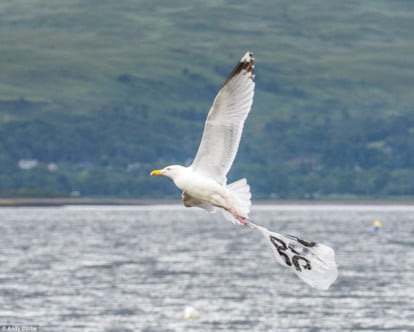
Sadly many thousands of animals are killed by litter in the UK and the Isle of Man every year - they can choke on it, eat it, become entangled in it, or become constricted by it.
Of course, we all know that dropping litter is an antisocial and environmentally unfriendly thing to do, but even when we are disposing litter responsibly, or recycling it, we can be endangering animals.
Everyday objects that seem perfectly safe can become hazardous when found accidentally by animals, whether they be domestic or wild ones.
TIN CANS - animals looking for food can get trapped in cans or injured by sharp edges, and so pinch them shut before you recycle or dispose of them.
-(2).jpeg?width=209&height=140&crop=209:145,smart&quality=75)
.jpeg?width=209&height=140&crop=209:145,smart&quality=75)
.jpeg?width=209&height=140&crop=209:145,smart&quality=75)
ELASTIC BANDS - by cutting open the elastic band before disposing of it, you may be preventing it becoming wrapped around a bird’s beak; and always pick up the red elastic bands that are sometimes left on the ground after a postal delivery - they look remarkably like food and could choke an unsuspecting bird or mammal.
THE PLASTIC THAT HOLDS CANS TOGETHER - always cut the loops before recycling or disposing of these holders, because animals can become entangled in them and suffer deep, usually fatal, wounds.
THE SEALS ON MILK CARTONS AND PLASTIC BOTTLES - these are the little plastic hoops that break off when a carton or bottle cap is first opened, and birds in particular are at risk from them becoming wedged onto their beaks, meaning that they can’t eat or drink. Simply by cutting open the hoop you will prevent this from happening.
BALLOONS - we all love balloons at a party and but please take the time to cut them up into pieces before disposing of them.
They are a serious choking hazard for animals. And please don’t plan or take part in balloon releases - they are as environmentally unsound as sky lantern releases and can cause suffering and death.
FACEMASKS - make sure you cut the ear straps before you dispose of your masks or, better still, if you work outside the medical field make sure you have a supply of reusable masks that are easily washed.
Plastic bags are less common than they used to be, but they can still pose an all too common threat to wildlife.
We were notified earlier this month about a hooded crow that had become tangled up in the handle of a plastic bag which had then hooked itself onto a barbed wire fence - the more the crow struggled to release himself, the tighter the bag became around his neck and body.
Luckily, help was at hand and a kind lady intervened, gently easing the bag over the crow’s head, and teasing it free from the bird’s flapping wings. These are her words:
’Holding him in both hands and preparing to send him into the air, I desperately hoped that after all our efforts together his wing would be fully working. "Please fly," I whispered to him.
’To my delight and relief he soared high above me and was immediately joined by three other birds.
’They seemed to then complete a couple of laps above me before climbing higher and higher.
’My lesson? Now I will always pick up any rogue plastic bag, even if it is attached to a hedge, and then dispose of it properly, out of harm’s way.’
Unless a wild animal is trapped or constricted, like our crow, a sad rule of thumb is that if you’re able to catch it then it’s likely to be severely ill or injured.
If you find an injured wild animal please remember that the best course of action is to take it straight to a vet where it will be given emergency treatment free of charge.
And please remember to be extra careful when handling birds at the moment, given the presence of avian influenza.
Comments
This article has no comments yet. Be the first to leave a comment.