
The Isle of Man’s Wildlife Act 1990 makes it illegal to harm or kill wild birds, unless a licence has been issued by the Department of Environment, Food and Agriculture.
This relatively straightforward state of affairs is not mirrored in the UK at the moment, where there has been confusion and anger about recent changes to licensing.
Natural England, the advisory body on the environment, had historically issued general licences that enabled landowners to shoot birds such as pigeons, Canada geese and crows, on the basis that these birds could damage crops and endanger lambs.
In early 2019 a lawsuit was brought against Natural England by a campaigning conservation group called Wild Justice which has the broadcaster and naturalist Chris Packham as one of its members.


-(2).jpeg?width=209&height=140&crop=209:145,smart&quality=75)
Wild Justice claimed that Natural England were in breach of the UK’s Wildlife and Countryside Act 1981 by issuing the general licences, which led to Natural England to revoke them at the end of April.
The Environment Secretary, Michael Gove, intervened after several farming and countryside groups sent him a letter stating that the ban on general licences was causing ’enormous problems and concerns for anyone reliant on general licences, and their withdrawal has come at the worst possible time of year when lambs, young crops and nesting birds, including declining species such as curlew and lapwing, are all in most need of protection from marauding pest birds’.
Natural England now seem to be exempting crows from the new licensing arrangements, and it has pledged to ’rush through’ licences that are considered to be urgent.
It’s still very unclear whether the new licensing arrangements will ultimately afford better protection to wild birds, as Chris Packham and his fellow naturalists are hoping, and the debate about shooting certain species will continue to rage.
The economics of farming aside, Wild Justice will, no doubt, seriously question the countryside groups’ justification for shooting crows in order to protect nesting birds (particularly when the use of pesticides and the lack of hedgerows are the main causes of the decline in many bird species).
Larger birds often predate young birds - it’s how the food chain works, and it’s an example of how nature can seem to be cruel.
But natural selection is an intrinsic part of our natural world. Certain species, such as the mallard duck, combat the problem of predation by having large numbers of offspring - many will be killed and eaten by predators, but enough will survive.
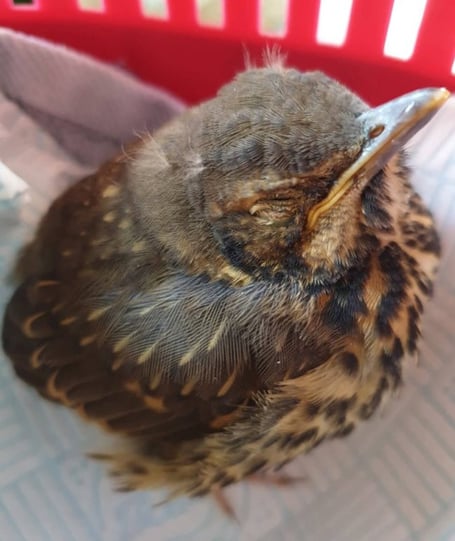
That said, the ManxSPCA will do its best to rescue young birds that have been abandoned, like the baby thrush pictured, rather than leave them to join the food chain.
It works closely with another charity called Manx Wild Bird Aid, but it also relies upon the public for help.
Please remember that if you see an injured bird (or any wild animal for that matter) and you are able to contain it, please take it straight to a vet where it will be given emergency treatment free of charge.
If you find an abandoned baby bird, and you’re not able to place it back into its nest, please watch and wait - it is probably developing its flight feathers, which it needs to do on the ground, and is being watched over by its parents.
If you are absolutely sure the young bird has been abandoned, place it in a ventilated box and bring it to Ard Jerkyll.
If you need to keep the bird overnight, please keep it warm inside a towel next to a heat source; and if you are able to give it a few drops of water, this will increase its life chances.
Lots of young birds will eat tiny pieces of mashed meat pet food or boiled egg, which you can give them with a pair of tweezers.
It’s incredibly rewarding to be able to help a young bird in this way, and to give them a second chance of life, but we should only interfere with nature when we have to.
Comments
This article has no comments yet. Be the first to leave a comment.