
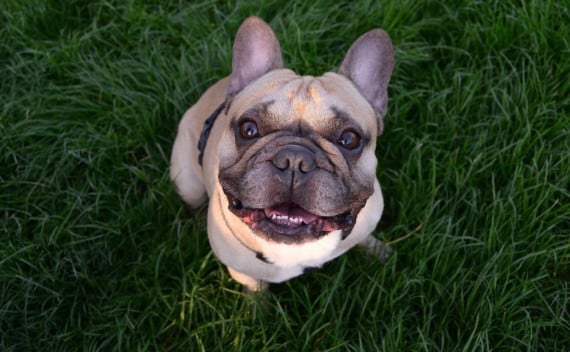
Fashionable ’Frenchies’ are one of Britain’s most popular dogs and puppies can sell for more than £5,000.
But we have bred them to have shorter faces purely to suit our own aesthetic preferences, and the consequences are dire.
Skin problems, eye conditions, breathing difficulties, frequent surgeries and shorter lifespans - they really do suffer for their looks.
So why are we drawn to pets with rounder, flatter faces and googly eyes?




Research shows the preference is ingrained in us because baby faces trigger our innate desire to nurture.
All mammals, even those with longer noses, are born with flatter faces because it helps with suckling.
Baby humans and animals also have relatively large eyes, and many people think they look ’cute’.
According to research by Oxford University, when we encounter something cute it ignites fast brain activity in regions linked to emotion and pleasure.
Flat-faced dogs tend to have narrow nostrils, with no space for the part of the nose that helps keep them cool during panting.
Their jaws are too short so the teeth are crowded together, twisted and don’t function as they should.
Their tongues block their mouths and their long, soft palates get sucked into their windpipes.
They also tend to have narrow windpipes. This means their airways are compromised at lots of different levels.
Around half of Frenchies, pugs and English bulldogs can’t breathe normally.
’Air hunger’ is thought to be one of the most distressing things a mammal can suffer and these dogs are dealing with this for most of their lives.
Thousands require surgery to open their airways just to lead a bearable life.
Owners of flat-faced dogs often see their snorting and snoring sounds as normal, but they are all signs of respiratory distress.
Perhaps you’ve been tempted by a bulldog because you’ve heard they don’t need much exercise. It’s not that they don’t need it; their laboured breeding makes them incapable of it.
Exercise is an innate behaviour in dogs, so if they can’t do it, they become frustrated.
There are further problems.
While their skulls have become wider, rounder and shorter over time, the other tissues of the head haven’t changed.
As a result, the skin wrinkles as the jaws have got shorter. All this extra skin can become inflamed and infected, requiring antibiotics and laborious cleansing regimes.
The eye sockets have become shallower, but the eyes are no bigger - they are just bulging out.
This means they are prone to damage and, in some cases, even have to be removed altogether.
We’ve reached the stage where flat-faced/brachycephalic dogs are virtually incapable of reproducing by themselves. They struggle to mate naturally, and their big heads and little pelvises mean births are difficult and the vast majority of puppies are born by C-section.
This leads to the ethical question - if a breed can’t pass the most basic test of reproduction, should it be allowed to continue in its current form?
The solution is in our hands - if we stem the demand then the supply will follow suit.
Most of our rescue dogs are cross-breeds, which generally means they have less breed-specific health issues and can therefore lead longer lives.
A practical as well as ethical reason to adopt rather than shop.
Comments
This article has no comments yet. Be the first to leave a comment.